A growing archive of writing from Dr Banerjee — music education and pedagogy, raga and tala, learning methods, film and performance analysis, book announcements, and the place of tradition in a technological age. Every piece is written to explain something clearly: for students, for teachers, and for anyone who wants to understand music and the arts more deeply.
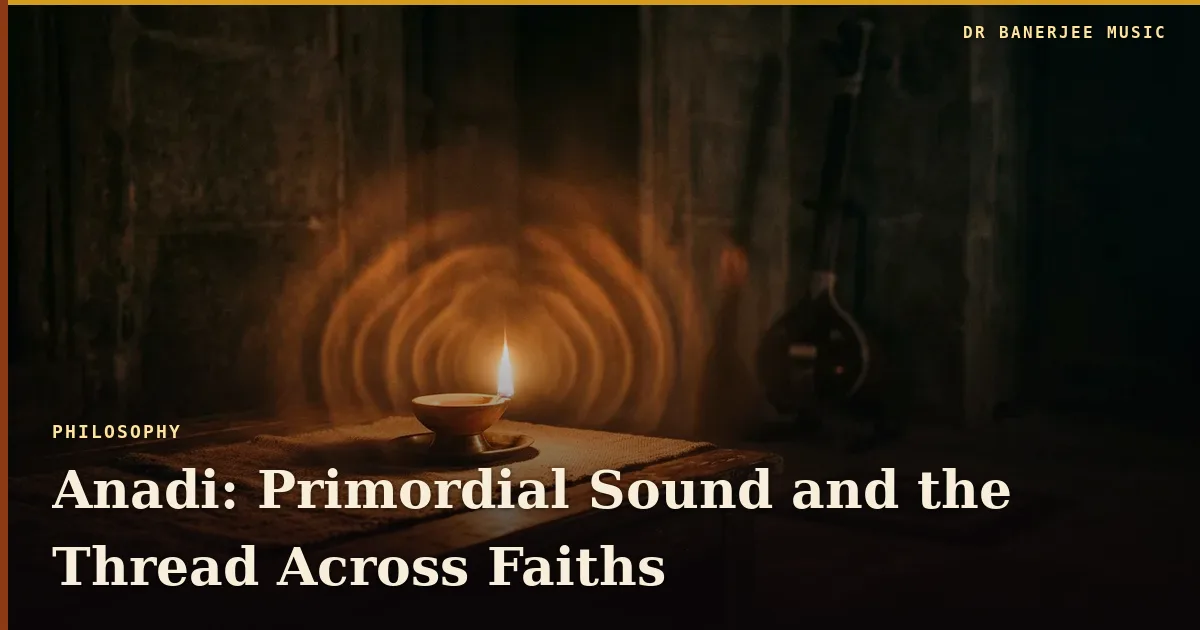
Anadi, the beginningless, traced from the Nasadiya Sukta through Nada Brahman, Ik Onkar and the Word: what primordial sound asks of a practising musician.
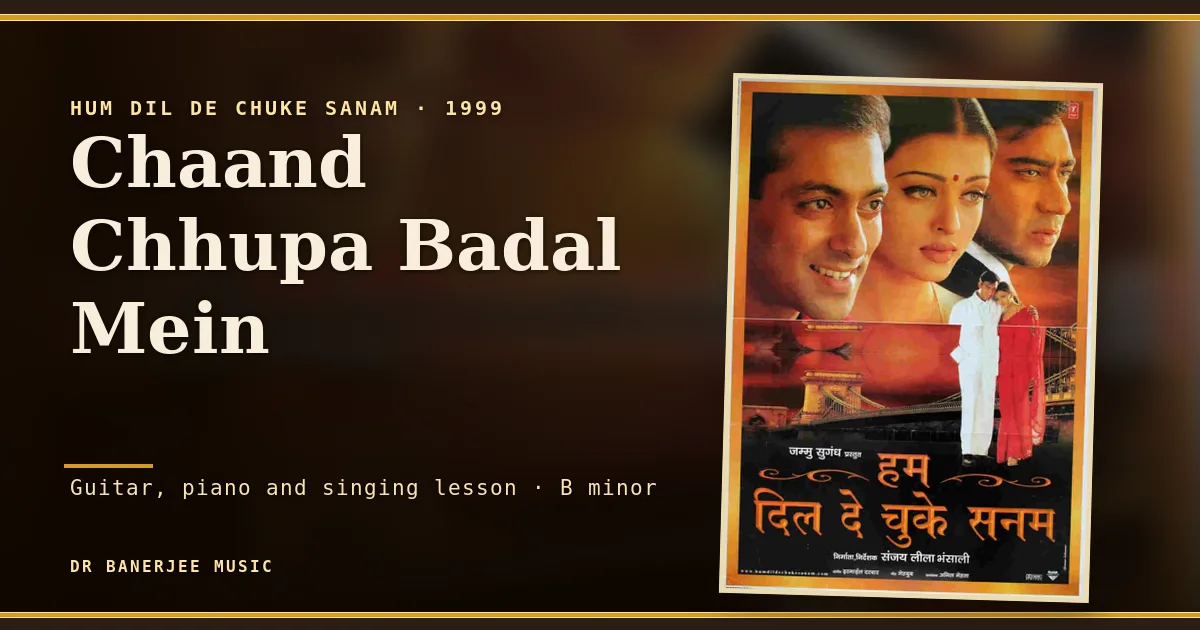
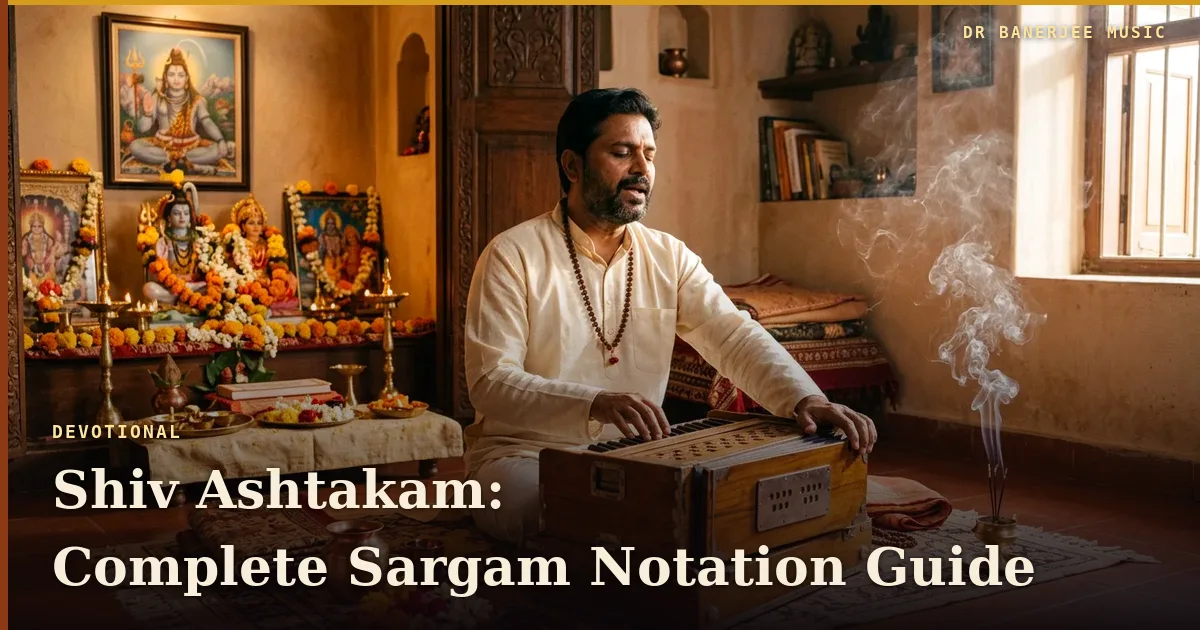
Chand Chupa Badal Mein as a full lesson: the B minor progression, the guitar and piano approach, the voice leading, and why this 1999 melody rewards learners.
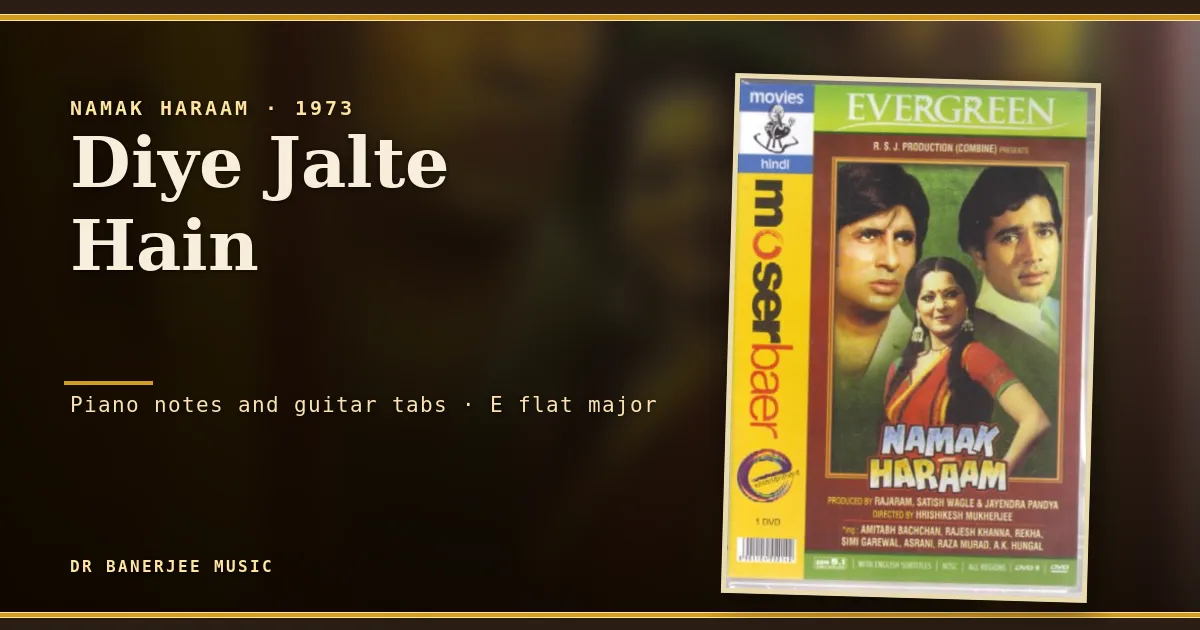
Diye Jalte Hain (Namak Haraam, 1973) for piano and guitar: the melody in E flat major, a practical chord framework, the phrasing, and the common mistakes.
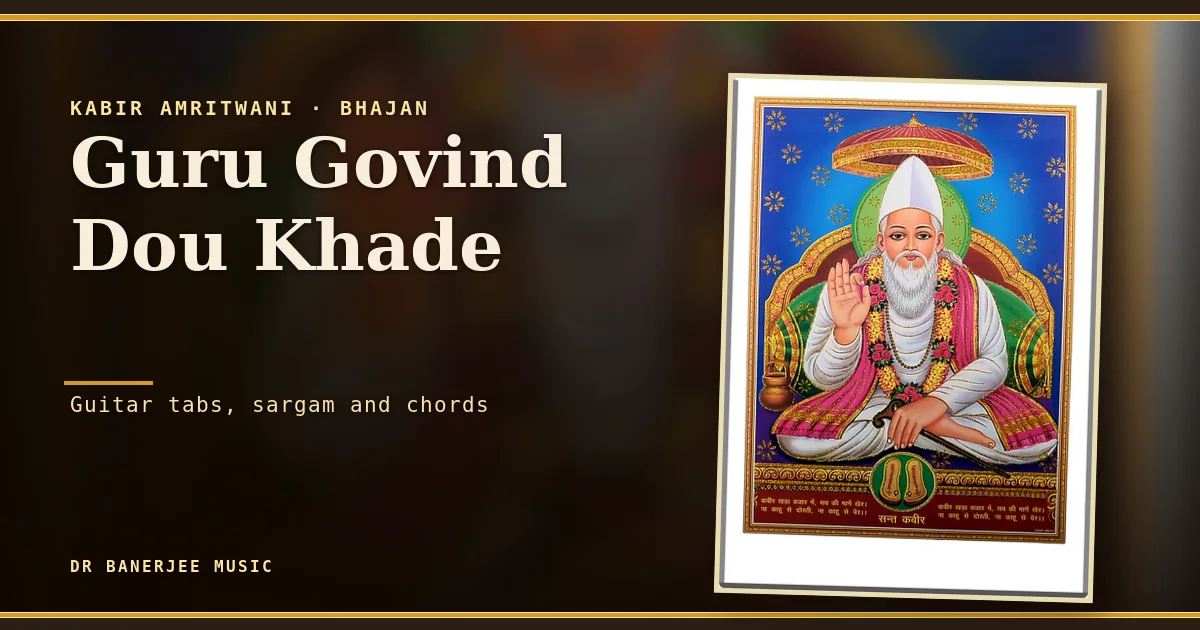
Guru Govind Dou Khade set for guitar: six-line sargam notation, tabs and chords, with a practice method that treats Kabir doha with real structural care.
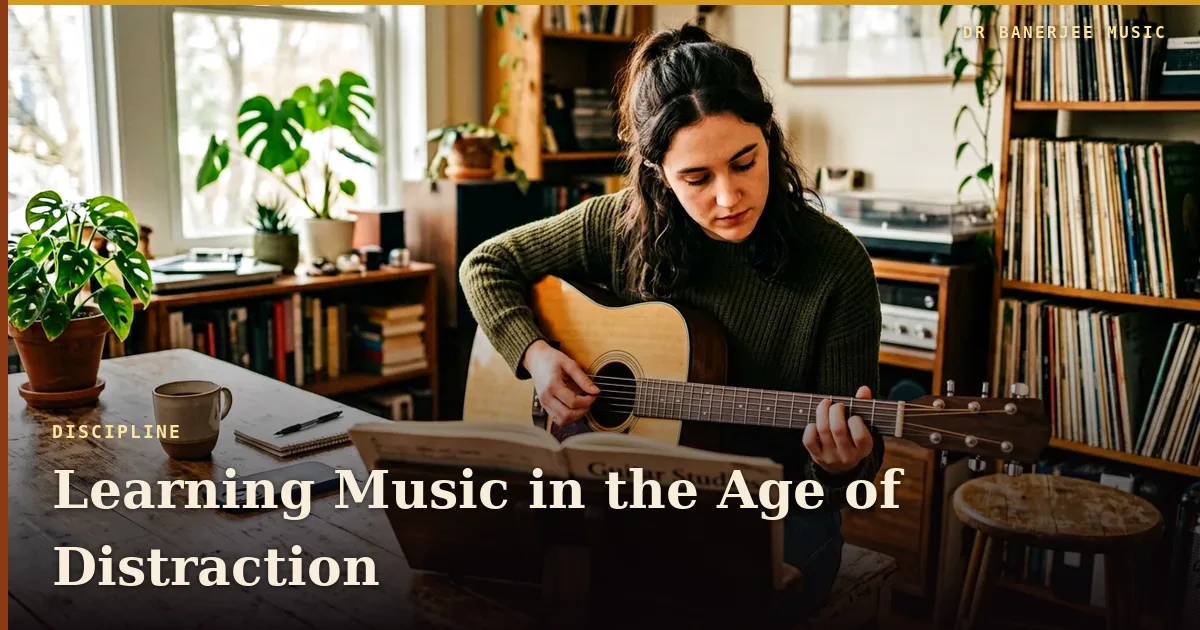
Learning music under constant interruption: why distraction hits embodied knowledge hardest, and what attention, boredom tolerance and listening now demand.
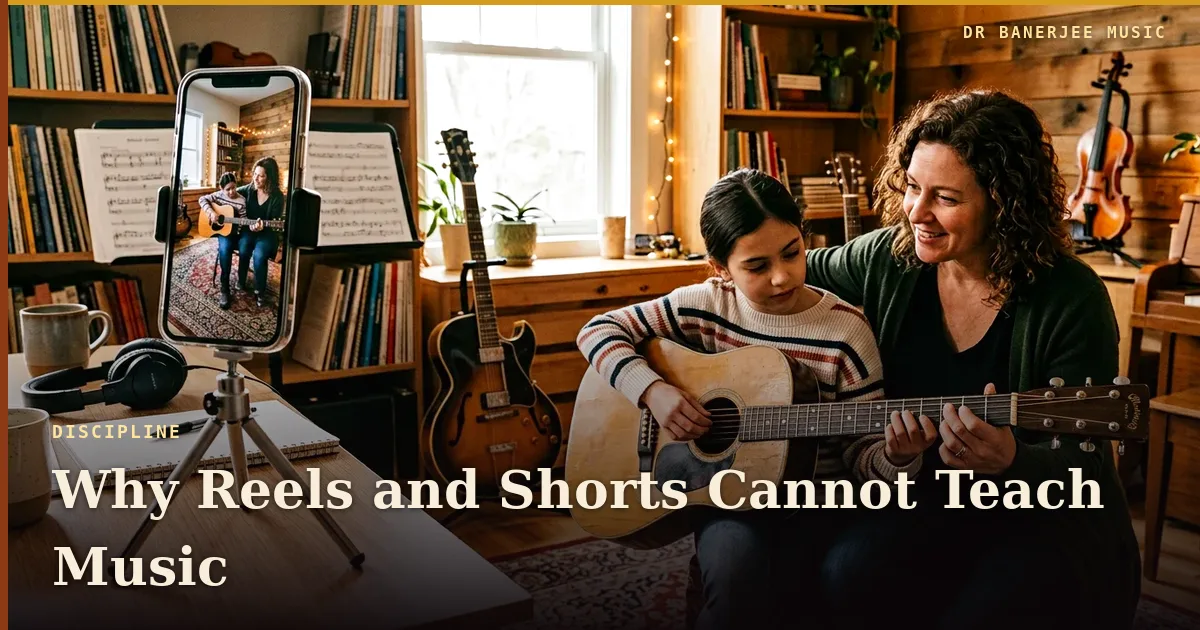
Why short-form video cannot carry music education: outcomes without grammar, imitation without comprehension, and what to ask of any under-a-minute tutorial.
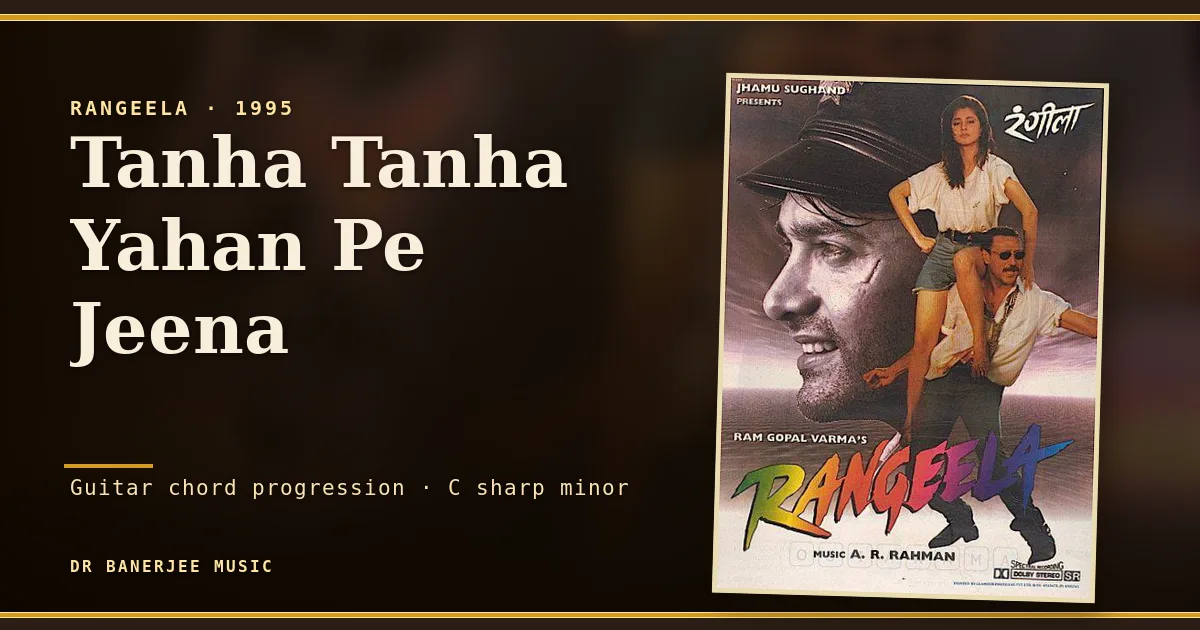
The Tanha Tanha guitar lesson: a four-chord C sharp minor progression from Rangeela (1995), its voicings and timing, and why harmonic economy suits learners.
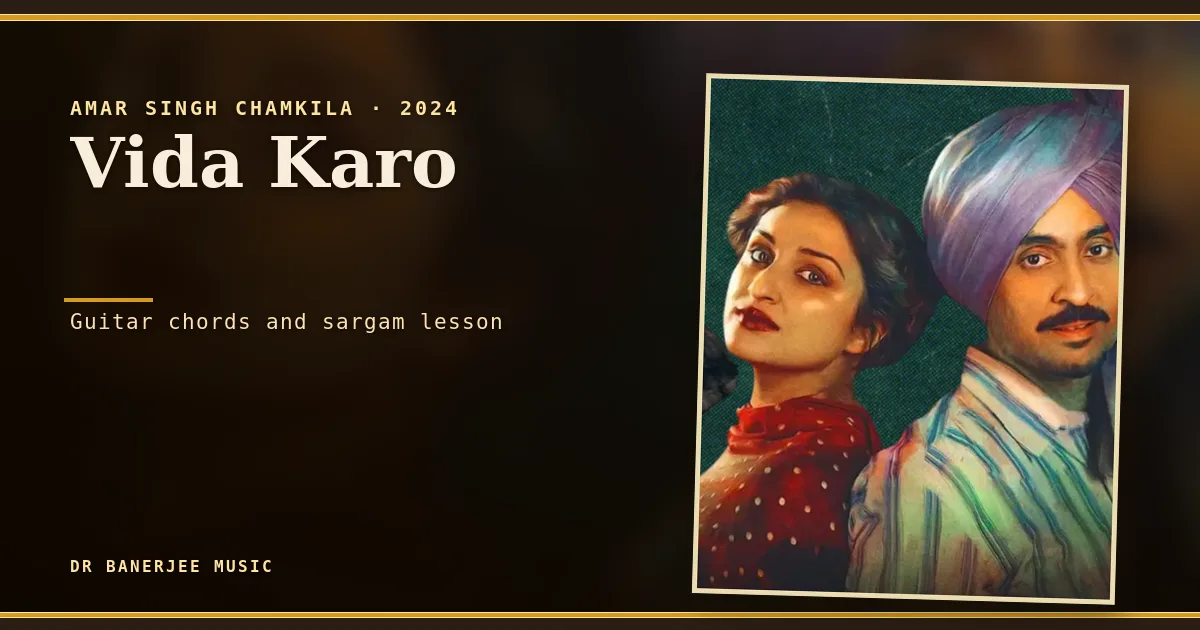
Vida Karo (Amar Singh Chamkila, 2024) in sargam and chords: line-by-line notation, the harmonic reading behind it, and how to practise it with drone and voice.
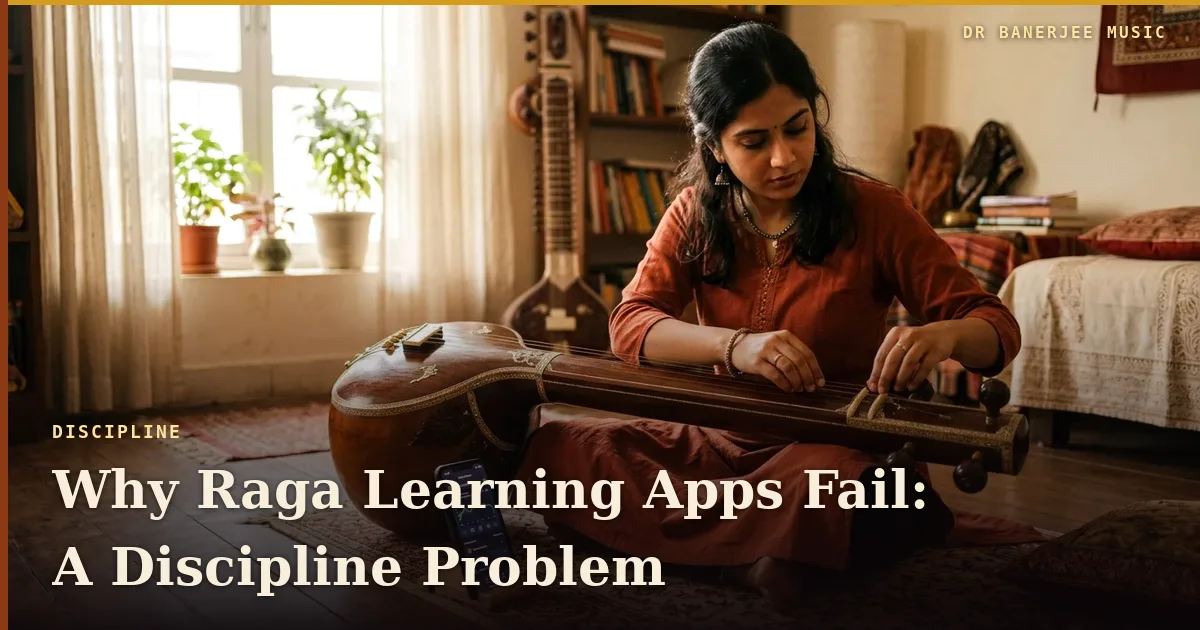
Why raga learning apps fail their students: no ear to correct the phrase, no discipline to sustain the riyaz, no tradition to carry. What to build instead.
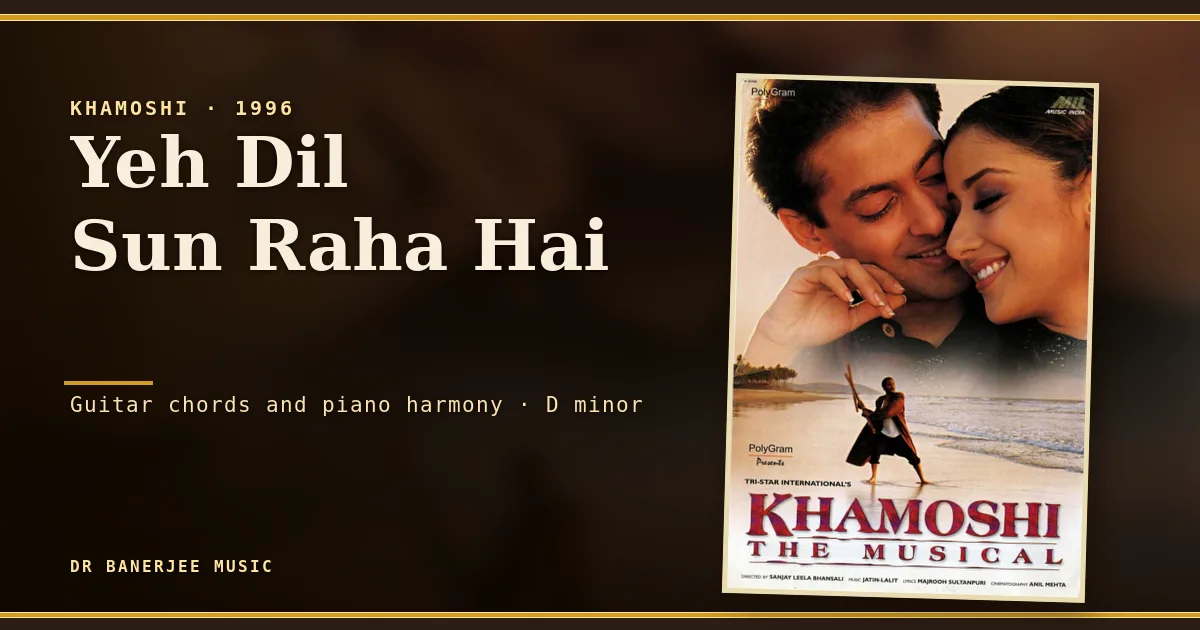
Yeh Dil Sun Raha Hai (Khamoshi, 1996) as a lesson: the D minor centre, the chord progression, guitar and piano approaches, and a listen-first practice method.
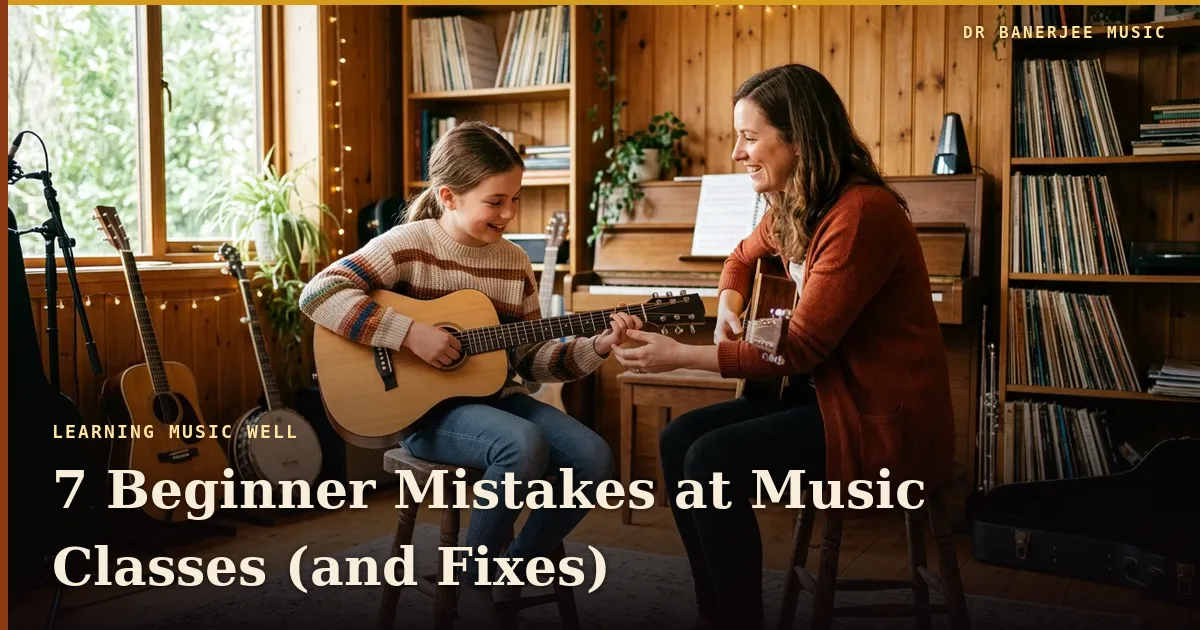
Seven beginner mistakes seen at music classes every week — posture, skipping sight-reading, ignoring the metronome — with the small, specific fix for each one.
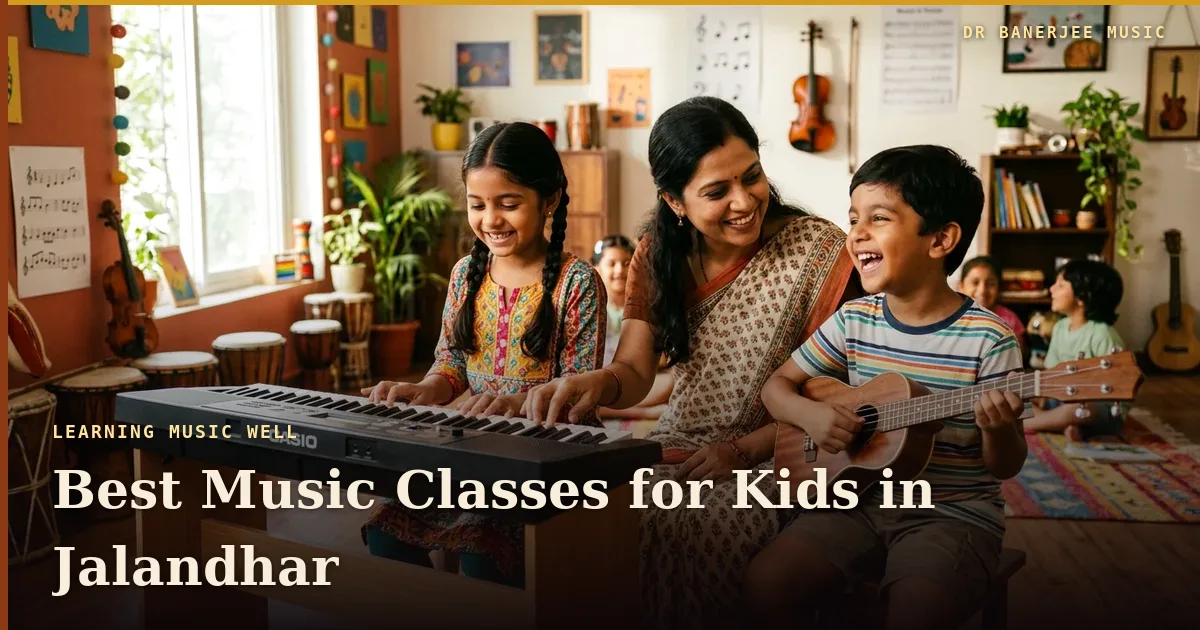
The best music classes for kids in Jalandhar start at seven: what classes cost, the instruments children pick first, and the habits that keep a child playing.
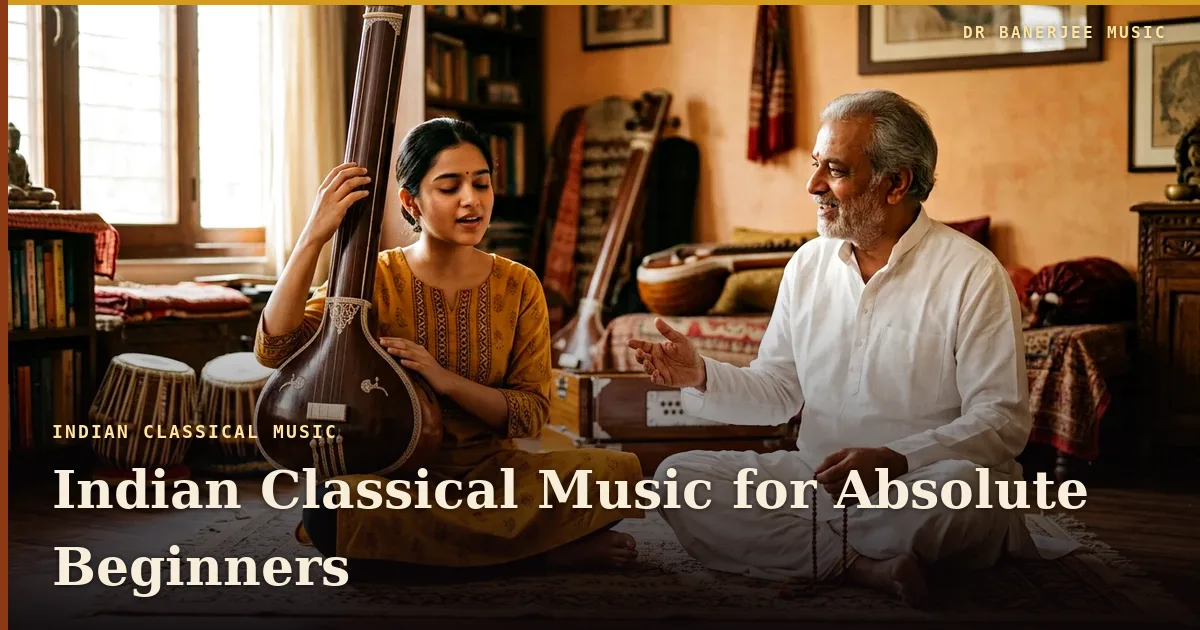
How to start learning Indian classical music: swaras, alankars and riyaz, the path from first patterns to a khayal, and the vocabulary a beginner will hear.
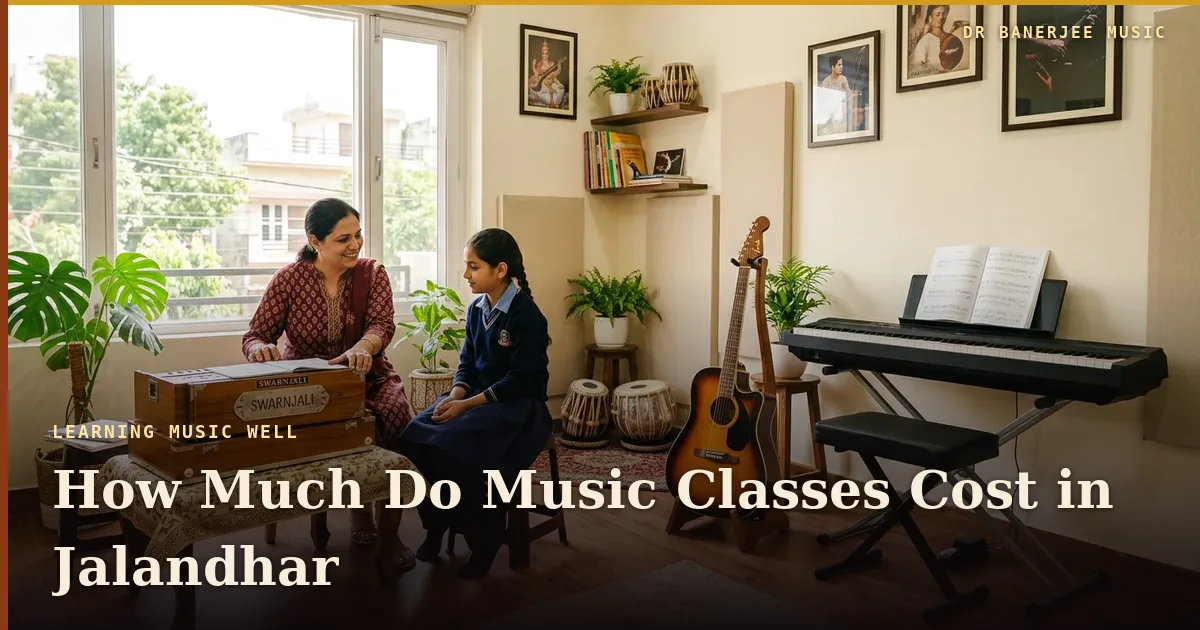
Music classes in Jalandhar, priced plainly: one-to-one, group and online fees at Dr Banerjee Music, plus the timetable, age rule and studio visit, in one list.
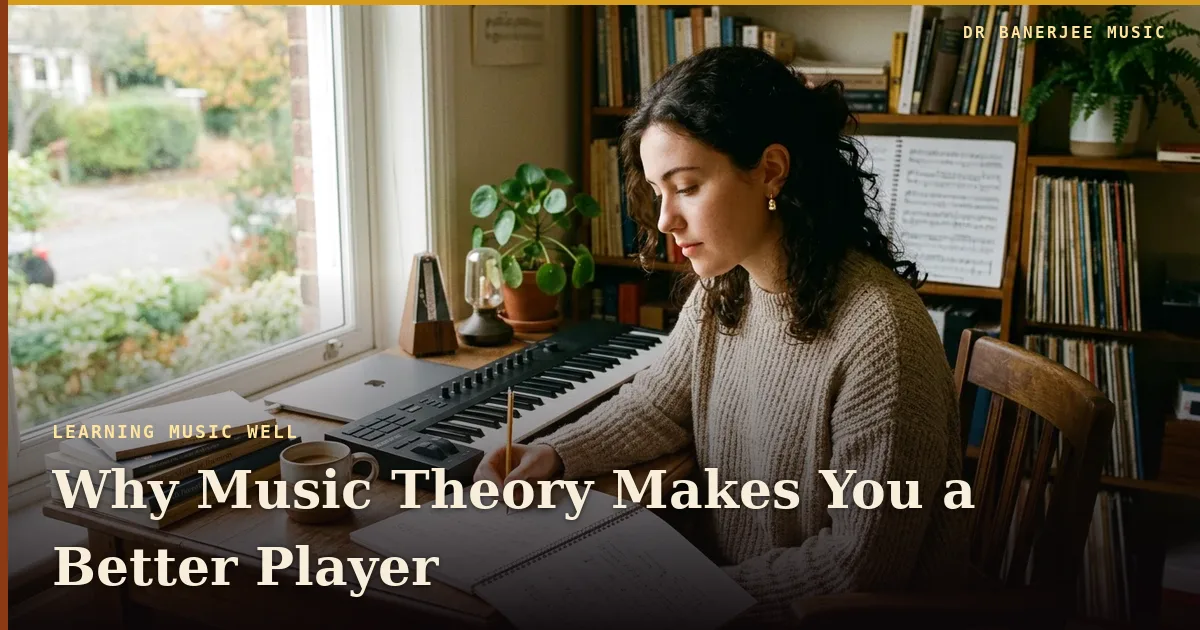
Why music theory makes you a better player: theory as the grammar of music, the order to learn it in, and how it sits inside lessons rather than beside them.
Online music lesson setup in five checks: device, camera framing so hands stay visible, earphones versus speakers, and what the free demo class is for.
Rows of shiny amps are overwhelming. Here is what actually matters in your first amplifier in 2026 — power, speakers, channels — and what you can safely ignore.
Beginner guitarists think warming up is a boring waste of time. These 10-minute routines fix that — five drills, clear tempos, and why each one earns its place.
Learn how to practise guitar daily with a realistic 30-minute routine built on the 'little and often' principle — a practice structure you can actually keep.
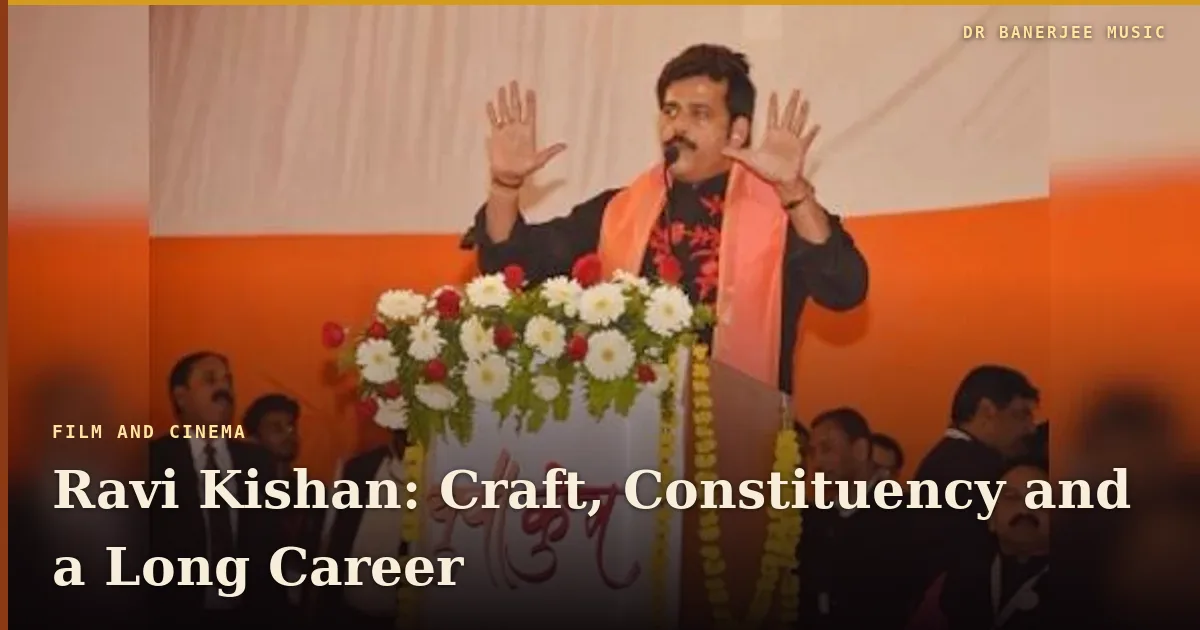
A sourced sketch of Ravi Kishan — his 1992 debut, Bhojpuri stardom, Laapataa Ladies acclaim, the Gorakhpur seat, and the daily discipline behind the work.
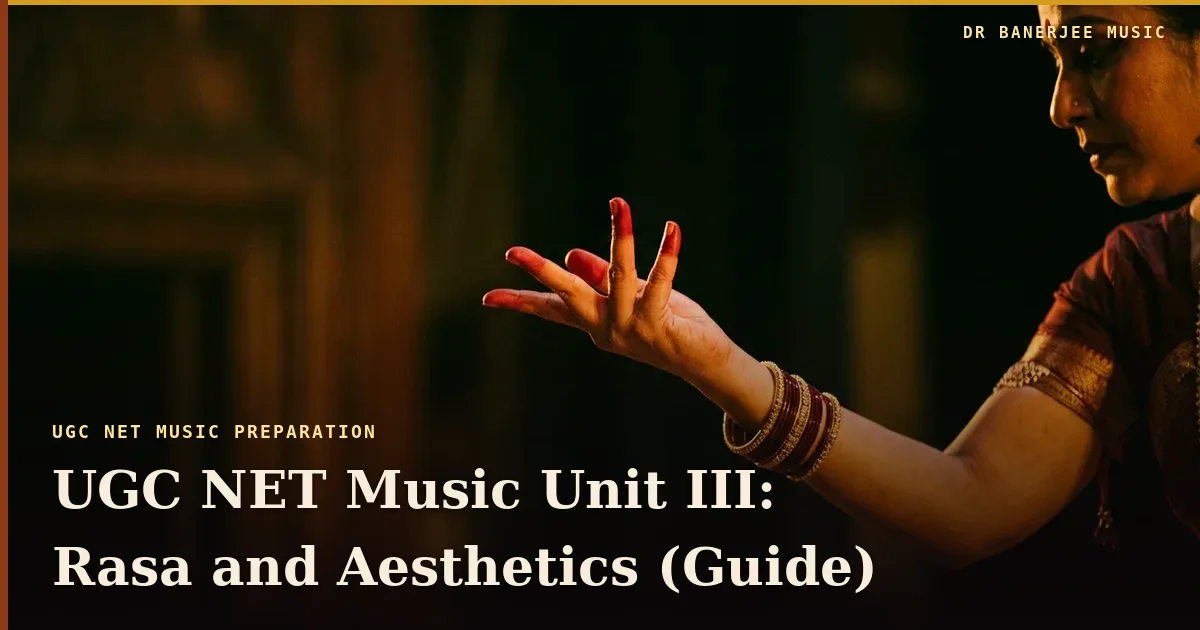
UGC NET / JRF Music Unit III rasa and aesthetics: a bilingual Kindle guide, 55 modules, for exam application. Kindle Unlimited readers can read it free.
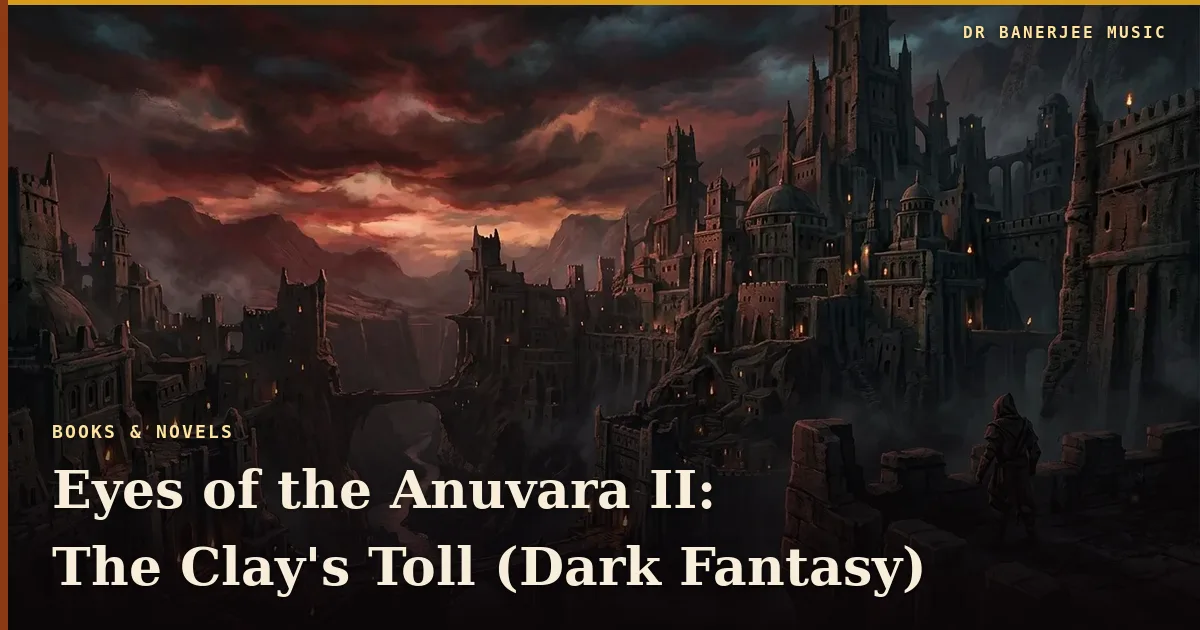
The Clay's Toll is a dark fantasy forensic mystery on Enkiya: missing children, a drained energy system and an investigator facing official silence. Book 2.
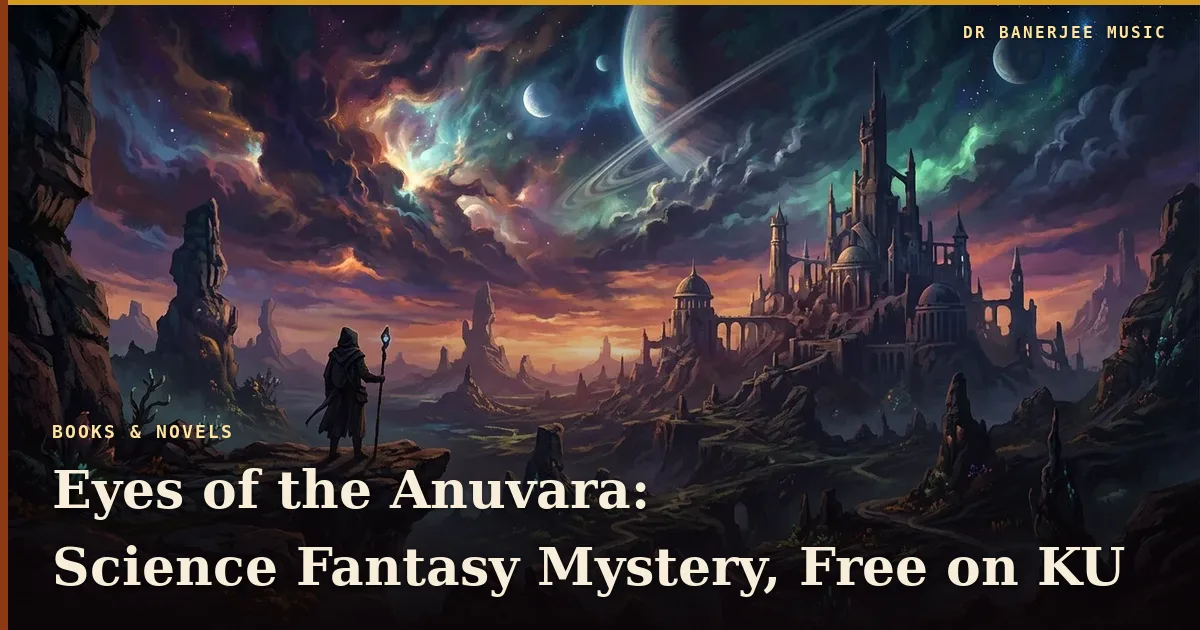
Eyes of the Anuvara – Journey Begins is a science fantasy mystery set on Enkiya, where observation is survival. Book 1 of the series, free on Kindle Unlimited.
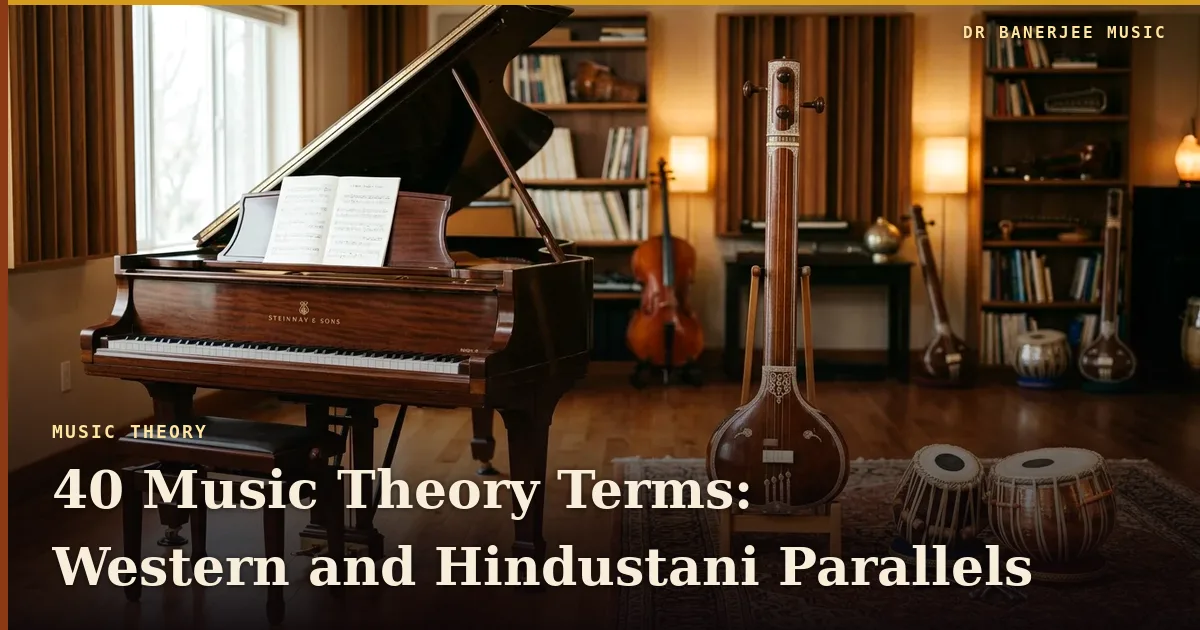
A comparative glossary of 40 music theory terms with their Hindustani parallels, showing where the two systems align on pitch and diverge on harmony and melody.
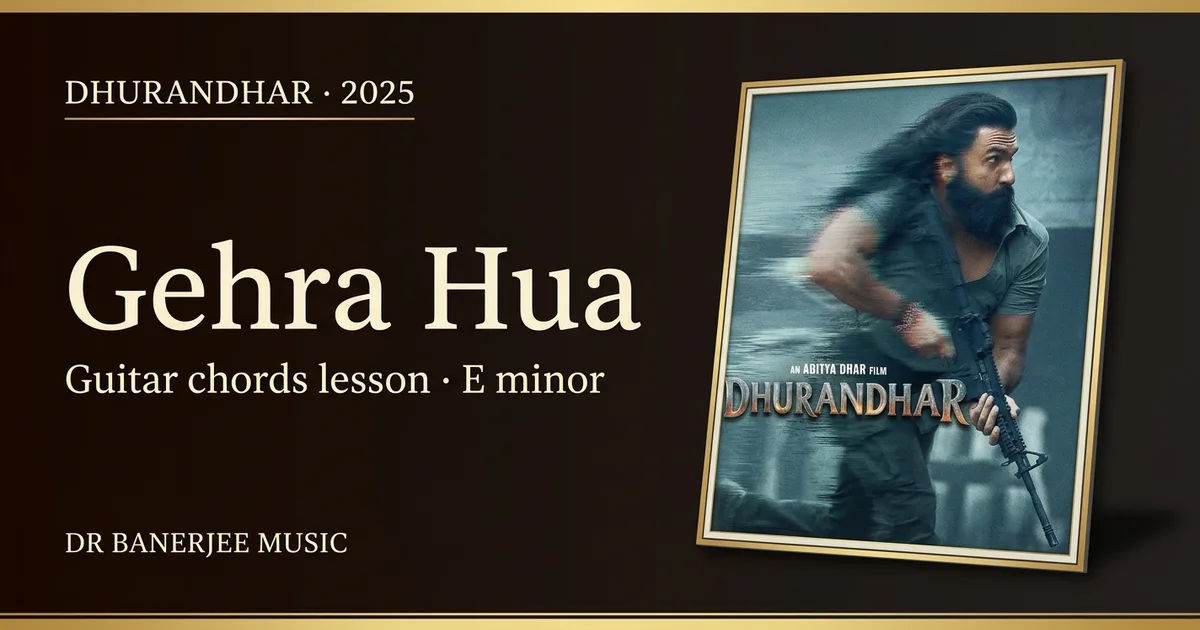
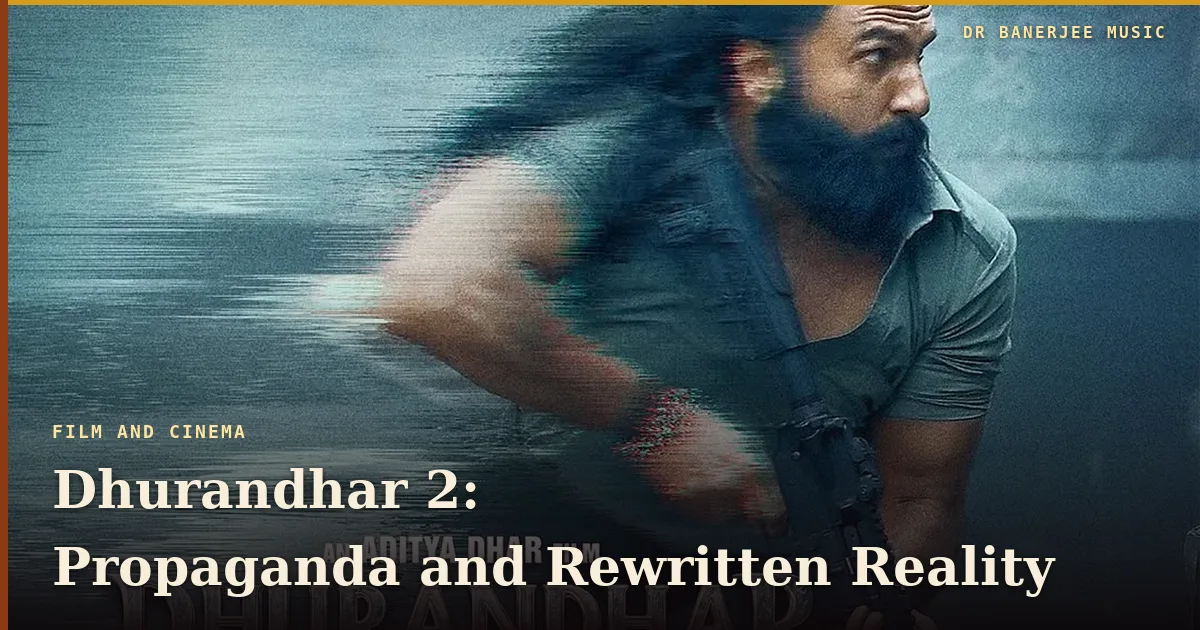
A close reading of Dhurandhar 2: The Revenge as cinematic statecraft — how direction, casting, sound and editing turn an espionage thriller into ideology.
A teacher's guide to choosing a first acoustic guitar under ₹10,000 in India: why setup and playability beat brand, plus dependable models and what to check.
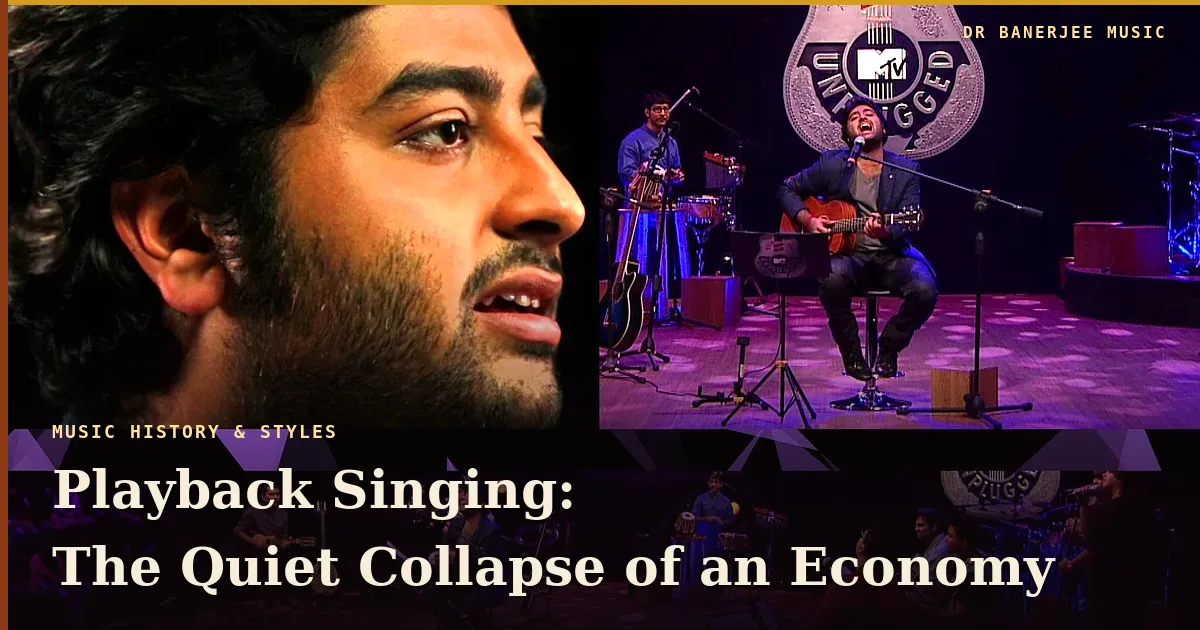
Playback singing did not fail dramatically — its economic logic simply expired. A structural reading of Arijit Singh's exit and what it means for musicians.
Generative AI writes music faster than copyright law can adapt. Here is how authorship itself erodes — and what musicians and educators should do to protect it.
How long it really takes to learn music: a truthful timeline from beginner to professional, a session-based way to measure progress, and how much to practise each week.
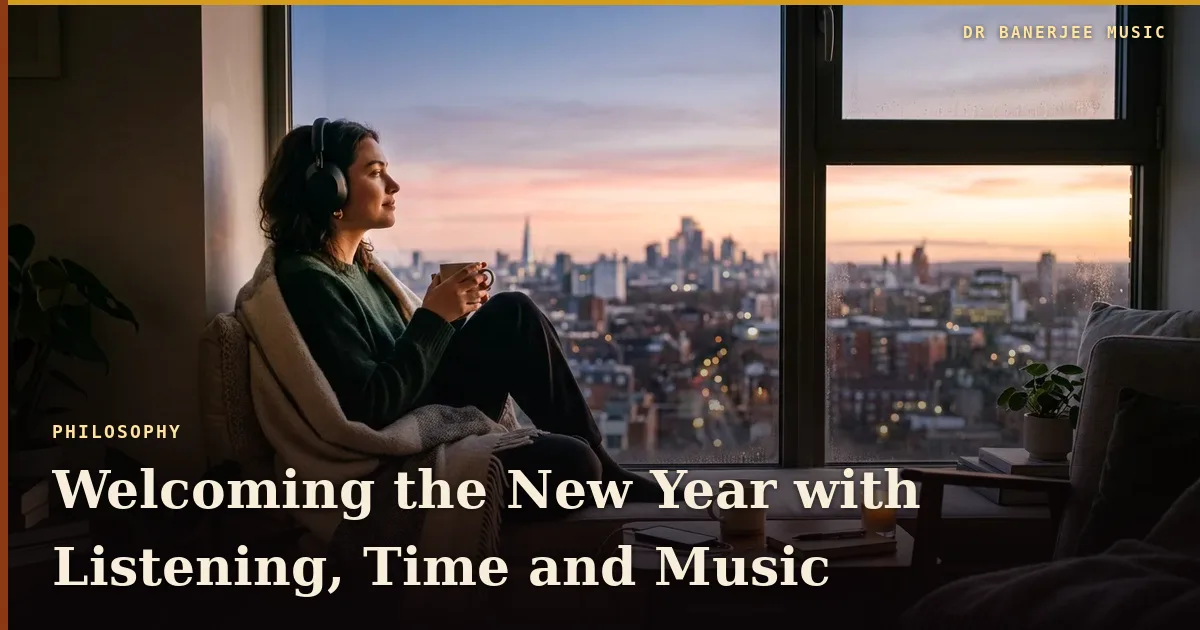
A New Year reflection for musicians: how music teaches that time does not reset at midnight, and why disciplined listening is the skill that matters most.
Notation apps, tuners and DAWs can strengthen music learning or scatter it. A teacher's disciplined, goal-first approach to technology without diluting craft.
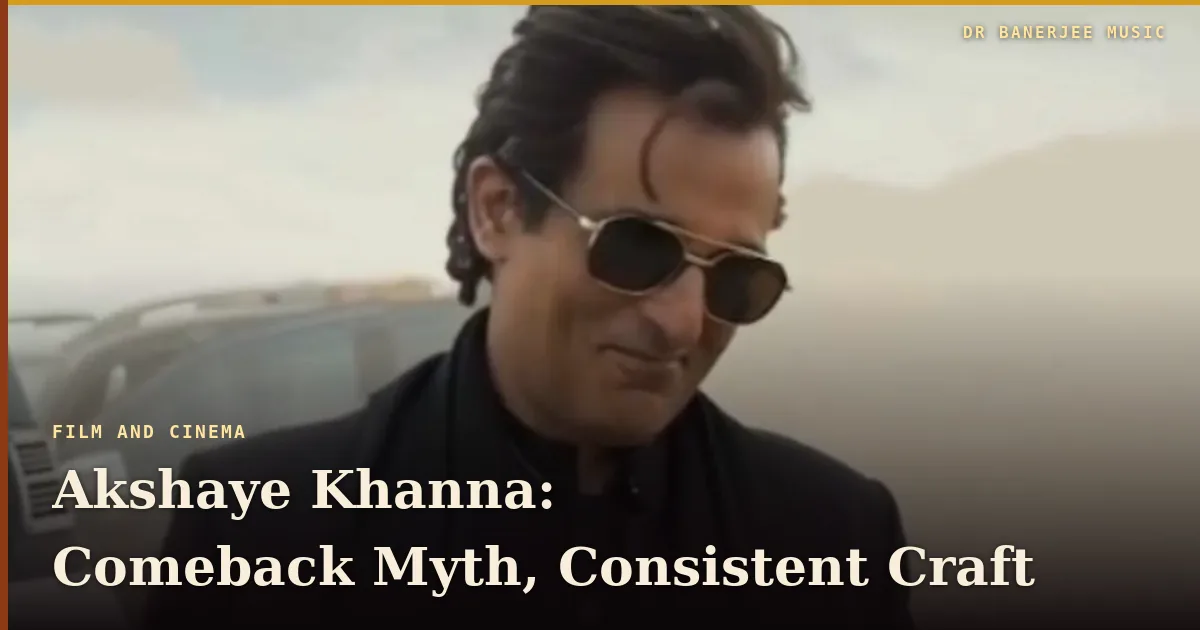
Akshaye Khanna is called a comeback story after Chhaava and Dhurandhar. A closer look at his restrained acting shows consistency, not resurgence — here is why.
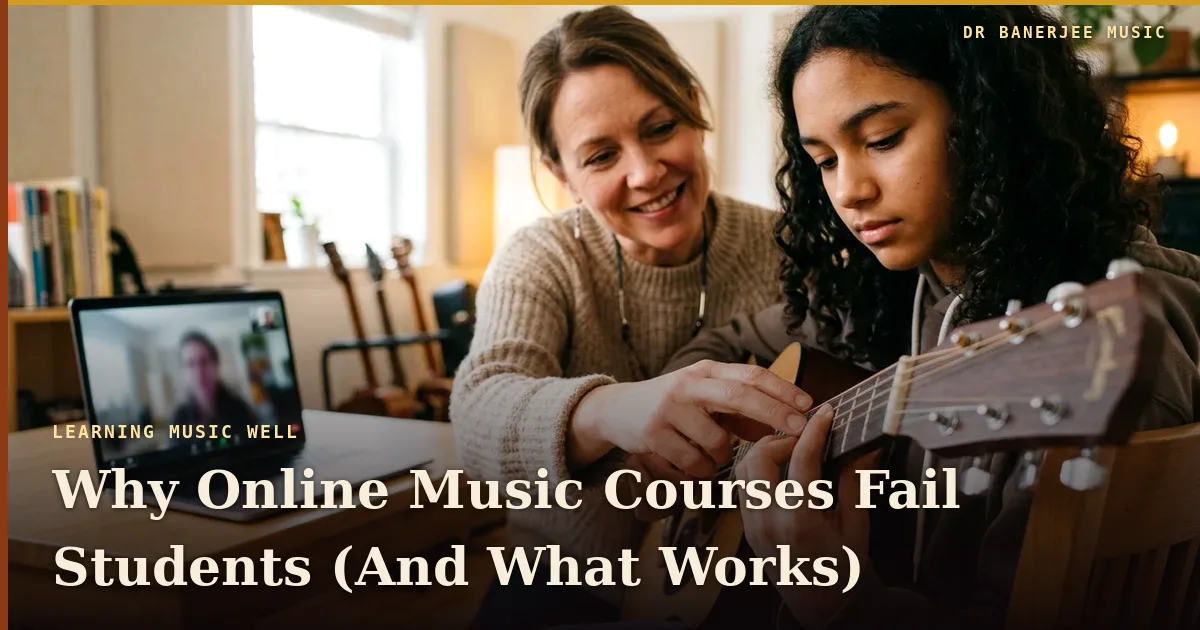
Why do online music courses fail? Content over craft, no real-time correction and automated discipline. A human-led guide for students and parents in 2026.
AI in music education can check pitch and rhythm instantly, but can it teach phrasing, rasa or judgement? A balanced guide for students, teachers and parents.
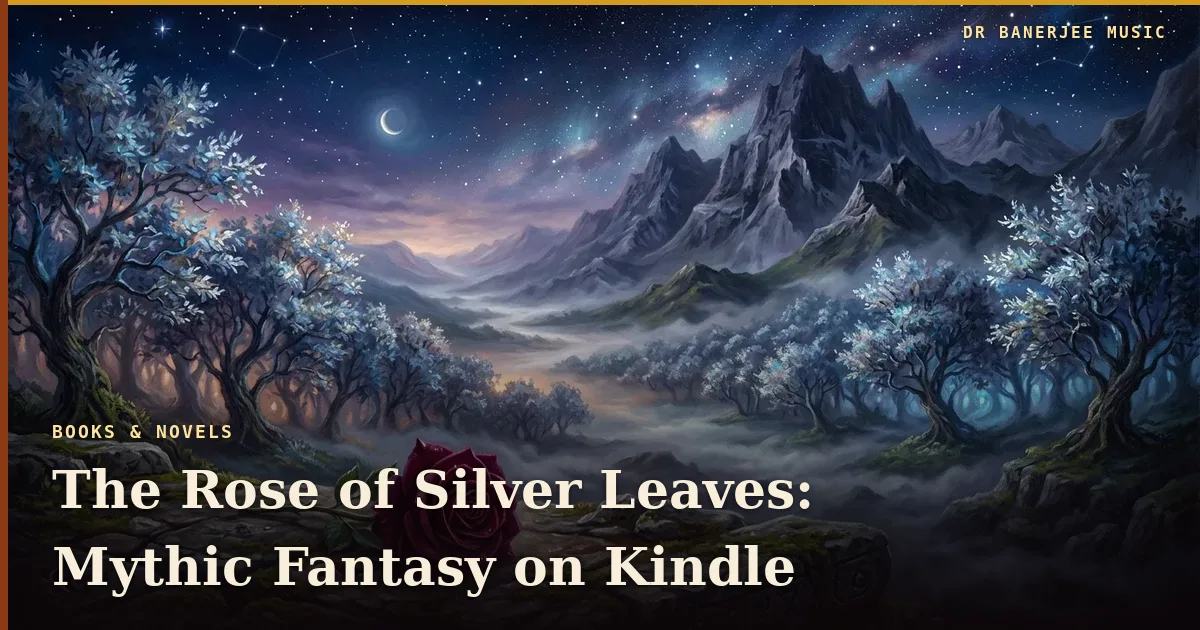
The Rose of Silver Leaves by Dr Banerjee, a mythic fantasy on Kindle Unlimited, is a 211-page tale of forbidden love, prophecy and destiny in Aetherion.
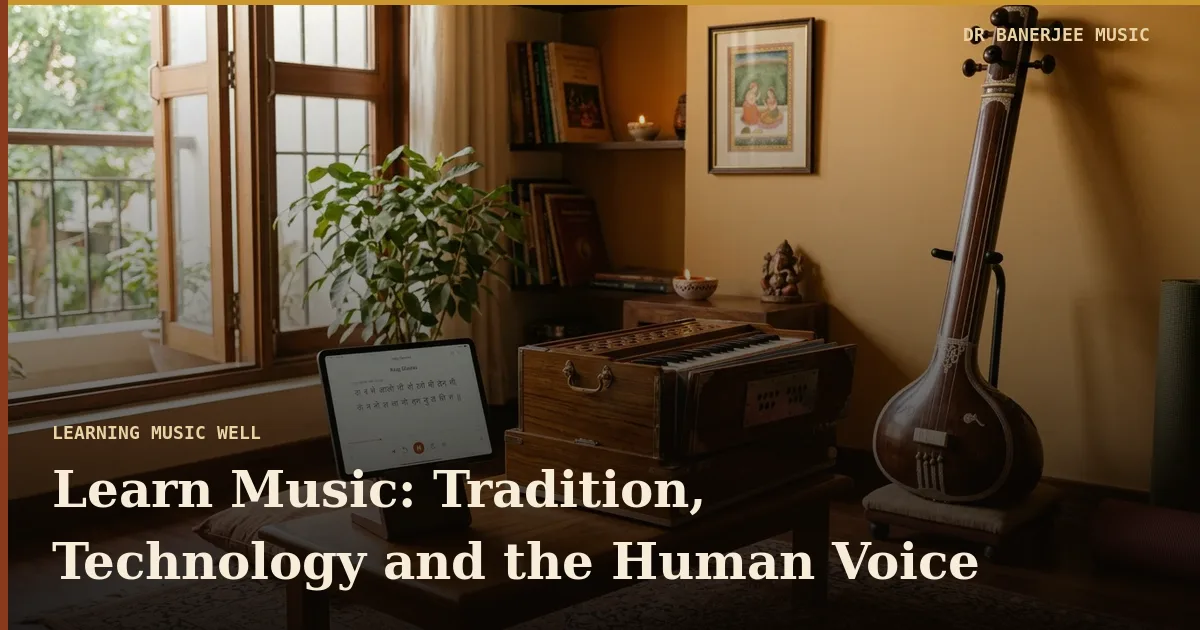
How to learn music now: riyaz and lineage, AI tools used as a mirror, licensed AI music and recorded grade exams, with the human voice at the centre. Updated for 2026.
Music is not a subject to be memorised but a practice that grows through enquiry. These articles exist to support that enquiry — accurate, useful and written from thirty years of teaching and studio work.
Continue your musical journey
If these articles speak to your curiosity and you would like to study music with clarity and discipline, one-to-one and group classes run at the Jalandhar studio and live online worldwide.
Add this website to your phone or computer and it opens like an app, always showing the latest lessons, fees and articles. There is nothing to download from an app store and no separate app to update.
How to add it to your home screen
Android (Chrome): open the ⋮ menu and tap Install app or Add to Home screen.
iPhone and iPad (Safari): tap the Share button, then Add to Home Screen.
Computer (Chrome or Edge): click the install icon at the right of the address bar.