Raaga — A Meditation with Dr Banerjee Vol. 1
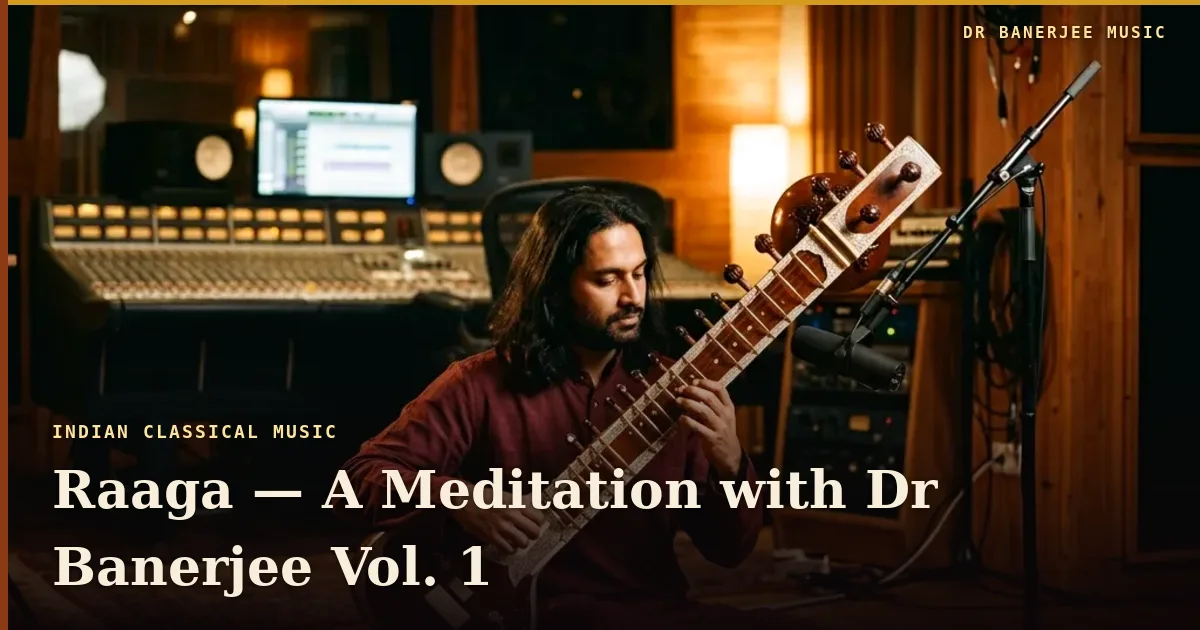

Doctorate in World Music, University of Oxford · teaching since 1992. More about the teacher.
An independent instrumental album from M&M Records, Zurich — available globally for archival listening.
Raaga — A Meditation with Dr Banerjee Vol. 1 is the first independent studio album released under my own name through M&M Records, Zurich. Made outside commercial commissioning structures, it documents raga as a disciplined, contemplative state rather than a performance spectacle. Although privately initiated, the album is distributed globally across major streaming platforms for accessibility and archival continuity. Availability here is for long-term reference, not for commercial intent.
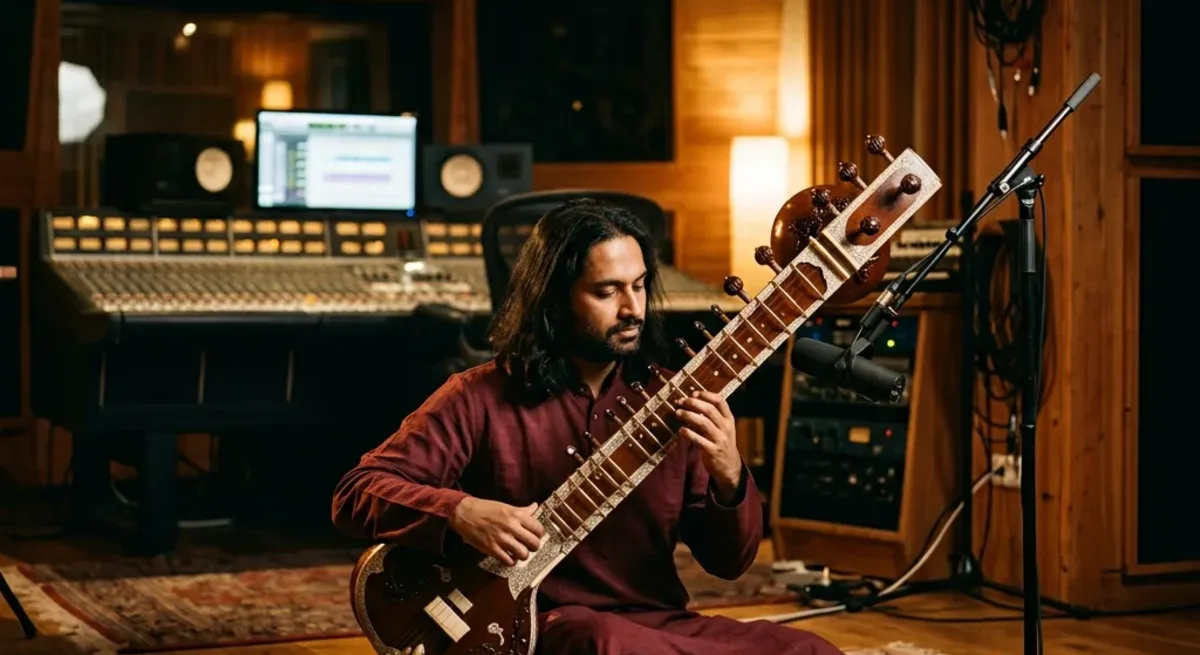
What is Raaga — A Meditation with Dr Banerjee Vol. 1?
This is an instrumental album approached as meditation rather than recital. Each raga is allowed to unfold without haste, without dramatic escalation and without the pressure to fit concert expectations or algorithmic listening habits. Silence, phrasing and tonal gravity are given equal weight to sound, and the arc of each piece follows the raga's internal grammar rather than an external narrative.
The intention is simple and rigorous: to remain with the raga long enough for its structure to reveal itself. That stance is close to how riyaz is taught in a serious tradition — patient, precise and attentive to minute shifts of intonation and time. If you are new to this language, start with Indian classical for beginners for how a raga's grammar is heard.
The album also sits within a broader enquiry into nada and the beginningless sound — not as abstract philosophy, but as a daily practice of listening.
Why was this album made without commercial intent?
There are no collaborations on this volume by design. Every performance is by me alone, allowing an unmediated dialogue between practitioner and raga. That solitude was deliberate: it preserves dynamic honesty and avoids the layering that can beautify a recording while distancing it from the raga itself.
Conceived outside market logic, the recording does not chase single-friendly durations, heightened dynamics or spectacle. It trusts duration over attention-grabbing, and it trusts listeners to find their own pace. Distribution since has been archival — ensure the work remains accessible for study, not to maximise streams. This position will continue in future volumes, which are planned as studio notes rather than pedagogical demonstrations or concert substitutes.
How was it recorded at M&M Records, Zurich?
The album was recorded at M&M Records, Zurich, a studio conceived as a research-oriented environment rather than a conventional facility. The entire chain — from room to microphone placement to monitoring — was directed towards tonal integrity rather than sonic embellishment.
Mixing and mastering were handled by Lena Mayer, an ex-student who now works with me professionally. That continuity mattered: a shared musical understanding meant the final sound kept its natural dynamic range and avoided unnecessary spatial or textural intervention. The result is a recording that respects the instrument's voice, the room's honesty and the raga's quiet demands, rather than polishing them away.
For students interested in how recording shapes learning, this approach contrasts with heavily processed commercial releases. It is closer to a teaching room than a stage — intimate, clear and unhurried.
Which ragas are on the album and why were they chosen?
The five ragas were chosen for contrasting structural and emotional architectures, not for market familiarity. Each is presented without theatrical framing; the focus remains on tonal centre, movement and repose.
- Raga Alhaiyya Bilawal — morning, Bilawal thaat. A raga of devotional repose; its sthayi moves with gentle ascent, inviting long, settled phrasing.
- Raga Bhairav — dawn, Bhairav thaat. Grave and austere, built on the flat second and sixth, it centres gravity and restraint.
- Raga Khamaj — late evening, Khamaj thaat. Lyrical and intimate, close to folk-inflected phrasing, allowing subtle ornament to colour without dominating.
- Raga Purvi — dusk, Purvi thaat. Introspective and searching; its augmented steps create a quiet tension that resolves without spectacle.
- Raga Yaman — evening, Kalyan thaat. Luminous and serene, centred on the sharp fourth, often the first Kalyan for students yet deep enough for unhurried meditation.
Together the set offers a full day's emotional arc while keeping each raga distinct. The sequencing is not a concert order but a study order — contrasts that help the ear learn to hear character.
How can you listen on streaming platforms?
While this is a non-commercial project, the album has been made globally accessible for long-term availability and reference. If you keep a personal listening archive, these official players are the stable sources — each loads only when you tap play, so no streaming service loads until you choose it:
All four are official distributions from M&M Records, Zurich. For direct links (if embedded players do not load in your browser), use: YouTube playlist, Apple Music, Spotify, Amazon Music. For ongoing independent work and teaching, follow Dr Banerjee Music, the blog hub and the owner channel @drbnrj on YouTube.
Listening is best done without urgency. Choose one raga, use good headphones or a quiet speaker, and give it time. The raga — not the platform — teaches the listening.
Frequently Asked Questions
Is Raaga — A Meditation Vol. 1 a commercial release?
No. It was privately initiated as an independent studio album through M&M Records, Zurich, outside commercial commissions. It is distributed on major platforms only for archival access and long-term reference, and its presentation avoids commercial framing.
How is this album different from a concert recording?
It is approached as meditation rather than recital. Each raga unfolds without haste or dramatic escalation, with restraint in ornamentation, tempo and dynamics. The performance is solo and unmediated, closer to a studio note than a stage spectacle.
Which ragas are included on Vol. 1?
Five: Raga Alhaiyya Bilawal, Raga Bhairav, Raga Khamaj, Raga Purvi and Raga Yaman. They were chosen for contrasting thaats and emotional architectures — from morning repose to evening luminosity — not for market logic.
Where can I listen to the album?
Globally on YouTube (official playlist), Apple Music, Spotify and Amazon Music via the links above. All are official distributions; catalogue availability may vary by region, but the recordings are identical. For updates on future volumes, follow the blog and the YouTube channel.
Can I use this album to learn ragas?
It is a listening resource and studio note, not a lesson. For structured study, learn with a teacher who can correct intonation, phrasing and timing in real time. Use the album to absorb tonal centre, movement and repose between lessons, alongside structured, teacher-guided riyaz between lessons.
Questions about anything in this article? WhatsApp +91-62800-75157 or email drbnrj@gmail.com.