Why Online Music Courses Fail Students (And What Works)

Doctorate in World Music, University of Oxford · teaching since 1992. More about the teacher.
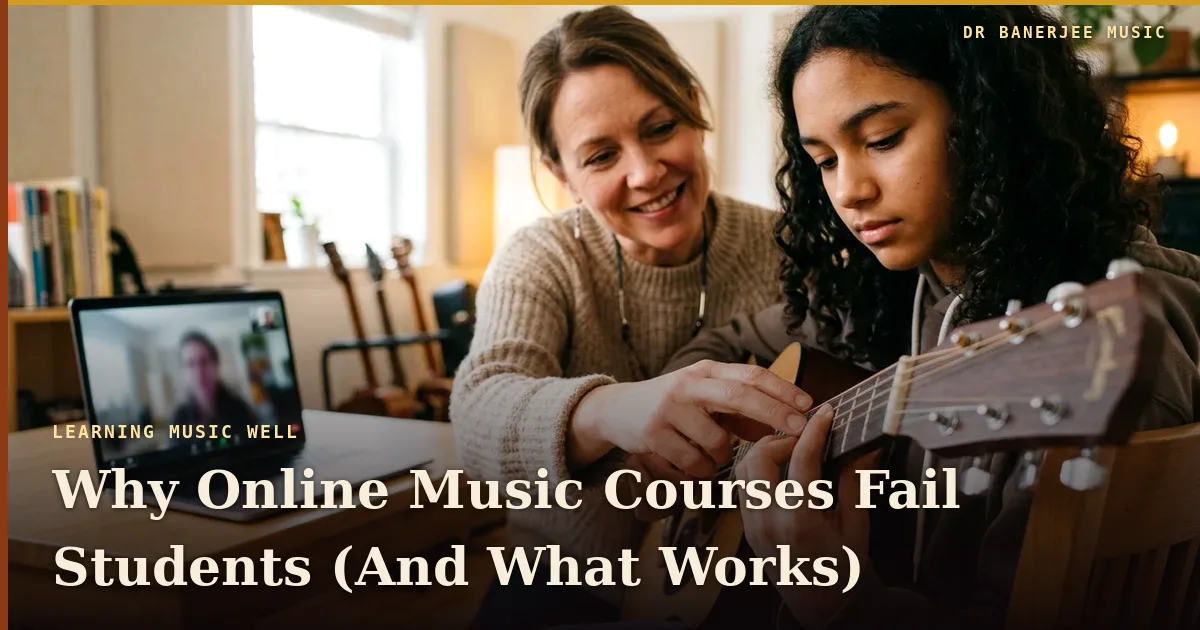
By 2026 most online music courses promise mastery through short videos, dashboards and instant certificates, yet genuine musicianship is rarer than ever. The pattern is familiar: students enrol with optimism and leave with confused technique and fractured understanding. This guide explains why that happens — content over craft, no real-time correction, and discipline that cannot be automated — and what real training must reclaim for students and parents who want depth, whether in Jalandhar or through online music classes worldwide.
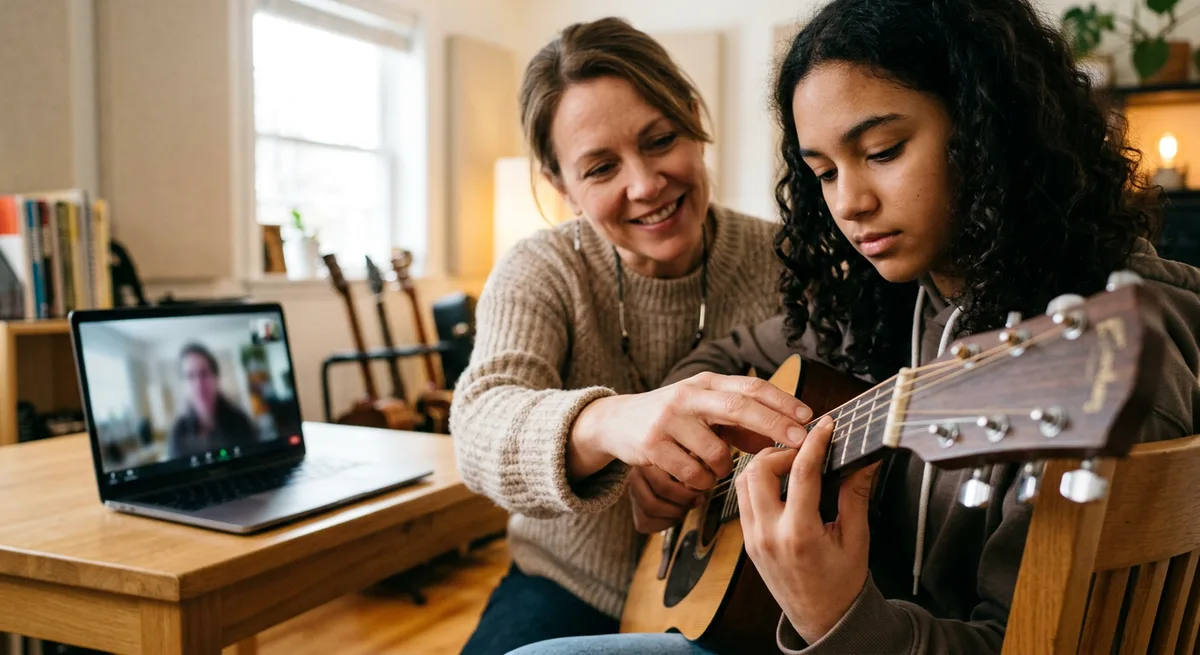
Save this guide: content delivers information; craft builds embodied skill through correction.
Why do most online music courses fail students?
The central problem is structural: most platforms optimise for scale, not musicianship. Music is not information to transfer; it is embodied knowledge built through listening, correction, repetition and cultural context.
Most courses turn music into bite-size content units. Scales become videos, rhythm becomes diagrams, and expression becomes optional. A student may watch ten lessons on raga or harmony and still be unable to sing in tune or feel time accurately. Knowledge without correction breeds illusion, not skill — a gap that grows when short videos are mistaken for a system and when pedagogy fragments across apps, as described in learning music in the age of distraction.
The promise of convenience is real — accessibility and affordability expanded after 2020 — but convenience without correction is not efficiency. It is the rapid distribution of unfinished learning. For a grounded sense of what effective study actually requires, see how long it really takes to learn music and Learn Music: Tradition, Technology and the Human Voice.
What happens when there is no real-time correction?
In traditional pedagogy — whether the Indian guru–shishya parampara or a Western conservatoire — progress depends on correction as it happens. An intonation error, a shallow breath, a rushing bandish or a tight wrist must be addressed in the moment, before it hardens into habit.
Most online courses replace that moment with self-assessment or automated feedback. Algorithms can tell you that you were flat; they cannot hear hesitation, tension, cultural nuance or emotional phrasing. When correction is absent, errors fossilise, and later lessons add new material on top of an unreliable foundation.
This is especially costly for Indian classical music, where why raga apps fail shows how precise pitch tracking remains vague about raga character. A teacher hears not only the note but the intention behind it. Short demonstrations of that human hearing are worth watching directly on the owner channel @drbnrj on YouTube — each player below loads only when you tap play:
More lessons are on the official channel at Dr Banerjee Music on YouTube — direct links if embeds do not load: Ae Ri Aali · Jaago Mohan Pyare. Notice in each how correction is verbal, immediate and specific — the opposite of a dashboard score.
How does the illusion of AI and automation make things worse?
Artificial intelligence can generate exercises, analyse pitch and even sketch a composition. What it cannot do is teach listening as a human act. Listening draws on memory, culture, expectation and emotional intelligence.
AI is a strong assistant, not a teacher. Used carelessly it encourages imitation without understanding and speed without reflection. The myth that now circulates — “play like a professional in seven days” — mistakes feedback for wisdom. AI accelerates feedback; only disciplined practice builds wisdom.
This myth also distorts practice itself. Practice is not repetition; it is directed effort. Students need guidance on how to practise, what to avoid, when to pause and when to stop. In 2026, unguided practice quickly becomes mechanical or abandoned. The fuller picture of AI’s proper place is explored in AI in Music Education: Revolution, Threat, or Mirage?, which places tools firmly in support of human judgement.
What does real musical training require in 2026?
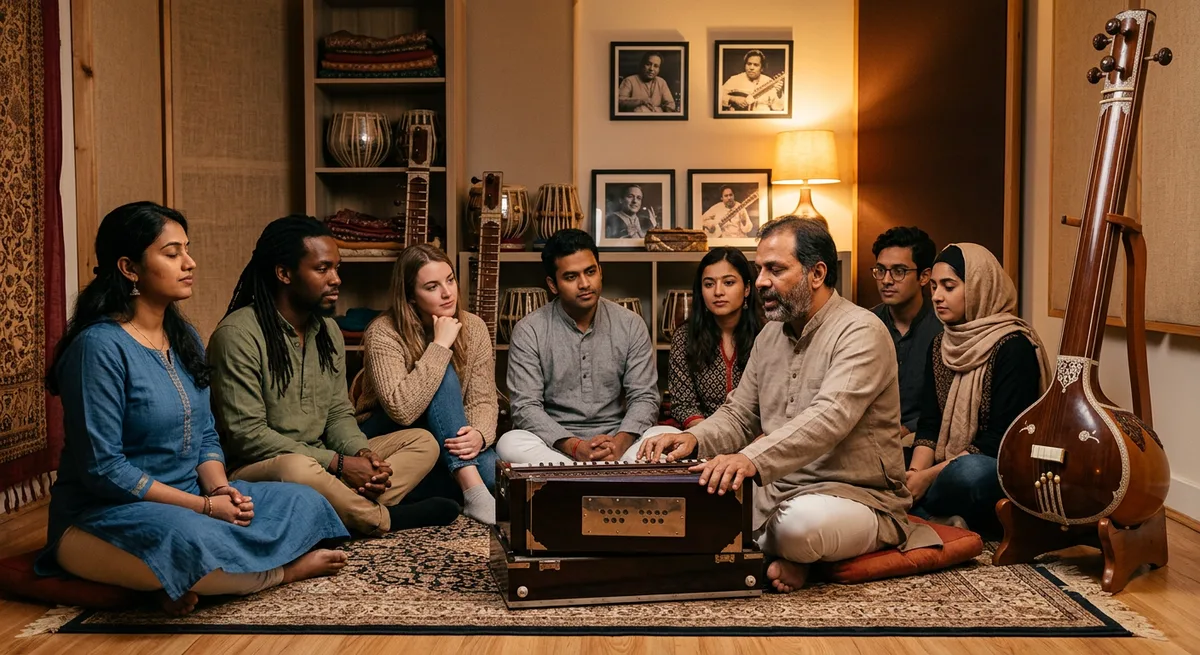
Real training is slow, continuous and human-led — technology supports, it does not lead.
1. Human-led, technology-supported learning
Technology should extend access, not replace authority. A teacher hears what software cannot: a held breath before a high Sa, a rhythmic push that signals tension, an emotional disconnect that needs reassurance rather than correction. Those subtleties define artistry. When you choose how to practise daily or set up your online learning space, put the lesson first and the app second.
2. Cultural and historical context
Music does not exist in isolation. Whether you study Indian classical, Western harmony or contemporary song, you need to know where the music comes from and why it exists. Raga, tala, harmony and form carry histories. Courses that strip that context produce technically competent but musically hollow players. For the vocabulary that makes context audible, see Indian classical for beginners.
3. Long-term mentorship over short-term certification
Certificates do not make musicians; years of guided listening and correction do. Real training values continuity, accepts slowness and prioritises depth over speed. In practical terms, this means a regular weekly lesson, deliberate assignments between lessons, and a teacher who tracks your sound over months — not a badge earned in a weekend.
Together these three pillars protect musicianship from marketing. In 2026 the serious choice is not which app to buy, but which mentorship to keep.
How should students and parents choose wisely?
Choose environments rooted in listening and correction, not in promises of acceleration.
- Ask who listens to you while you learn. If no one hears your take and replies specifically, the course cannot correct you.
- Prefer structured learning over content libraries. A clear path from fundamentals to repertoire, with practice instructions that say what to avoid, beats endless “new” videos.
- Protect practice as a disciplined ritual, not a streak. Short, focused, teacher-guided sessions each day outlast occasional marathons.
- Insist on personalised feedback. Group inspiration is valuable, but your technique needs an ear on your sound.
- Use technology as a support between lessons — tuners, recorders and analytics — while keeping the teacher as the authority inside the lesson. That hybrid balance is the only sustainable form of digital music education.
If you are weighing options, compare a week of dashboard-driven study with a week of human-led lessons on the same material. The second week will sound humbler at first — and far stronger a month later.
Frequently Asked Questions
Why do so many online music courses not lead to real progress?
Most courses are built for scale, not for correction. They deliver content well but cannot hear your breath, timing or intention in real time, so errors become habits. Progress returns when a teacher corrects you immediately and designs your practice around what was heard, not what was watched.
Are online music lessons effective for beginners?
Yes, when they are human-led and interactive. Beginners need live feedback on posture, pitch and rhythm from the first weeks. Pre-recorded libraries without that feedback teach knowledge, not skill. Live one-to-one or small-group lessons online work well when the teacher hears you every session.
Is AI feedback enough to replace a music teacher?
No. AI can track pitch and tempo between lessons, but it cannot judge phrasing, rasa, cultural context or when to withhold correction so you learn to self-hear. Use AI as a diagnostic between lessons and keep the teacher as the musical authority inside the lesson.
How should I practise between online lessons to avoid bad habits?
Practise short, slow and with a clear intention from your teacher. Record a brief take, listen without the app, note one thing to improve, and bring that question to the next lesson. Directed effort and rest beat long, unfocused repetition — and avoid streaks that reward quantity over quality.
What should parents look for before enrolling a child?
Look for a teacher who listens live each week, explains cultural context, sets deliberate practice tasks and tracks progress over months, not badges. Ask about lesson structure, correction method and how the teacher handles plateaus. Continuity and mentorship matter far more than certificates.
Questions about anything in this article? WhatsApp +91-62800-75157 or email drbnrj@gmail.com.