Indian Classical Music for Absolute Beginners

Doctorate in World Music, University of Oxford · teaching since 1992. More about the teacher.
How to start learning Indian classical music is a question with a plain answer: you begin with the voice, the swaras (notes) and steady riyaz (daily practice) — not with a rare raga, an expensive instrument or a waiting period of theory. Everything else in the tradition is built on those three, and a traditional sangeet teacher starts every student in exactly this place, whatever their age.
The path: alankars, then khayal, then bandish
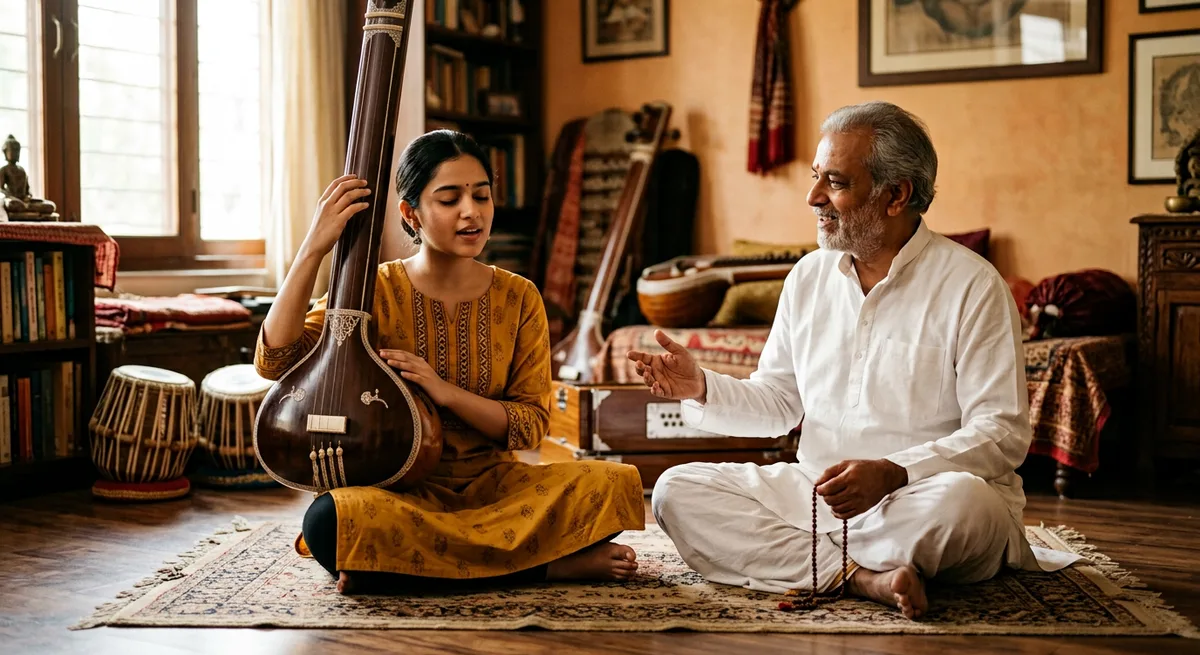
The studio's method is the traditional one, and its order is the whole point. First come paltas and alankars — simple patterns up and down the scale in one raga, sung until they are boring, which is to say until they are automatic. They build pitch, breath and steadiness, the three things everything later stands on. Then comes the slow discipline of Bada Khayal, the long, unhurried development of a raga where a student learns to dwell inside a note instead of passing through it. And then the bandish — the fixed composition — arrives as both a destination and a frame: something learned entirely, so that improvisation has a home to depart from and return to. Beginners sometimes ask where the interesting part starts; the honest answer is that the alankars are the interesting part, heard correctly.
A bandish lesson from the studio's channel — Raga Yaman, taught with sargam — tap to play, loads only on tap:
Direct link if embed does not load: Raga Yaman Bandish Vocal Lesson: 'Ae Ri Aali' | Learn Classical Singing with Sargam
Caring for the voice
The voice is the first instrument in this tradition, and it is the one you cannot restring. Plain care carries further than any technique: water through the day, no shouting across playgrounds or traffic, five minutes of gentle humming before singing and nothing at all when a cold has settled in the throat. A voice treated this way improves for decades; a voice pushed improves for weeks.
Building a raga-listening habit
Listening is half the training, and it is free. Pick one raga and stay with it for weeks — recordings by great artists, the same bandish heard in many voices. Listen the way the tradition teaches: not for entertainment but for detail, following one phrase at a time and noticing what returns. A student who has genuinely heard one raga for a month knows more of this music than a student who has skimmed forty.
The vocabulary you will hear
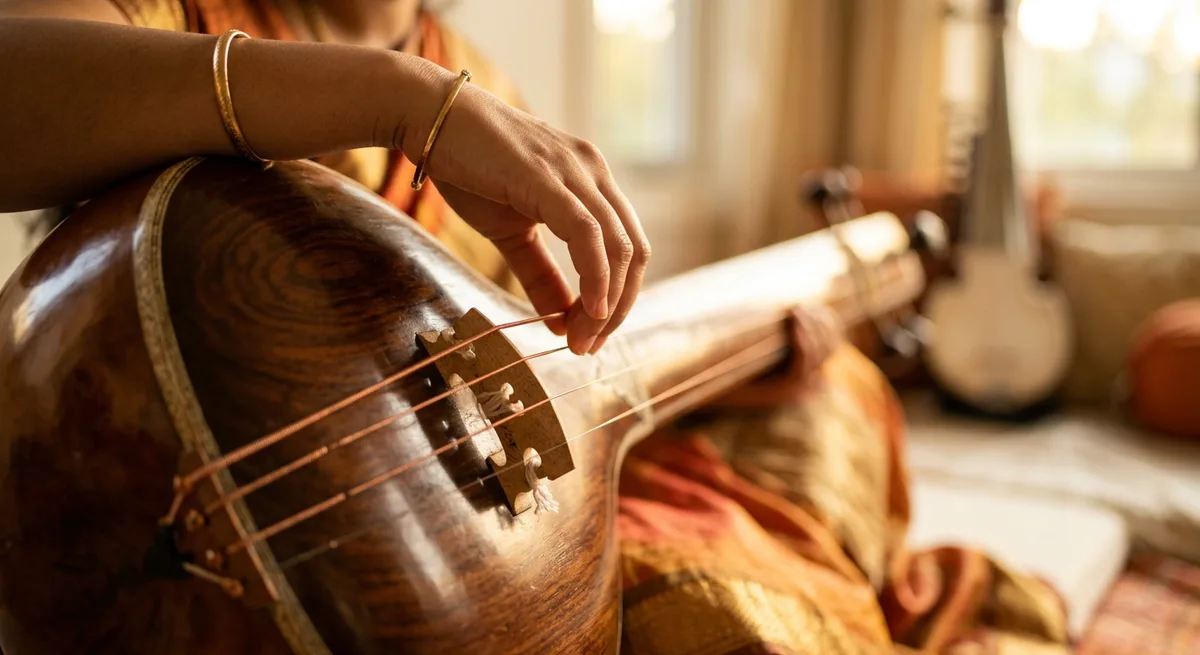
The words arrive faster than the ideas, so here is the short glossary: swaras (notes), alankars (practice patterns), riyaz (daily practice), raga (the melodic framework), tala (the rhythmic cycle), bandish (the fixed composition), khayal (the principal form of Hindustani vocal music) and tanpura (the drone instrument that frames all of it). None of it is exam material; it is simply what the room sounds like. The Indian classical music classes page describes how this path runs in the studio and online, singing classes carry the same training for the voice, and harmonium — taught alongside piano on the piano, keyboard and harmonium page — is the traditional companion for a classical student's own practice. For how the daily riyaz itself is sized, How Much Should You Practice Music Each Week? is the companion piece.
Frequently Asked Questions
Do I need a good voice to start Indian classical music?
No. Training builds the voice; it does not select one. A "good voice" in this tradition mostly means a steady, cared-for voice on pitch — and both steadiness and pitch respond to the alankar path within months. Starting is the only audition.
Can I learn Indian classical music on an instrument instead?
Yes — harmonium, flute, guitar and keyboard are all taught here as vehicles for the same material. The raga grammar and the rhythmic training are identical; only the technique of producing the note changes. Many students sing and play in parallel, which is the traditional arrangement.
Questions about anything in this article? WhatsApp +91-62800-75157 or email drbnrj@gmail.com.