Digital Piano vs Keyboard: Which to Buy First?

Doctorate in World Music, University of Oxford · teaching since 1992. More about the teacher.
Digital piano vs keyboard is the first gear decision in beginner piano lessons, and the honest answer is that the cheaper machine wins the first year: any decent 61-key keyboard is enough to start, and the 88-key digital piano can wait until playing turns serious. Prices below are prices at time of writing, Sep 2026.
The 60-second answer
Buy the keyboard first. A good 61-key instrument in the ₹8,000–13,000 band covers everything a first-year pianist is asked to do: reading, two-hand coordination, first chords, simple repertoire. An 88-key weighted digital piano — from about ₹38,000 — is the right purchase when grade material or classical repertoire begins, not before. The money saved buys a year of lessons, and lessons move a student further than key weight ever will.
Weighted, semi-weighted, and the feel of the thing
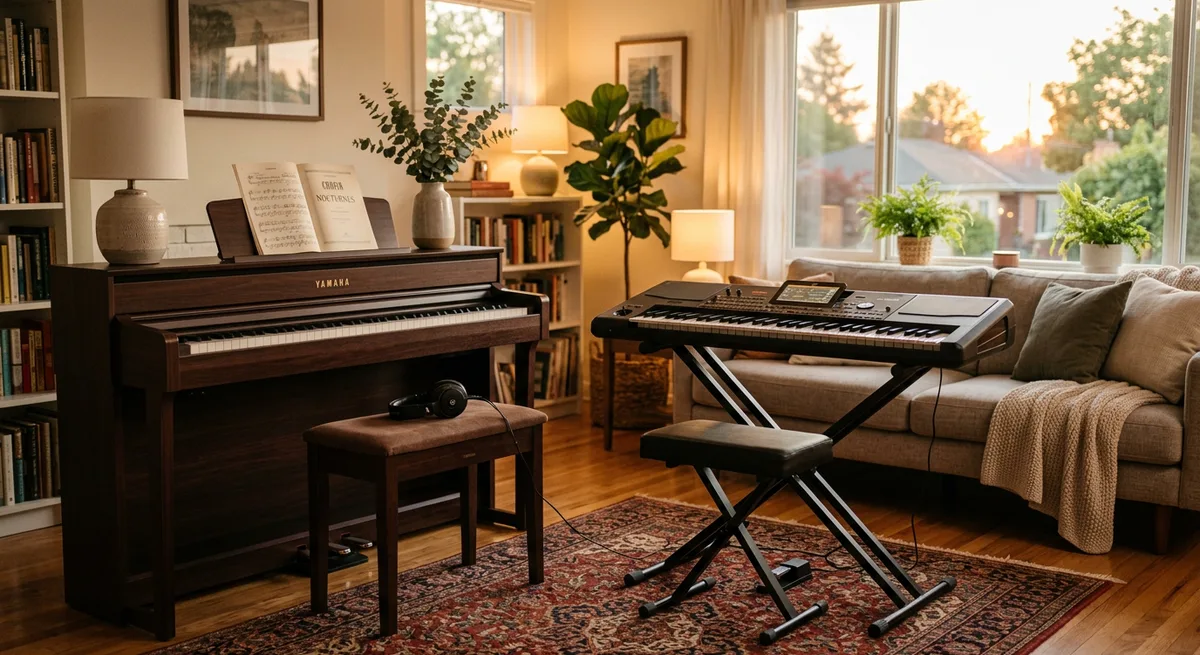
The difference is the action. A weighted digital piano tries to reproduce the resistance and retreat of an acoustic piano's hammer action, which is what finger strength and tone control are trained on. Semi-weighted keys, the norm on 61-key keyboards, are lighter and springier — completely fine for learning notes, chords and coordination, and only a limitation once sustained classical work begins. Unweighted toy keys are a third thing entirely, and no class asks for them.
The common fear — "will light keys ruin my technique?" — deserves a straight answer: a year of light keys builds reading, rhythm and coordination that transfer perfectly. What does not transfer is tone control at the advanced end, which is a problem for later, not for now.
Speakers, headphones and the neighbours
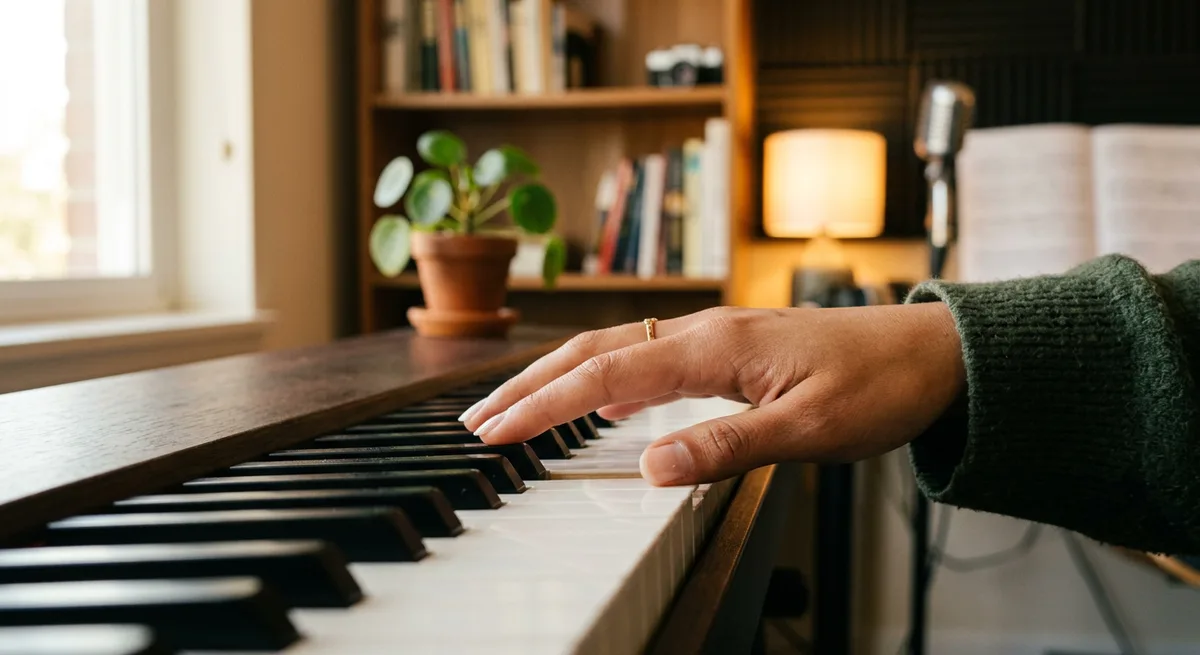
Keyboards carry small speakers that are made for a bedroom, not a hall — entirely serviceable at lesson volume. Digital pianos carry better amplification and better samples, but the more used socket on both is the headphone output. Silent playing at ten at night is half the point of an electronic instrument in an Indian household, and both classes of machine do it well.
The resale reality in India
First keyboards are the most traded instrument in the country: the next beginner's family is always looking for one, so the ₹8,000–13,000 machine is easy to pass on when the upgrade comes. Digital pianos hold their value longer but sell slower, because the pool of buyers is smaller. Buying the cheap year first means less money tied up while the student works out whether the piano is their instrument at all.
For what the full budgets look like at every tier, read Best MIDI Keyboard for Beginners (2026, India) — and the piano and keyboard classes page explains how lessons run in the studio and online worldwide.
Frequently Asked Questions
When should I upgrade to a digital piano?
Upgrade when the syllabus demands it — grade material, classical repertoire, sustained work on tone — not when the shop suggests it. For most students that is well into the second year or later, and a teacher will say so plainly at the right moment.
Is a 61-key keyboard bad for a young child?
No — it is genuinely the better start. Light keys suit small hands, the instrument is portable, and the sound is good enough for the music a beginner plays. A child who stays the course earns the 88-key machine; a child who does not has cost the family a keyboard, not a piano.
Questions about anything in this article? WhatsApp +91-62800-75157 or email drbnrj@gmail.com.