Best Beginner Guitars Under ₹10,000 in India (2026)


Doctorate in World Music, University of Oxford · teaching since 1992. More about the teacher.
Most beginners do not fail because of a lack of interest. They fail because their first instrument works against them. A poorly set-up guitar creates unnecessary finger pain, tuning instability, tonal inconsistency and, eventually, psychological discouragement. In the under-₹10,000 range the useful question is not "which guitar sounds best?" but "which instrument allows consistent, frictionless practice?" This guide answers that from a teacher's chair. All figures are approximate street prices at time of writing, Sep 2026, INR unless stated, and will drift over time.
The real problem with beginner guitar buying
Before looking at models, three realities must be understood. First, laminate construction is standard: almost every guitar in this range uses laminate wood, and claims of a "spruce top" rarely imply solid wood. Second, setup matters more than brand — a properly adjusted guitar around ₹8,000 will outperform a poorly set one at ₹10,000. Third, playability determines retention: neck comfort, string height (action) and tuning stability matter far more than tonal nuance for a learner. Choosing well here is really the first step of a practice habit, which is why it pairs with how to choose your first guitar.
What actually matters at this budget
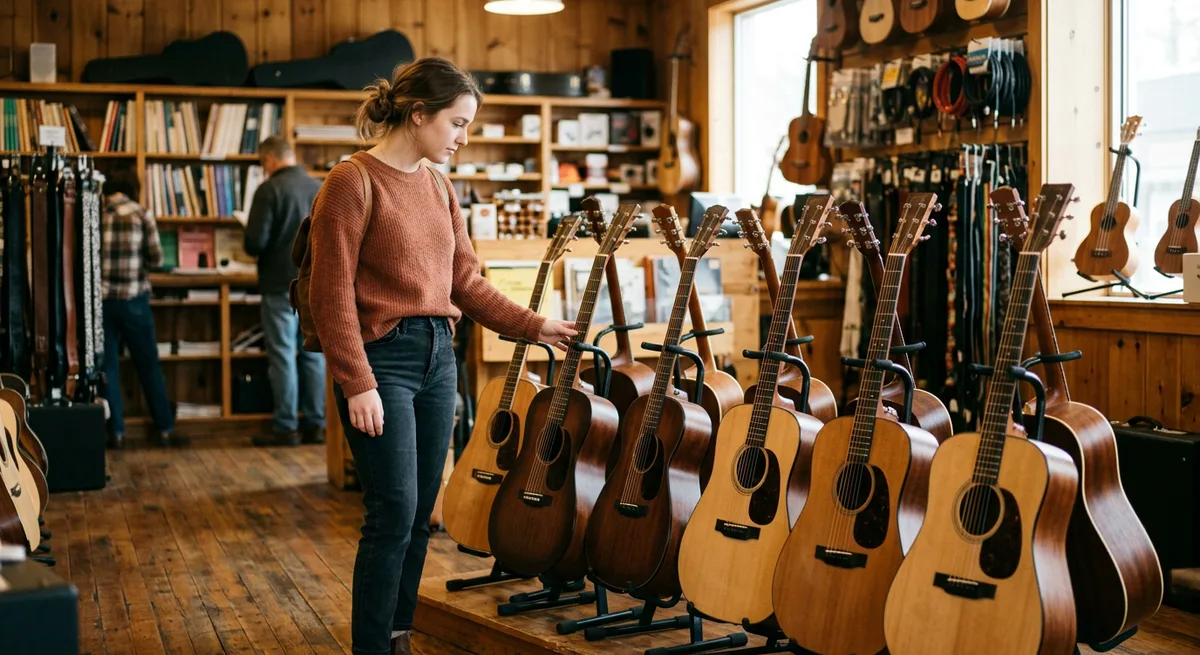
At this level your decision is not brand loyalty; it is functional priority. Look for a comfortable neck a beginner's hand can wrap around, a low and even action so fretting does not hurt, and hardware (tuners and nut) that holds pitch between sessions. Tone is secondary because almost everything here is laminate and will sound broadly similar once set up properly. A learner does not need a better guitar; a learner needs a better starting condition. Getting the daily habit right matters more than the badge on the headstock — a theme I return to in how to practise guitar daily.
Recommended beginner guitars
These are dependable options widely available in India for roughly ₹6,000 up to ₹10,000 and are grouped by what they do best rather than by price alone.
- Yamaha F280 (around ₹8,000–₹9,000): a consistent, durable full-size dreadnought with balanced tone and stable tuning — a safe default for learners planning long-term training.
- Yamaha FS80C (around ₹9,000): a smaller concert body that prioritises comfort over volume, ideal for younger students or smaller builds.
- Fender Squier SA-105 / SA-150C (around ₹8,000–₹10,000): a classic dreadnought with strong projection and a bright, familiar tone, good for strumming and accompaniment.
- Ibanez MD39C (around ₹8,000): engineered for ease of playing, with a slim neck and low action that reduce finger fatigue — kind to absolute beginners and fingerstyle learners.
- Kadence Slowhand Series (around ₹9,000–₹10,000): a value-oriented option with warmer tone and good bundled accessories.
- Cort AD810 (around ₹9,000): a structurally reliable dreadnought with strong projection; note the laminate construction despite "spruce top" wording.
- Hertz HZA 3800 (around ₹6,000): resilient and low-maintenance, widely used in Indian classrooms and by budget learners.
- Epiphone DR-100 (around ₹10,000): at the upper edge of the range, with a slim neck and a bright, punchy folk-and-rock character.
- Vault EA20 (around ₹6,000): the most accessible entry point, with an adjustable truss rod, for beginners starting at minimum budget.
For structural comparison: the best playability sits with the Ibanez MD39C and Epiphone DR-100; the best durability with the Yamaha F280, Cort AD810 and Hertz HZA 3800; the best budget entry with the Vault EA20; and the best ergonomic comfort with the Yamaha FS80C.
The most important advice, often ignored
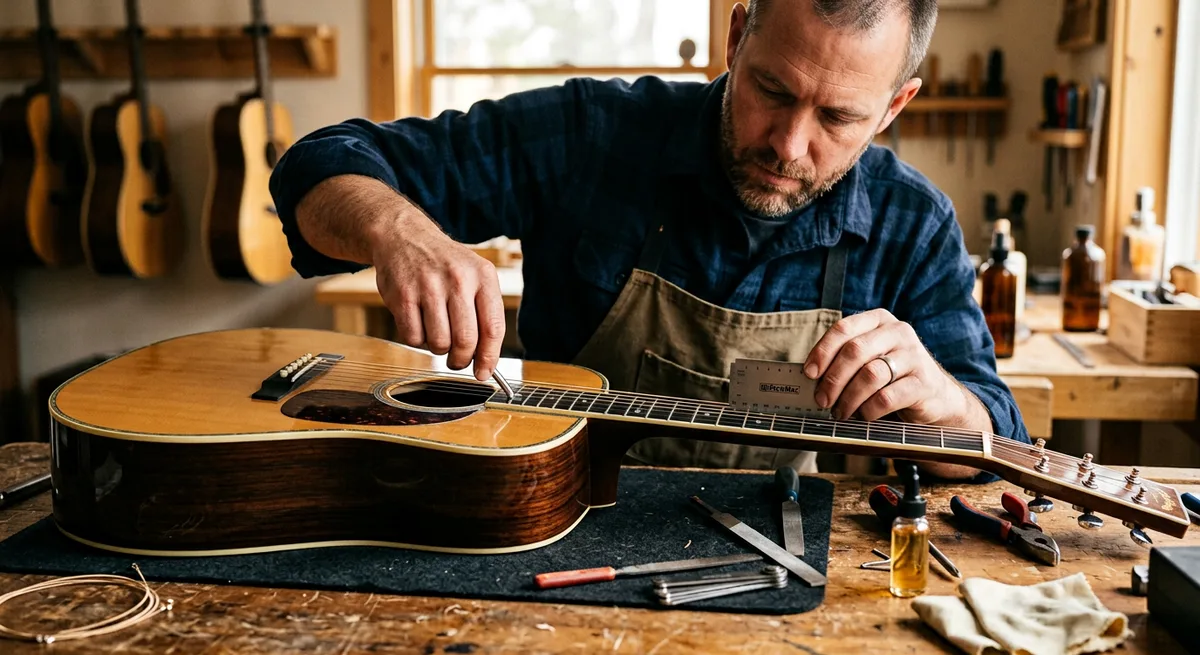
Before you begin learning, make sure the instrument is set up: check the string height (action), confirm tuning stability, and have the fret edges smoothed if required. The correct choice is not the most expensive option within budget, but the one that reduces friction, supports daily practice and remains stable over time. A beginner guitar is not a performance instrument; it is a learning tool. In music education the instrument is not separate from pedagogy — it is the first teacher, and if you are still deciding between formats, electric versus acoustic and other first choices is worth reading alongside this.
Frequently Asked Questions
Do I need to spend the full ₹10,000 on a first guitar?
No. Several dependable models sell from around ₹6,000 and a well-set-up guitar at ₹8,000 will serve a beginner better than a poorly adjusted one at ₹10,000. Spend on a proper setup and stable tuning rather than chasing the top of your budget for tone you will not yet use.
Is a branded guitar always better for beginners?
Not necessarily. At this budget almost everything is laminate, so build consistency and setup matter more than the badge. Trusted names like Yamaha, Cort and Ibanez offer reliable quality, but a carefully set-up lesser-known guitar with a comfortable neck and low action can be the better learning tool.
What should I check before buying a beginner guitar?
Check three things: the action (string height should be low enough to fret without pain), tuning stability (the guitar should hold pitch between sessions), and neck comfort for your hand. Smooth fret edges help too. A quick professional setup after purchase is the single best investment you can make.