How Long Does It Take to Learn Music? Practice, Lessons and Progress

Doctorate in World Music, University of Oxford · teaching since 1992. More about the teacher.
"How long does it take to learn music?" sounds reasonable, but it quietly assumes that music behaves like a finite skill — something you complete and move on from. In reality, music behaves more like language acquisition crossed with physical training and cultural literacy. You do not finish learning music; you stabilise certain capacities over time while others keep shifting for decades. This is a truthful timeline from beginner to professional — not a promise, but an honest map.
Why the question is usually asked the wrong way
The confusion begins when people mistake visible output for internal development. Someone who can play a recognisable tune looks accomplished, yet the foundations beneath that tune may be shallow. This is reinforced by modern attention habits, where urgency replaces learning discipline — the same erosion I describe in learning music in an age of distraction. The honest starting point is to separate what can be seen from what is actually being built.
The problem with the usual answer
"It depends" is comfortable precisely because it commits to nothing. It lets both teacher and student avoid the harder truth: that time in music is not measured by calendar duration but by compliance with a process. For any meaningful estimate, several conditions must hold — instructions followed exactly as given; focus, dedication and genuine surrender to the process; riyaz output that matches the expected musical result rather than mere effort; and every assigned practice repeated daily until explicitly stopped. If even one of these weakens, time does not expand slightly. It expands structurally.
What develops first: ear, body or mind?
Musical development does not happen in a straight line, and contrary to popular belief the fingers are rarely the first problem. The ear develops first — or fails to. If listening habits are shallow, everything built on top of them stays unstable, which is why many technically competent musicians struggle: they learned shapes before sound. The body follows next; muscle memory, coordination, breath control and timing live in the nervous system, not in theory books, so inconsistent practice produces plateaus that no amount of new material fixes. The mind comes last — musical thinking, anticipation, phrasing, proportion and restraint require accumulated listening and embodied experience, and you cannot intellectualise your way into it early. This mismatch is why people feel stuck despite years of effort.
Playing, learning and thinking musically are not the same
Playing music is executing instructions; learning music is absorbing patterns; thinking musically is making decisions in real time based on context, style and intent. Most learners stop at the first stage and assume progress has stalled, when in reality they have simply reached the ceiling of imitation. Advancement now requires internalisation, which feels slower because it is less visible — and this is where many quit. Different paths distort expectations in their own ways. Classical training builds patience, discipline and structural clarity but often delays creative confidence; film and media music creates the illusion of speed, forcing output at the cost of depth; contemporary and online learning creates the illusion of arrival, where posting replaces listening and consistency is confused with competence. Each path teaches something valuable and hides something dangerous, a tension I unpack further in why so many online music courses fail.
A truthful timeline (not a promise)
Progress in music is cumulative, not linear. Around one year, you are learning how to practise: your ear is waking up, your body is unreliable but improving, and confusion is normal and healthy — if nothing feels unclear, something is wrong. Around three years, you are functionally literate; you can follow structures, stay in time and reproduce styles with guidance, though you still depend heavily on reference and validation, and this is where many feel falsely intermediate. Around seven years, you begin to sound like yourself: mistakes reduce, not because you avoid them but because you hear them sooner, and stylistic choices become intentional rather than accidental — the earliest point at which artistry becomes possible. Around fifteen years and beyond, you develop judgement, you know what not to play, and you survive professionally in emotional, physical and economic terms. This is not mastery; it is stability. The session model below is how I measure that progress inside a class.
A session-based model of progress
Instead of years, measure sessions. Under ideal compliance, progression can be structured as a Foundation Level of about 108 sessions, a Beginner Level of about 216 sessions, and an Intermediate Level of a further 216 sessions. These figures are not arbitrary; they reflect cognitive absorption cycles, motor conditioning and the repetition thresholds required for musical internalisation. Progression is stage-based, not time-based — a distinction that also explains how much weekly practice actually moves the needle, which the weekly section below sets out. A student who attends consistently and completes each stage advances predictably; one who attends erratically does not, regardless of how many months pass.
The hidden variable: completion quality
Each session does not stand alone. For progression to remain valid, previous material must be completed to roughly 70–80% functional accuracy — not theoretical understanding, but applied execution. If that threshold is not met, the system compensates by adding sessions, not as punishment but because the learning unit remains incomplete. In other words, unfinished learning accumulates time debt. This is why consolidation matters more than coverage, and why rushing ahead quietly lengthens the whole journey. The same principle governs daily practice hours: quality of completion, not raw volume, decides progress.
Why most learners take longer
Most students unknowingly violate the model. They move forward without consolidation, they practise inconsistently, and they measure effort instead of outcome. This creates an illusion of learning while actually delaying structural progress — activity mistaken for advancement. Interestingly, major institutions such as Trinity, ABRSM and Berklee follow a similar underlying logic. They do not present it as session counts; instead they fix performance standards, enforce graded progression and ensure competency before advancement. The difference is only in presentation, not in principle. Chasing shortcuts through fragmented clips makes it worse, which is why I keep returning to why short-form tutorials cannot teach music.
How much to practise each week
How much you should practise music each week depends on your level, but the shape of the week matters more than its size: six focused sessions of twenty minutes beat one heroic two-hour sitting, every single time. Here is why, and what the amounts look like at each stage.
Why short and often wins
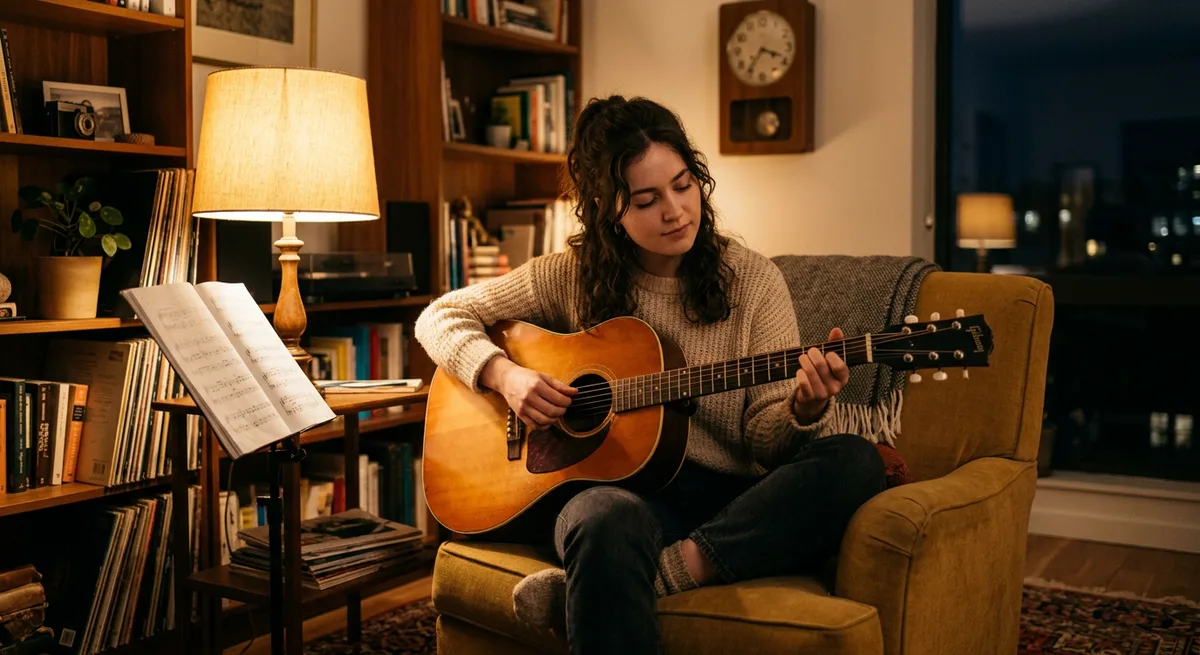
Playing an instrument is motor learning, and motor learning consolidates between sessions, not during them. Six small contacts with the instrument in a week give the hands six rounds of sleep-and-settle; one long session gives one, plus tired fingers that invent mistakes worth unlearning. Short sessions also protect the thing that actually decides the outcome — the willingness to sit down again tomorrow. A beginner who enjoys twenty minutes will still be playing in a year; a beginner grinding through two hours usually is not.
Practice time by level
| Where you are | Weekly shape |
|---|---|
| Beginner (first year) | 20–30 minutes daily |
| Student preparing for grades | 45–60 minutes daily |
| Adult hobbyist | 30 minutes, four times a week |
The table is a target, not a tribunal. A beginner doing honest fifteen-minute sessions six days a week is on the path; the same beginner doing nothing for six days and ninety minutes on Sunday is not, whatever the weekly total says.
The practice-log habit
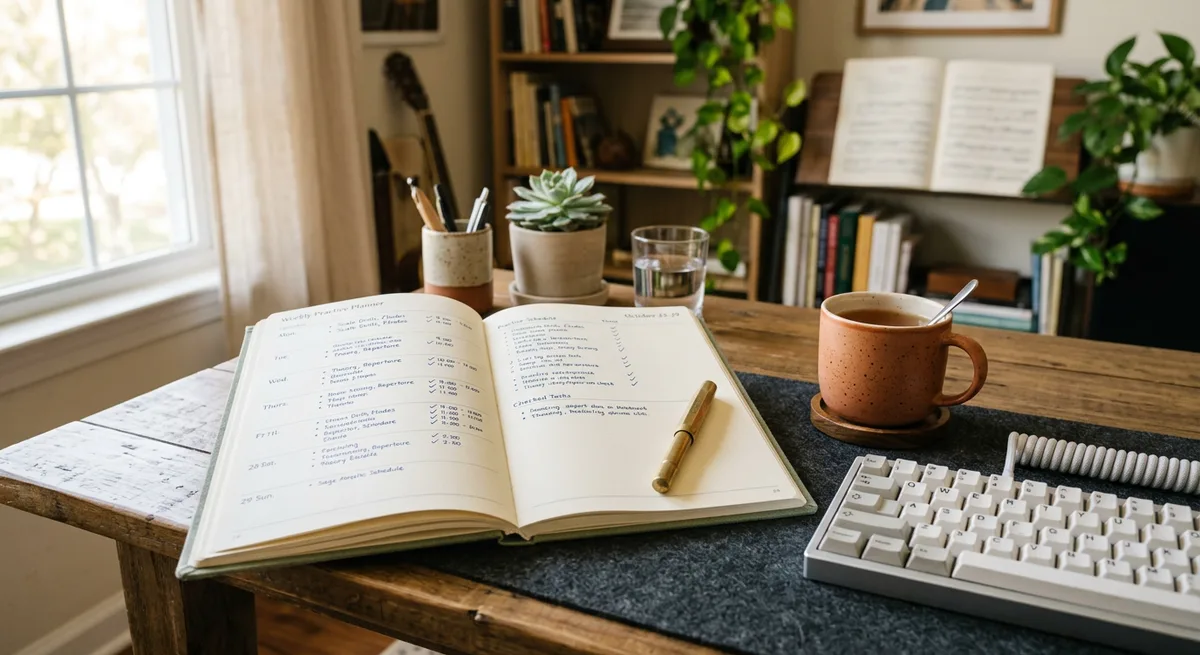
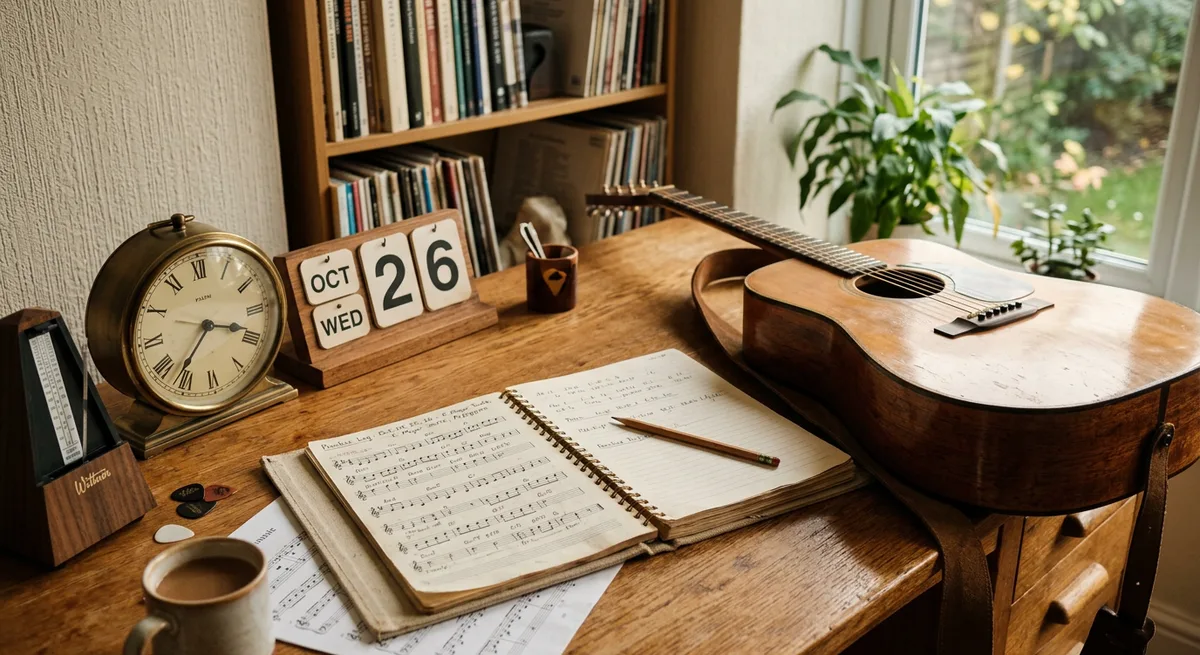
Write three lines after each session: what you played, what broke, what you will touch first tomorrow. The log turns practice from a feeling ("I think I am improving") into a record ("last month this passage broke at speed 60; today it holds at 84"). It also does something quieter: it makes skipping visible, which is the whole trick. A log with a gap in it asks a question a memory conveniently does not.
Lessons and practice: what a week looks like here
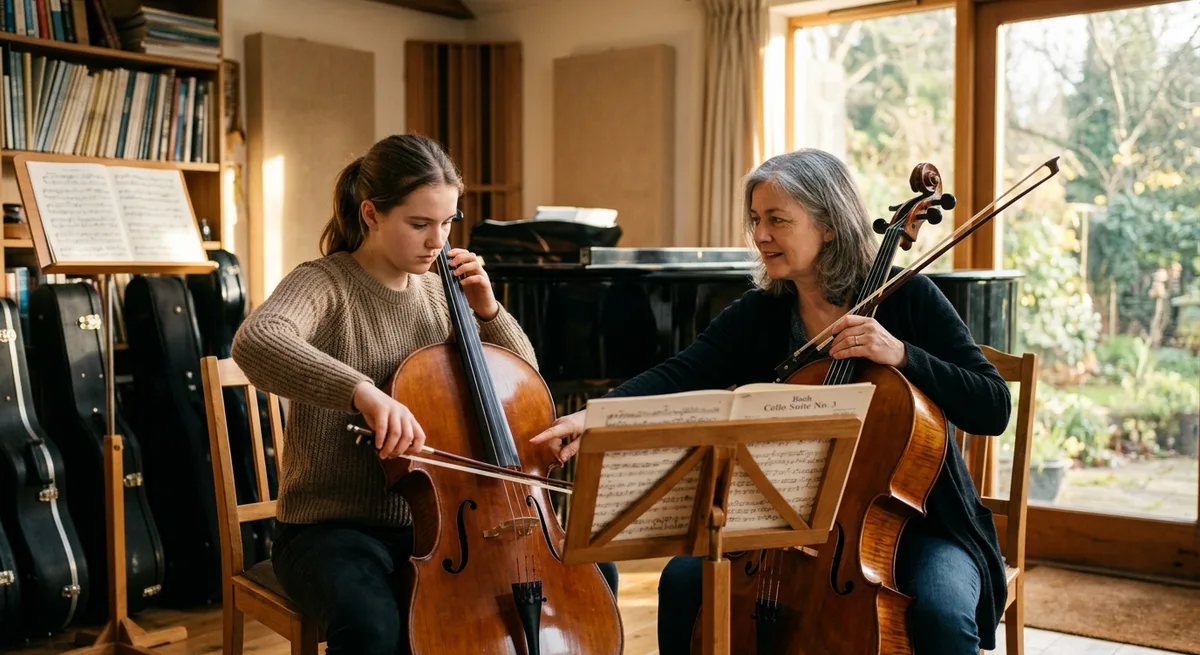
A lesson is where the work is set and checked; practice is where it settles. The completion threshold above is exactly what I listen for at the start of each class, and it decides whether we move on or consolidate.
At Dr Banerjee Music, one-to-one lessons run 45 to 60 minutes, and the eight-class plans are held twice a week — the rhythm the class pages state for singing, piano and keyboard and every other subject, in the studio or through online classes worldwide. Practice notes follow every class, so the between-lesson work is assigned, not guessed. Twice a week plus short daily practice is a complete week; the seven mistakes that undo beginners — irregular attendance first among them — are collected in 7 Beginner Mistakes at Music Classes (and Fixes).
Can you learn after 30, and is music a career?
Yes, you can learn music after thirty — with different constraints. Adults often learn faster cognitively but slower physically; what they gain in focus they must compensate for in patience, and the real challenge is not age but expectation management, because music does not reward urgency. As for whether music is a career: it is not a single career but an ecosystem of skills — performance, teaching, composing, producing, arranging, directing, editing and listening. Longevity depends less on talent and more on adaptability. The timeline never stops; it only changes emphasis. And the final, uncomfortable truth is simple: music is learnable, music is teachable, but music is not compressible. Anyone promising speed is selling hope, not craft — and that is precisely why this art still matters.
The real answer
So, how long does it take to learn music? A more accurate answer is that it takes a defined number of correctly executed sessions, not a number of months or years. Time becomes predictable only when practice is disciplined, instruction is followed precisely, and output matches expectation. Otherwise, time becomes indefinite. Music cannot be rushed, but it can be structured. The question is not "how much time will it take?" but "how correctly will you spend each session?" — because in the end, music does not reward time. It rewards correctness repeated over time.
Frequently Asked Questions
How many hours a day should I practise music?
There is no single magic number. What matters far more than raw hours is consistency and quality: focused, daily work that develops the ear, conditions the body and gradually trains musical thinking. Short, disciplined sessions repeated over years outperform occasional long ones, because progress in music is cumulative rather than linear.
How many sessions does it take to learn music?
Under disciplined, consistent practice, a workable model is roughly 108 sessions for the Foundation Level, 216 for Beginner and a further 216 for Intermediate. These reflect repetition and motor-conditioning thresholds, not arbitrary targets, and assume each stage is completed to functional accuracy before the next begins.
Why do some learners take much longer than others?
Because they move ahead without consolidating, practise inconsistently, and measure effort rather than outcome. When previous material is not completed to about 70–80% functional accuracy, extra sessions are needed to close the gap. This "time debt" from unfinished learning, not lack of talent, is the usual cause of delay.
Is it too late to learn music after 30?
No. Adults often learn faster cognitively, though the body conditions more slowly, so patience matters more than youth. The genuine obstacle is expectation management rather than age. With realistic timelines and consistent practice, learners who begin after thirty can reach a high, satisfying level of musicianship.
Why do I feel stuck even after years of practice?
Usually because you have reached the ceiling of imitation and progress has become internal and less visible, not because you have stopped improving. Development moves from ear to body to mind, and the later stages feel slower. Deeper listening and consolidation, rather than new material, tend to break the plateau.
Is it okay to miss a day of practice?
Yes, one day — even the professionals do. Two missed days in a row are where the slide starts, because the third day is easier to skip than the second. If the week collapses, restart with a ten-minute session rather than planning a heroic weekend.
Does it count if I just play songs I like?
Half yes. Song-playing keeps the instrument enjoyable, and enjoyment keeps the calendar full — but the technical work a class assigns is what makes the songs sound better next month. The honest mix is the assigned work first, songs as the reward.
Questions about anything in this article? WhatsApp +91-62800-75157 or email drbnrj@gmail.com.