Learning Music in the Age of Distraction

Doctorate in World Music, University of Oxford · teaching since 1992. More about the teacher.
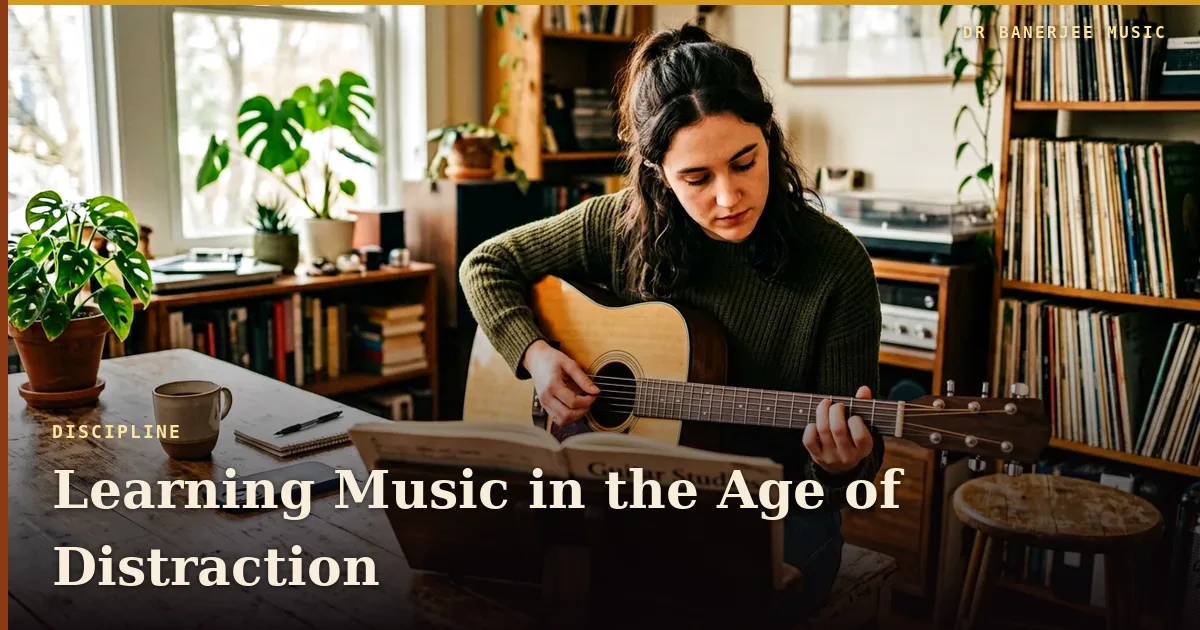
In 2026, learning music has never been more accessible—and never more fragmented. Tutorials are endless, apps are seductive, and inspiration is only a swipe away. Yet paradoxically, musical depth, discipline, and sustained growth are becoming rarer rather than more common. The central challenge facing today’s music student is no longer a lack of resources, but a lack of attention.
This article examines how distraction has reshaped the learning environment, what has genuinely changed in the last decade, and what serious musical training still demands from students in 2026—regardless of technology, genre, or ambition.
The Culture of Constant Interruption

Music study once unfolded in long, uninterrupted stretches of listening, repetition, and reflection. Today, learning is routinely broken into fragments: short videos, bite-sized tips, algorithmically curated “hacks,” and rapid consumption disguised as progress.
This culture of interruption trains students to recognise information without internalising it. Watching replaces practising. Saving replaces revisiting. Exposure masquerades as experience. Over time, attention itself becomes the weakest muscle in a musician’s body.
Unlimited resources often create fragmented learning rather than depth.
Why Distraction Hits Music Harder Than Other Skills
Music Is Embodied Knowledge
Unlike purely intellectual disciplines, music is learned through the body—through breath, muscle memory, micro-timing, and listening under pressure. These cannot be downloaded or skimmed. They require duration, stillness, and repetition.
A distracted learner may understand theory, own the tools, and even sound competent briefly, yet remain unstable in performance. This gap between knowing about music and being able to do music is where most modern students quietly stall.
Feedback Requires Silence
Real musical feedback emerges in silence—between notes, between repetitions, between attempts. Constant audio, visual, or social input prevents this feedback loop from forming. Without silence, the student cannot hear themselves clearly, nor recognise what needs correction.
Technology: Amplifier, Not Substitute
Technology is not the enemy. Recording tools, notation software, metronomes, and learning platforms are powerful accelerators when used with intention. However, tools amplify existing habits—they do not replace discipline.
A focused student uses technology to refine listening and measure progress. A distracted student uses the same tools to postpone effort. The difference lies not in the platform, but in the posture of attention brought to it.
What Learning Music in 2026 Actually Demands
Sustained Attention
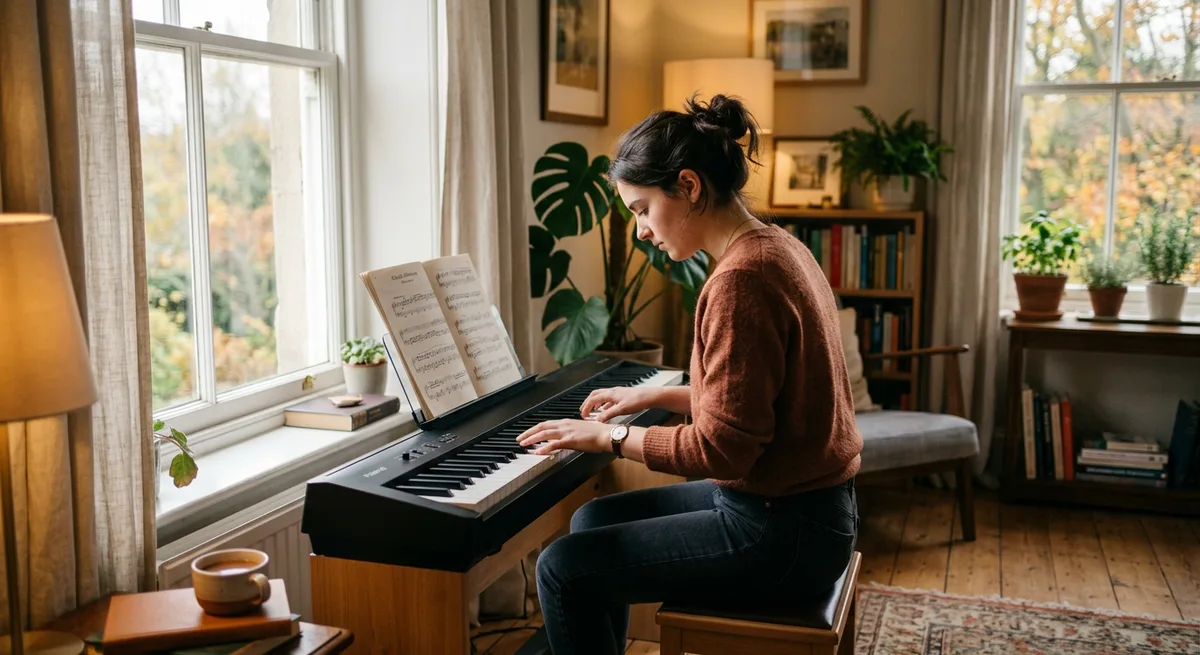
Progress requires time spent with discomfort: slow tempos, repetitive exercises, and unresolved mistakes. This is not glamorous, but it is irreplaceable.
Boredom Tolerance
Every serious musician learns to work through boredom. Mastery begins where novelty ends.
Listening Before Expression
In an era obsessed with self-expression, listening has quietly eroded. Yet musicianship begins with listening—to pitch, rhythm, silence, and tradition—before personal style can mean anything at all.
Progress is built through repetition, patience, and silence.
A Quiet Responsibility Shift
The responsibility for meaningful progress in 2026 rests increasingly with the student. Teachers can guide, structure, and correct—but they cannot manufacture attention. No course, platform, or technology can compensate for a divided mind.
Learning music today requires a conscious resistance to distraction and a deliberate commitment to depth. Those who cultivate this will thrive quietly. Those who do not will remain endlessly busy, and strangely unfulfilled.
Conclusion
The future of music education will not be decided by artificial intelligence, new platforms, or faster content. It will be decided by whether students are willing to reclaim their attention.
In the age of distraction, focus has become the rarest and most valuable musical skill of all.
Related study
More from the discipline series on this site:
- The classes overview on the home page
- How Long Does It Take to Learn Music? Practice, Lessons and Progress
Frequently Asked Questions
Why does distraction hurt music more than other study?
Because music is embodied knowledge: it lives in the hands, the breath and the ear, not on a page. And its feedback loop needs silence — the student must hear their own sound to correct it, which is exactly what a fragmented attention never provides.
Is technology the enemy of music learning?
No — the essay's position is amplifier, not substitute. Used deliberately, tools extend practice; used reactively, they replace the long unbroken stretches in which technique and listening are actually built. The stance is about how, not whether.
What does learning music demand now?
Three things the essay names plainly: sustained attention, boredom tolerance, and listening before expression. They are trainable, they are unglamorous, and no app or shortcut currently builds them for you.
Questions about this lesson? WhatsApp 62800-75157 or drbnrj@gmail.com.