Generative AI and the Collapse of Musical Authorship

Doctorate in World Music, University of Oxford · teaching since 1992. More about the teacher.
Generative artificial intelligence has entered music production with remarkable speed, but copyright law has not followed. Copyright doctrine was built on the assumption that creative works originate in demonstrable human intellectual labour; it now confronts outputs produced through probabilistic systems trained on vast musical corpora. This article examines one central consequence of that collision: the erosion of authorship itself as a protectable human attribute. For musicians, composers and educators, the question is no longer whether AI can assist creation, but whether meaningful authorship can still be legally recognised once it does.
Why copyright assumes a human author
Modern copyright regimes are explicitly human-centred. In the United States, protection attaches only to works that embody "the fruits of intellectual labour founded in the creative powers of the mind," a principle the Copyright Office has reiterated repeatedly, and similar assumptions underpin European doctrine even where regulation diverges. This framework evolved to exclude mechanical reproduction, drawing a clear line between human agency and automated execution. That distinction held for centuries because tools — notation, recording, even the digital audio workstation — remained subordinate to deliberate human decisions. Generative AI disrupts the hierarchy: trained on enormous datasets, such systems do not execute predefined musical intentions. They infer statistical likelihoods across pitch, rhythm, harmony, timbre and form, producing outputs that resemble authored music without originating in sustained human musical thought. Copyright does not protect resemblance or competence. It protects authorship.
How authorship gets relocated into the machine
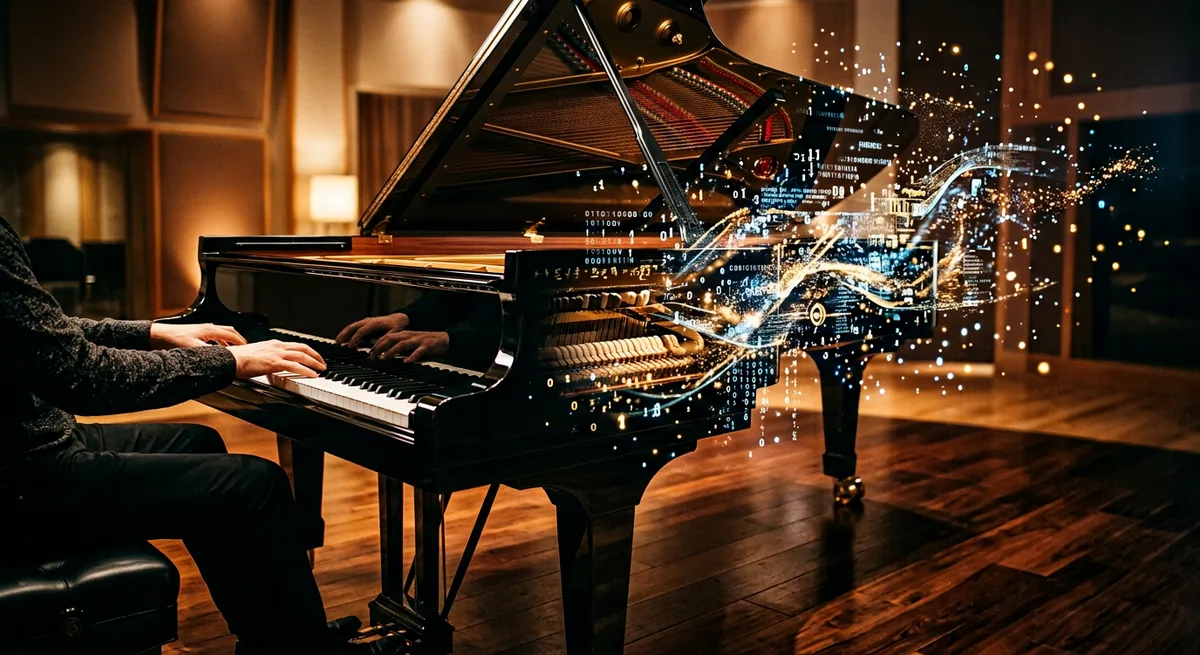
Generative AI erodes authorship by moving creative decision-making away from the human mind and into algorithmic inference. When a musician prompts a system to generate music "in the style of" a raga, a jazz idiom or a known artist, the system does not realise an internally conceived idea. It selects from probabilities derived from training data, assembling material by statistical confidence rather than intentional judgement. Legal doctrine responds by denying full protection to purely AI-generated material: prompts are treated as high-level instructions, not evidence of creative control over notes, rhythm, orchestration or structure. Protection can attach only where human authorship is demonstrable — lyrics written by hand, melodies conceived independently, vocals performed by the artist. The remainder falls outside ownership, so hybrid works become legally fractured objects: partly protected, partly public-domain, and structurally vulnerable to replication. This is the same displacement of human judgement I have described in AI music education as revolution or mirage.
Why the "AI learns like a student" defence fails
A common defence equates AI training with human learning: just as a student absorbs musical grammar by listening, the model learns without copying expression. The analogy collapses under scrutiny. Human learning is constrained by time, memory, cultural transmission and ethical norms; a student forgets, misremembers and transforms material through lived practice, and does not scale infinitely or reproduce stylistic artefacts on demand. Generative systems ingest material en masse — sometimes unlicensed — and retain it with mathematical fidelity, reproducing distinctive sonic markers, vocal inflections and production artefacts with industrial consistency. Borrowed concepts such as "intermediate copying" from software reverse-engineering struggle when the outputs compete directly in the cultural marketplace. That legislators now reach for publicity rights to protect voice and likeness implicitly concedes that authorship doctrine no longer covers the terrain. The erosion is not accidental; it is structural.
What practising musicians and teachers should do
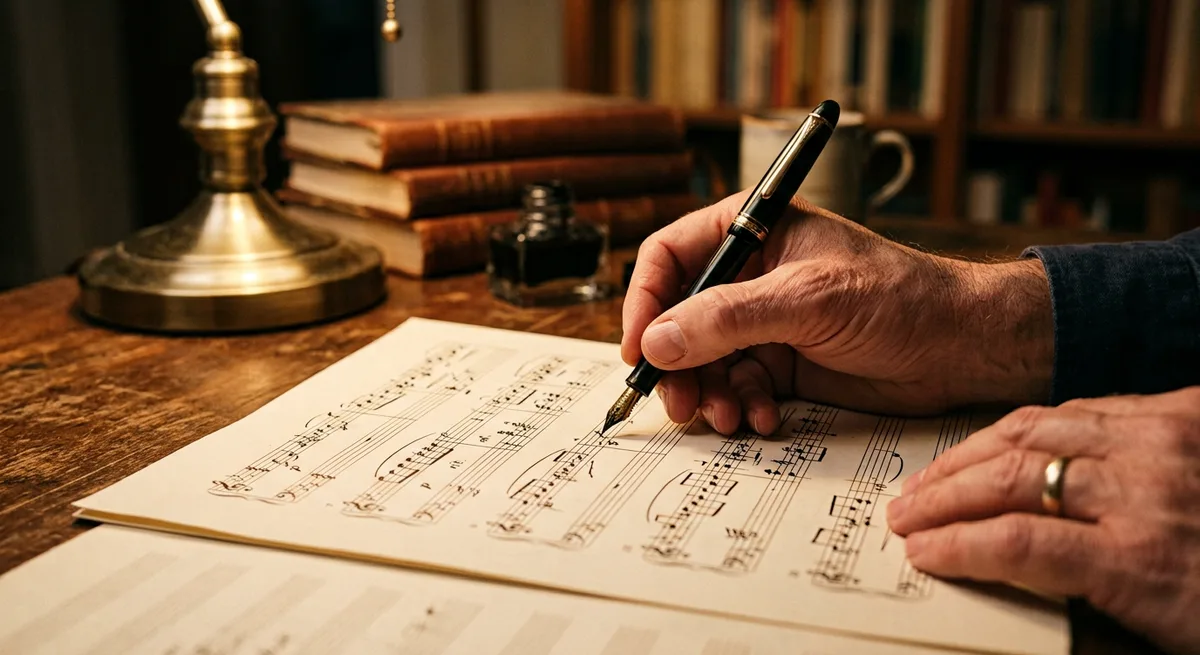
For practitioners the lesson is sobering. AI can support ideation, exploration or refinement, but it cannot carry authorship. Core musical decisions — melodic conception, rhythmic architecture, contrapuntal thinking — must be executed through human practice before any algorithmic intervention if legal protection is to remain plausible. Where AI tools are used, document the process: sketches, notated drafts, recordings of live improvisation and clear timelines of human contribution. This does not guarantee enforceability, but it strengthens the evidentiary basis for authorship. In teaching, the implication is equally clear. Instructing students to "prompt well" is not musical training; musicianship still resides in the disciplined shaping of thought over time, which is exactly why real learning takes real time and cannot be delegated to opaque systems whose outputs cannot be owned.
The wider stake for living traditions
If authorship keeps eroding without structural adaptation — transparent licensing, revised thresholds for human contribution, enforceable limits on training data — the economic foundation of independent musicianship weakens. Traditions dependent on long apprenticeship, such as Hindustani raga or regional folk systems, are particularly exposed: when derivative systems can ingest, replicate and monetise stylistic grammar without obligation, the incentive to sustain living traditions diminishes. Ethically trained or fully licensed models may mitigate this, but only if creators demand transparency and refuse to conflate technical novelty with creative legitimacy. The same appetite for outcome over process shows up wherever people expect mastery without the work, a theme I return to in why short-form tutorials cannot teach music. The central question is not whether machines can produce music, but whether music can remain a domain of authored knowledge once human labour becomes optional, invisible or legally irrelevant.
Frequently Asked Questions
Can I copyright music made with generative AI?
Only partly. Courts and copyright offices generally protect the elements you demonstrably authored — hand-written lyrics, independently conceived melodies, your own recorded vocals. Purely AI-generated accompaniment or arrangement typically falls outside ownership, leaving hybrid tracks legally fractured and easier for others to replicate.
Is prompting an AI the same as composing?
No. A prompt is treated in law as a high-level instruction, not as creative control over notes, rhythm, orchestration or structure. The system selects from statistical probabilities rather than realising a human musical idea, so prompting is not recognised as authorship in the way composing is.
How can musicians protect their authorship when using AI?
Keep human decision-making central and document it. Sketch, notate and record your own drafts and improvisations, and keep dated timelines of your contribution. Make core musical choices before any AI step. This does not guarantee enforceability, but it strengthens your evidentiary claim to authorship.