The ideas behind the sound — nada, the beginningless, and what the old texts ask of a working musician today, written for players. Book your free demo class.
Music, attention and the questions around listening
The essays in this collection ask what happens around music as well as inside it. Sound, time, authorship and public life are not separate from the way people listen, but they cannot all be reduced to a lesson exercise. This is a place for longer arguments: why an idea deserves attention, what a familiar label leaves out, and how an assumption changes what a listener hears. Read the articles as essays with a point of view rather than as a checklist of agreed answers.
The collection contains writing on beginningless sound, the turn of the year, musical authorship and Republic Day. Those are different starting points. Their connection is a willingness to slow down and examine an inherited description instead of repeating it. A reader interested in music-making may begin with authorship; someone interested in listening may begin with time or sound. There is no requirement to accept every argument in order to find a useful question in one of them.
These pages also sit beside practical writing about learning. That does not make philosophy a prerequisite for booking lessons. It means that a question about attention can illuminate a practice habit, while a concrete experience of listening can make an abstract argument easier to examine. Follow the link that matches your interest and keep the distinction between an essay, a study guide and a service description in view.
Four essays, four different starting points
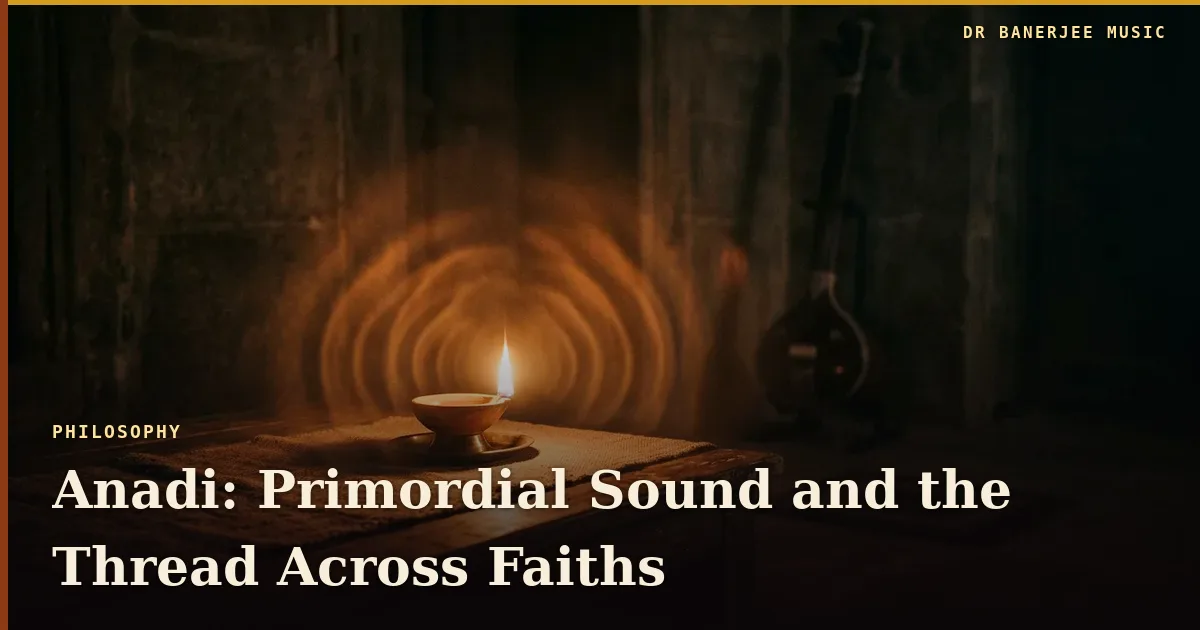
Anadi: beginningless sound is the sound-centred entrance to this collection. Approach it as an extended reflection, not a glossary entry that can be replaced by a one-line definition. Notice how a discussion changes when the subject is sound itself rather than a named song or a particular instrument. A useful question to carry through the essay is what the language allows you to hear differently, and where the language remains an interpretation rather than a performance.
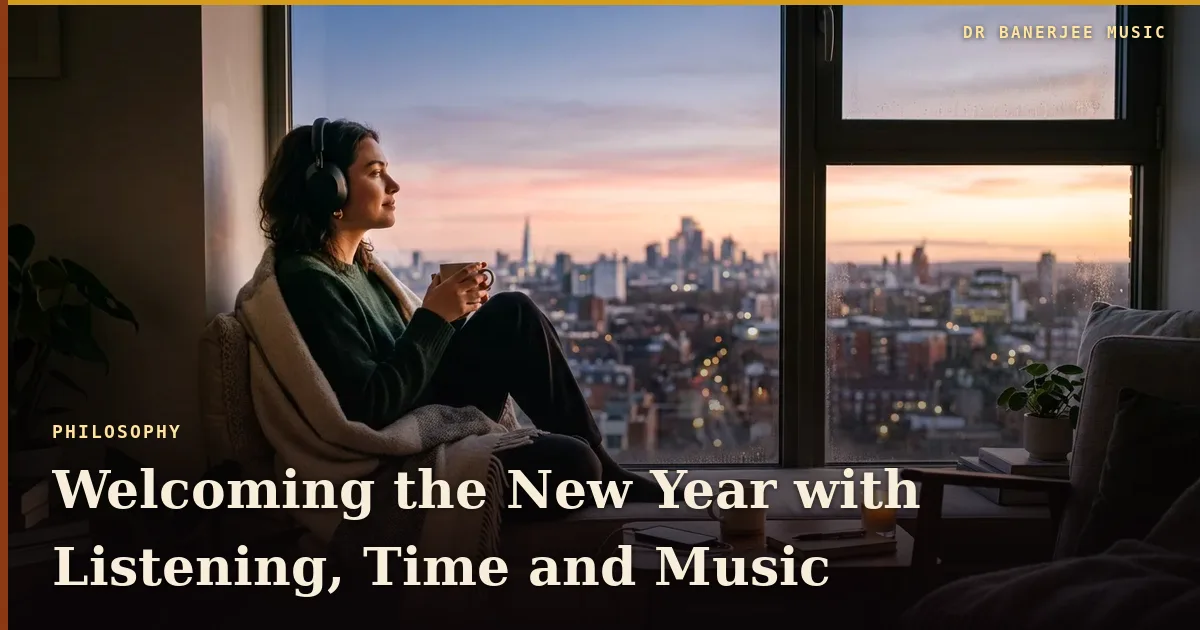
New Year, listening, time and music places listening beside the way time is marked. It offers a different pace from a tutorial whose purpose is to deliver an immediate result. Read a passage, stop, and consider the connection it makes before moving to the next claim. The point of including this essay here is not to turn a date on a calendar into a practice rule, but to make room for the relationship between time and attention.
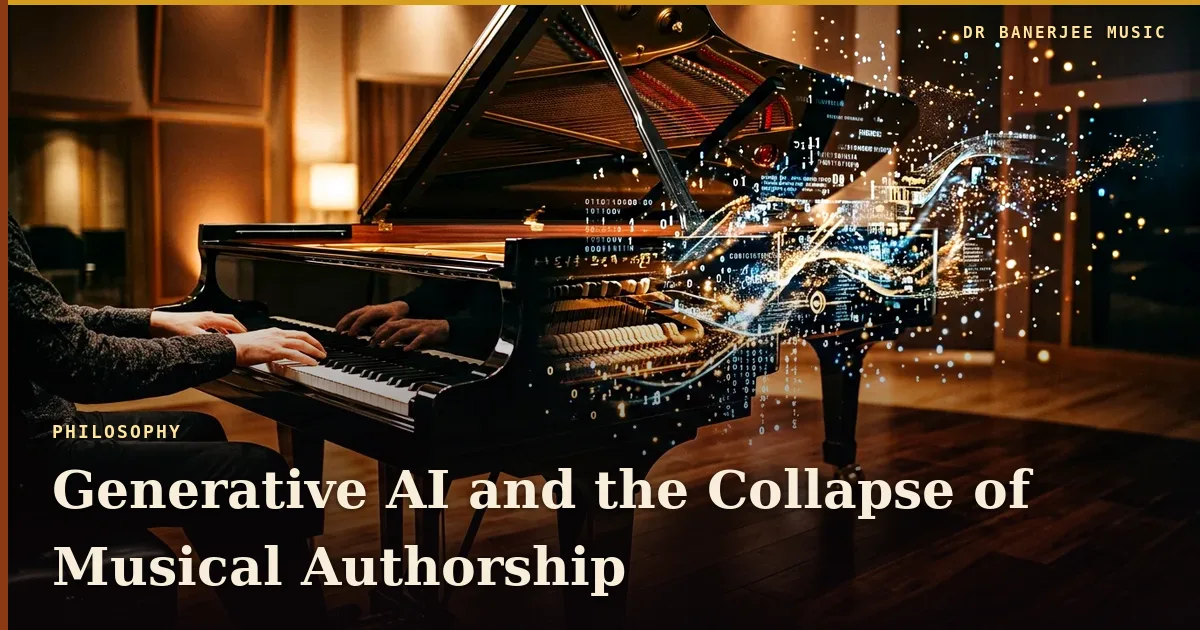
Generative AI and musical authorship addresses the language of originality and authorship. Keep the question of who or what produces material separate from the question of how a student learns. They can affect one another, but they are not the same argument. The article belongs beside the site's technology writing because a discussion of tools becomes incomplete if it never asks what is being attributed to the tool, the musician or the listener.
Why Republic Day needs rethinking takes the collection beyond a narrowly instrumental subject. Its presence does not make a political position a condition of studying music here. It is an essay to read and evaluate on its own terms. Identify the question being asked, follow the reasons offered, and distinguish disagreement with a conclusion from misunderstanding the argument that led to it.
Where the learning essays meet these questions
For a practical counterpart to the question of attention, read learning music in an age of distraction. It brings the discussion back to what happens when a learner tries to sustain work over time. The connection is not that every difficulty in practice has a philosophical answer. It is that the conditions under which we listen matter to both a long essay and a repeated musical phrase.
Short-form tutorials cannot teach music considers the limits of fragments, while learning music through tradition, technology and the human voice offers a broader educational discussion. Use those articles to separate the convenience of finding information from the slower task of making it part of your own work. A short explanation may introduce an idea without supplying the practice or response needed to use it.
Reading without turning every essay into advice
Not every paragraph here should become a personal rule. Some writing explains a method; other writing tests a concept or argues for a different way of seeing something familiar. Ask which kind of claim you are reading before deciding what to do with it. That distinction makes the collection more useful than a list of motivational quotations removed from their context.
If an essay raises a practical question about studying, the music-theory collection and Indian classical collection offer more subject-specific routes. Keep one question from your reading and follow the relevant thread. There is no need to read the whole archive before listening closely to a piece of music or returning to the exercise already on your stand.
Anadi: the sound before sound, and the thread it runs through every faith.
Anadi, the beginningless, traced from the Nasadiya Sukta through Nada Brahman, Ik Onkar and the Word: what primordial sound asks of a practising musician.
Generative AI writes music faster than copyright law can adapt. Here is how authorship itself erodes — and what musicians and educators should do to protect it.
A New Year reflection for musicians: how music teaches that time does not reset at midnight, and why disciplined listening is the skill that matters most.
Book your free demo class on WhatsApp, call +91-62800-75157, or email drbnrj@gmail.com. Physical classes begin after one studio visit; online plans start with the free 15–30-minute demo class, where days, timings, syllabus and progression are agreed.
Add this website to your phone or computer and it opens like an app, loading current lessons, fees and articles when connected. Recently visited pages may be available offline. There is nothing to download from an app store and no separate app to update.
How to add it to your home screen
Android (Chrome): open the ⋮ menu and tap Install app or Add to Home screen.
iPhone and iPad (Safari): open this site in Safari, tap Share (or the browser menu, then Share), choose Add to Home Screen, keep Open as Web App enabled if shown, then tap Add.
Computer (Chrome or Edge): use the install icon in the address bar when offered, or the browser menu’s install option. Availability depends on your browser and device.
In an in-app browser, open this page in Safari or Chrome first. Installation is optional; all lessons and articles also work in your browser. Offline copies may be older, and video, maps and messages need an internet connection.