How music is actually learned: practice routines, plateaus, first instruments and the habits that keep a beginner playing daily. Book your free demo class.
Find the obstacle before choosing more advice
The articles in this collection address different stages of learning: choosing lessons, creating a workable setup, sustaining attention and deciding whether practice is producing progress. I would not read them as a list of rules to adopt all at once. Start with the problem that currently prevents you from making music, then choose the article that gives you a task you can actually try.
For a complete beginner, the first decision is usually a manageable goal and a suitable instrument or vocal range. For someone already taking lessons, it may be a practice routine that survives an ordinary working week. For a returning learner, old habits can be more important than missing information. More videos do not necessarily help any of those situations unless their advice is connected to feedback.
Check understanding through a small transfer
After learning a pattern, try it in a second context: a different starting note, another pair of chords or a phrase you have not memorised. This is not a surprise examination. It tells you whether you learned the musical relationship or only the sequence of movements in one demonstration.
If the transfer fails, return to a smaller distinction. Can you hear the pulse? Can you name where the change happens? Can you reproduce the movement without looking at the model? Each answer points to a different exercise. I prefer that diagnosis to telling a learner simply to work harder.
Read, try, then bring back a question
One useful idea tested for a week is worth more than a long collection of saved advice. Keep the experiment small enough to compare attempts and note what happened without exaggerating it. A difficult day does not prove that a method has failed; a single easy day does not prove mastery.
For specific routines, move to music practice. To understand what a first conversation with me covers, read the free demo guide. The longer articles below provide the reasoning and examples behind individual learning decisions.
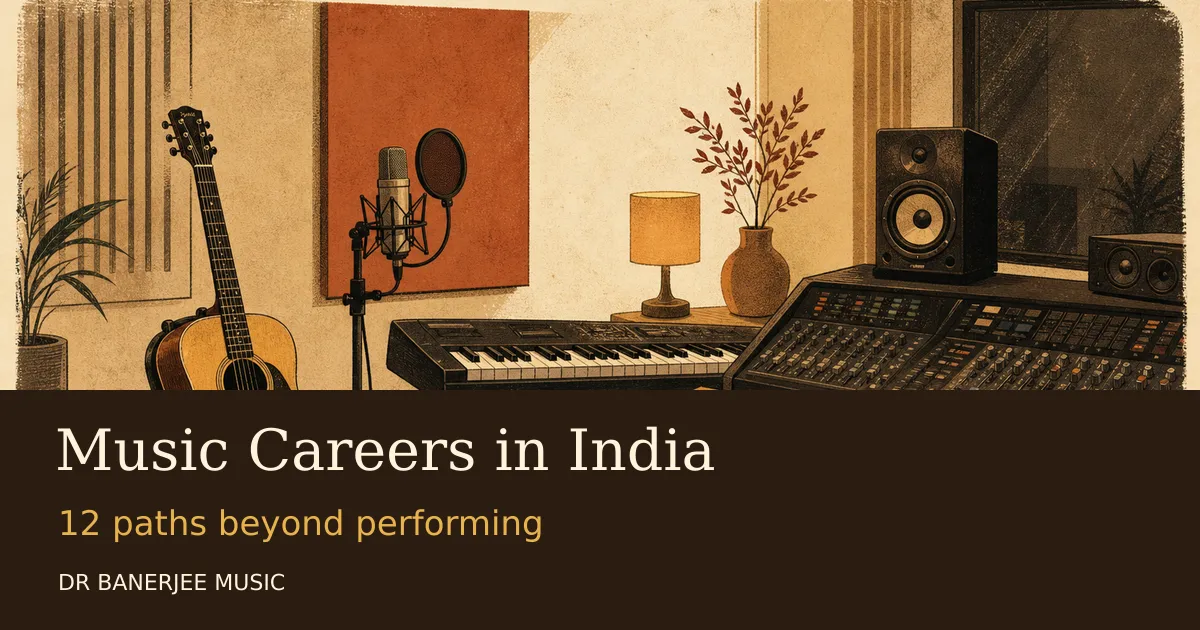
Music careers connect performance, recording, planning and business. Conceptual AI-generated illustration, not a photograph of the teaching studio.
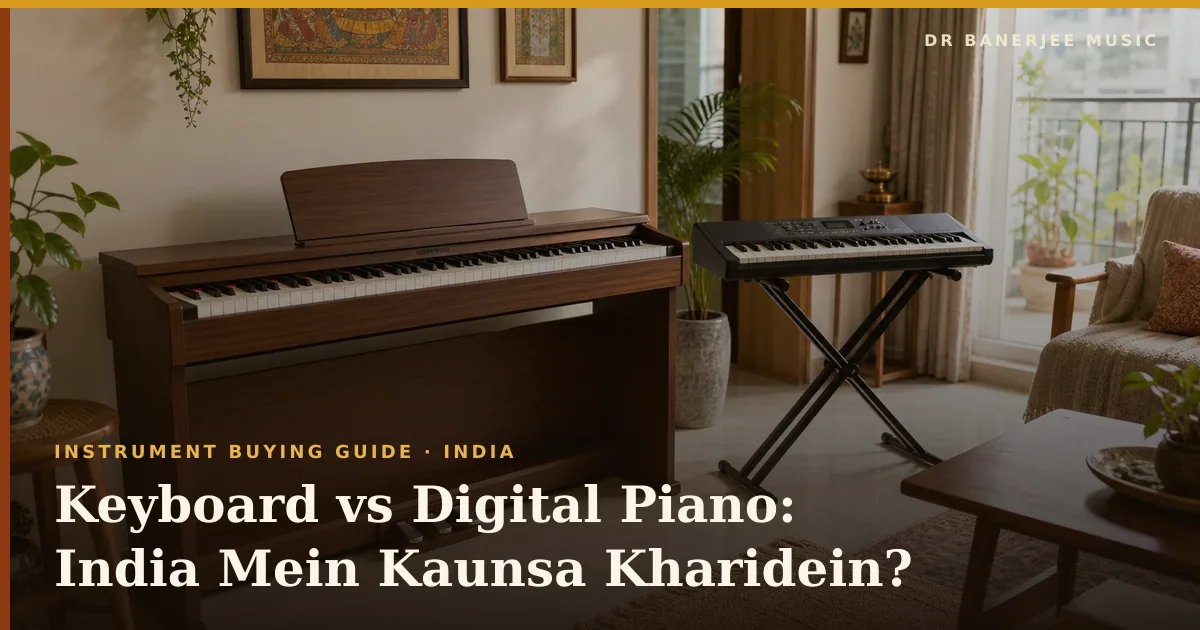
Practical keyboard vs digital piano India buy guide comparing 61-key touch keyboards and 88-key weighted digital pianos by budget, room space, and goals.
Indian music institutes train students for examinations, not inquiry. What the syllabus asks, what the history paper repeats, and what research-led teaching would look like.
Clear guide to online Hindustani Carnatic classes monthly fee India in INR: published platform examples vs independent gurus, 1:1 vs group plans, and checks.
Practical guide to online singing lessons for beginners Hindi Punjabi songs India: breath support, sur and taal control, and learning melodies without strain.
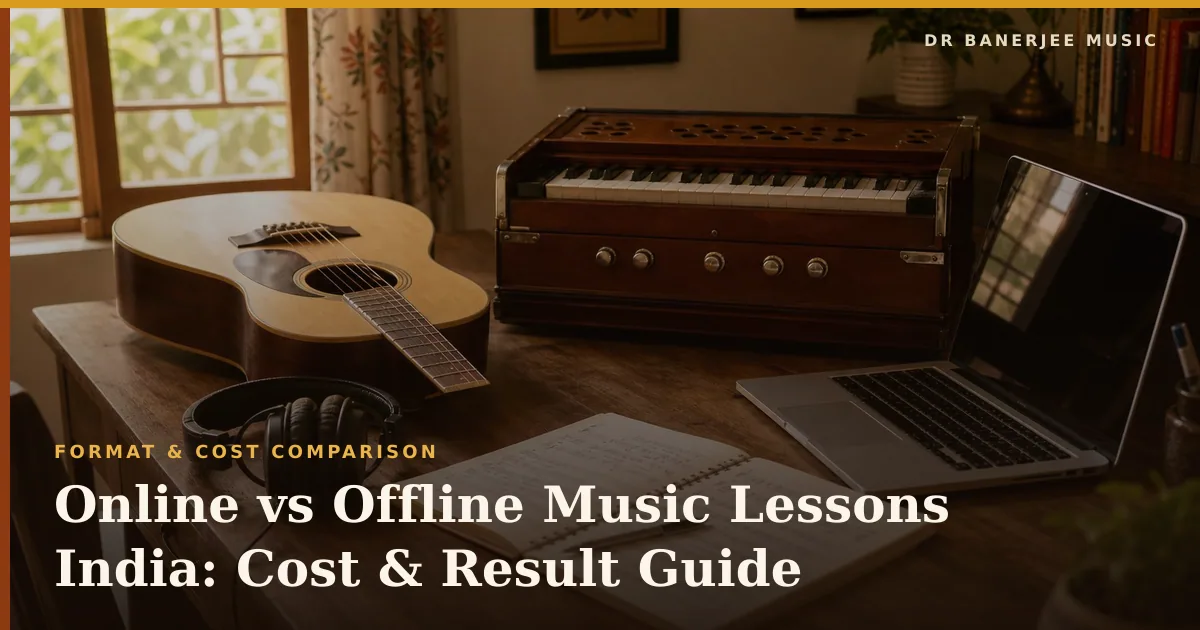
Honest online vs offline music lessons India comparison on monthly cost, city commute, teacher access across India, acoustic feedback, and real progress.
Practical guide to choosing a ukulele under ₹5000 India beginners can enjoy daily: soprano vs concert size, geared tuners, first chords, and online practice.
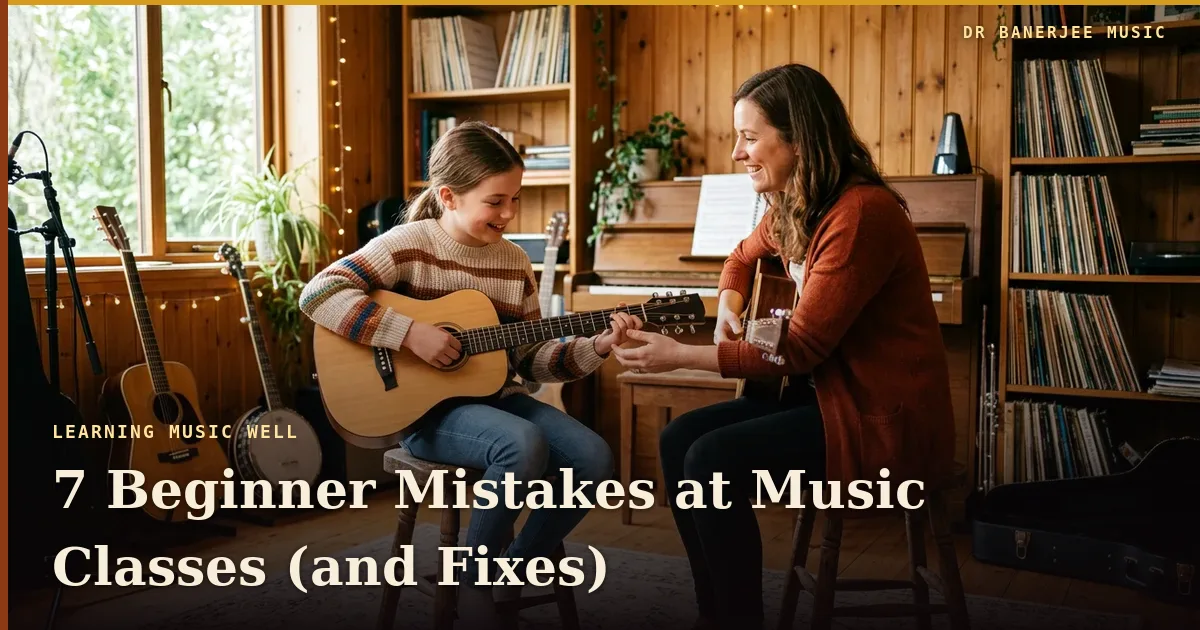
Seven beginner mistakes seen at music classes every week — posture, skipping sight-reading, ignoring the metronome — with the small, specific fix for each one.
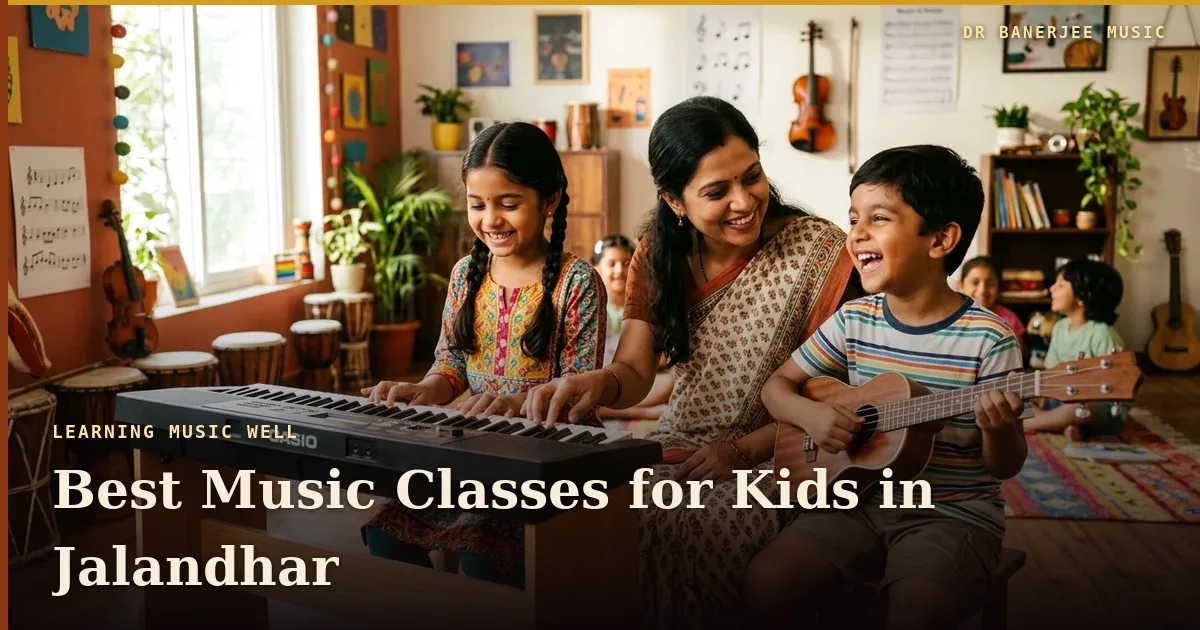
Music classes for kids start at age seven: what they cost, which instruments children pick first, the habits that keep a child playing, and what to look for in a teacher.
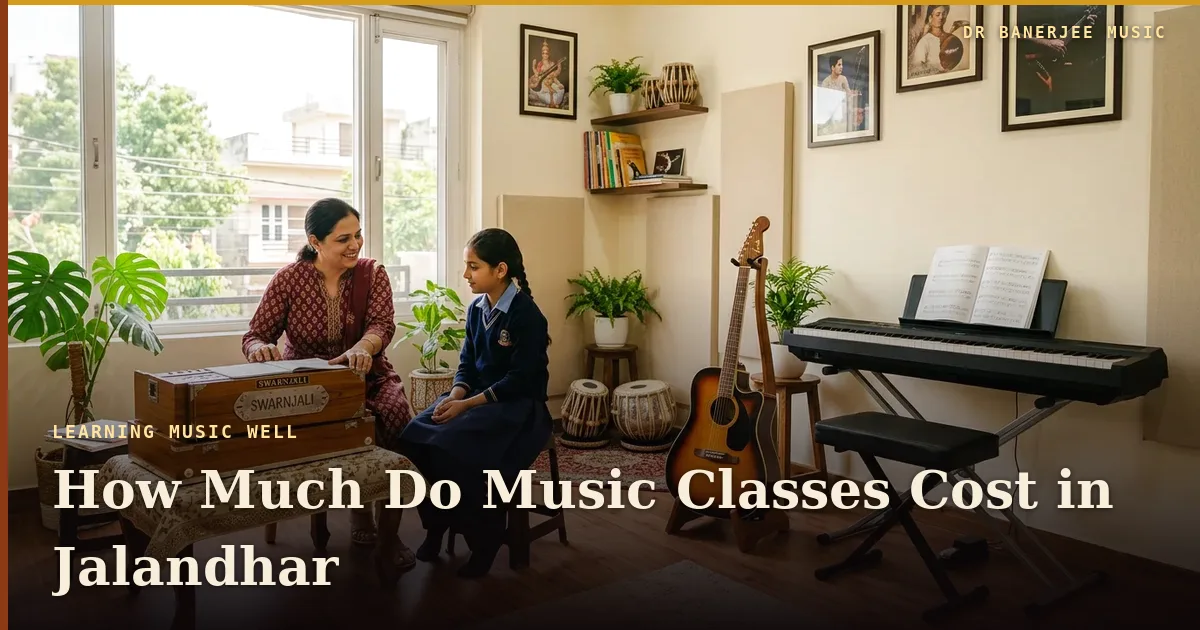
Every music class fee at Dr Banerjee Music — in person and online, one-to-one and group — with the timetable, the age rule and exactly what the price includes.
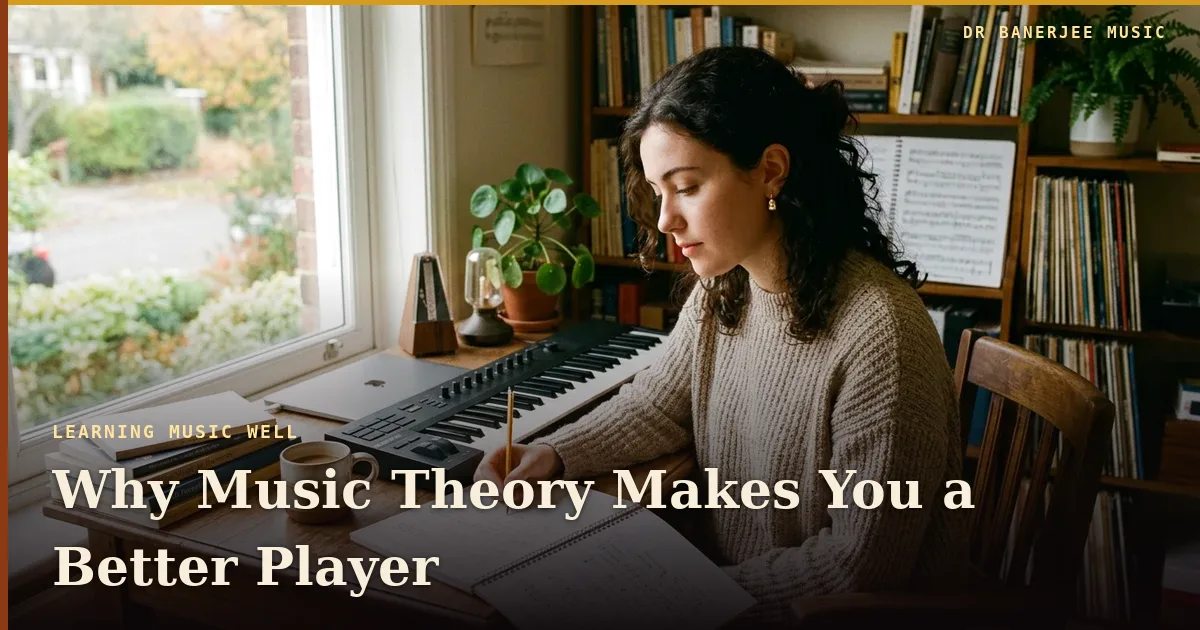
Why music theory makes you a better player: theory as the grammar of music, the order to learn it in, and how it sits inside lessons rather than beside them.
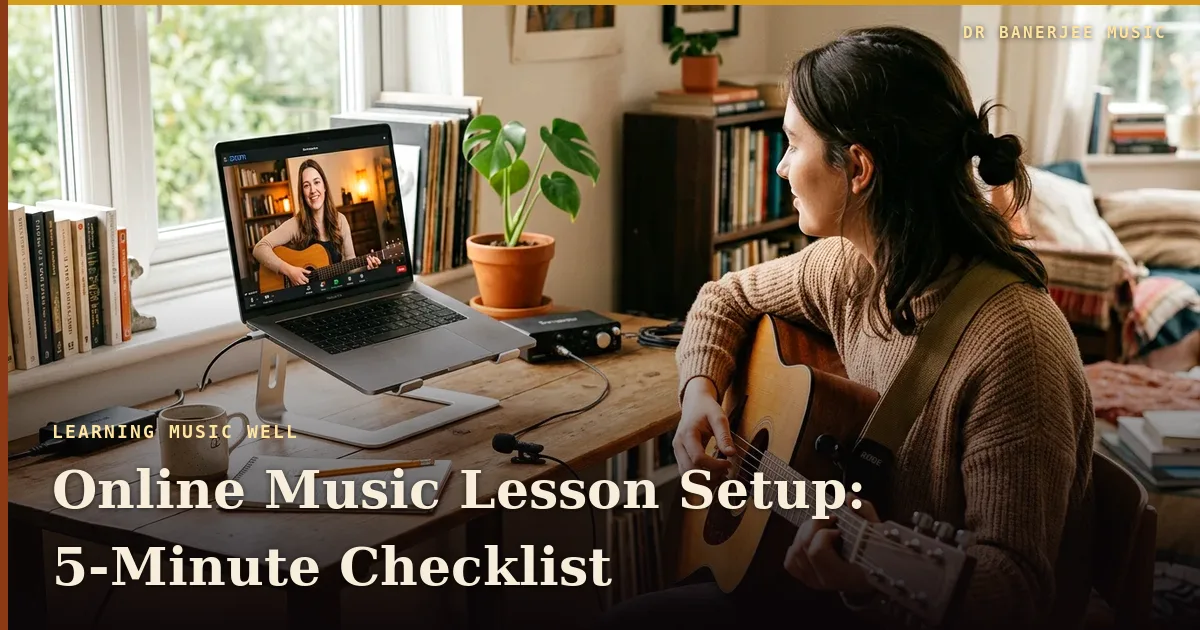
Online music lesson setup in five checks: device, camera framing so hands stay visible, earphones versus speakers, and what the free demo class is for.
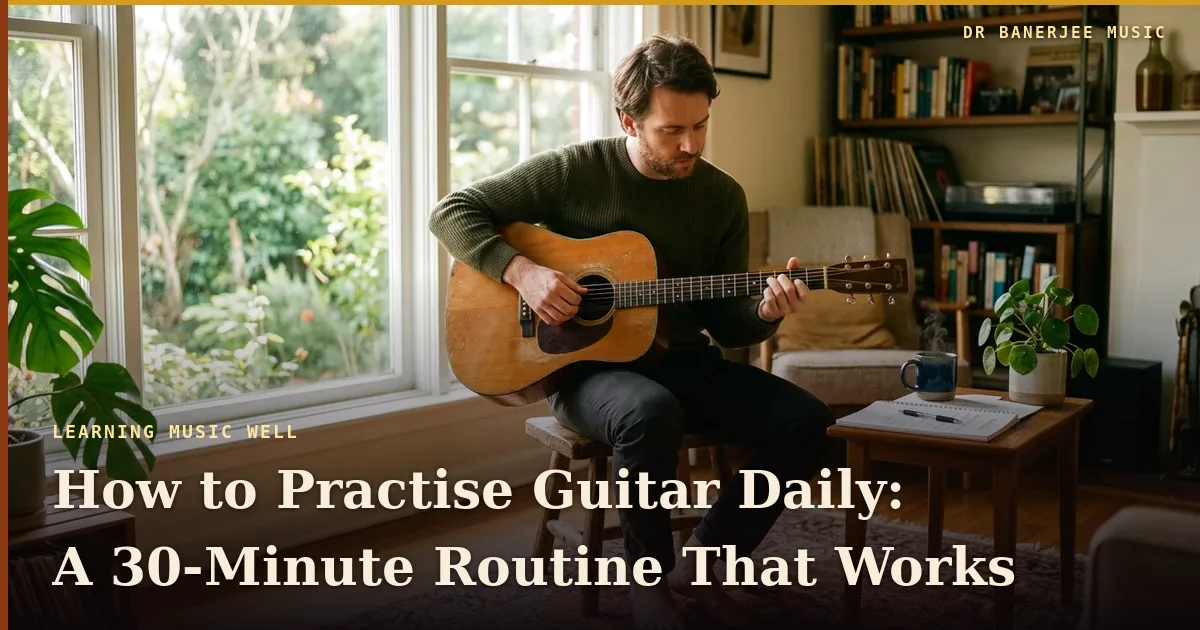
Learn how to practise guitar daily with a realistic 30-minute routine built on the 'little and often' principle — a practice structure you can actually keep.
How long it really takes to learn music: a truthful timeline from beginner to professional, a session-based way to measure progress, and how much to practise each week.
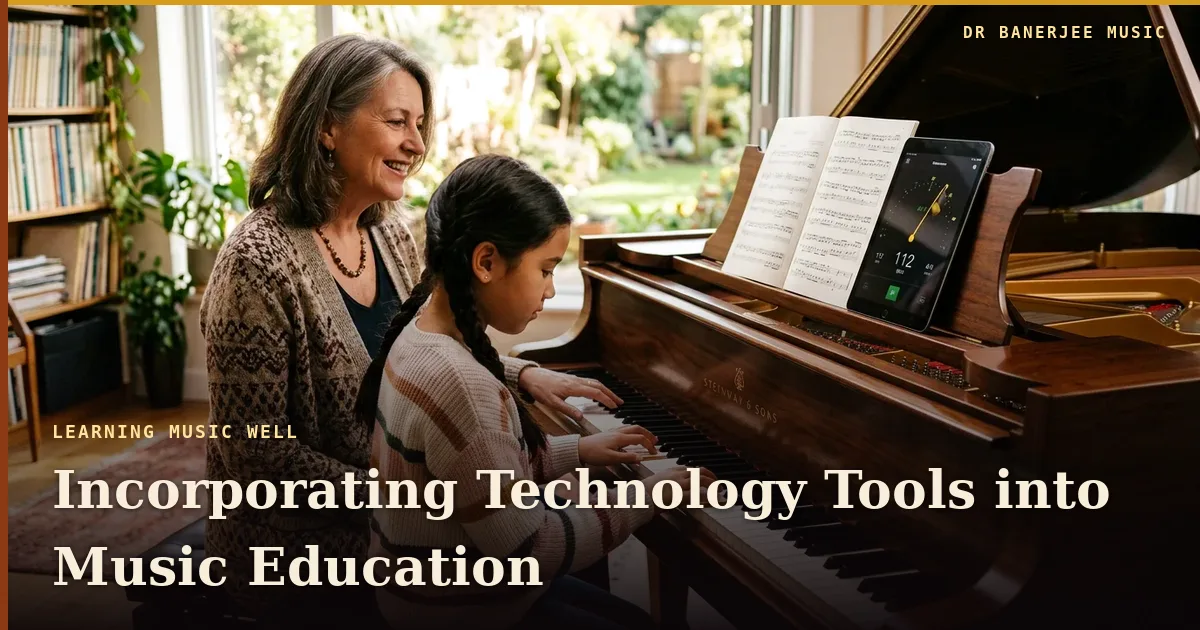
Notation apps, tuners and DAWs can strengthen music learning or scatter it. A teacher's disciplined, goal-first approach to technology without diluting craft.
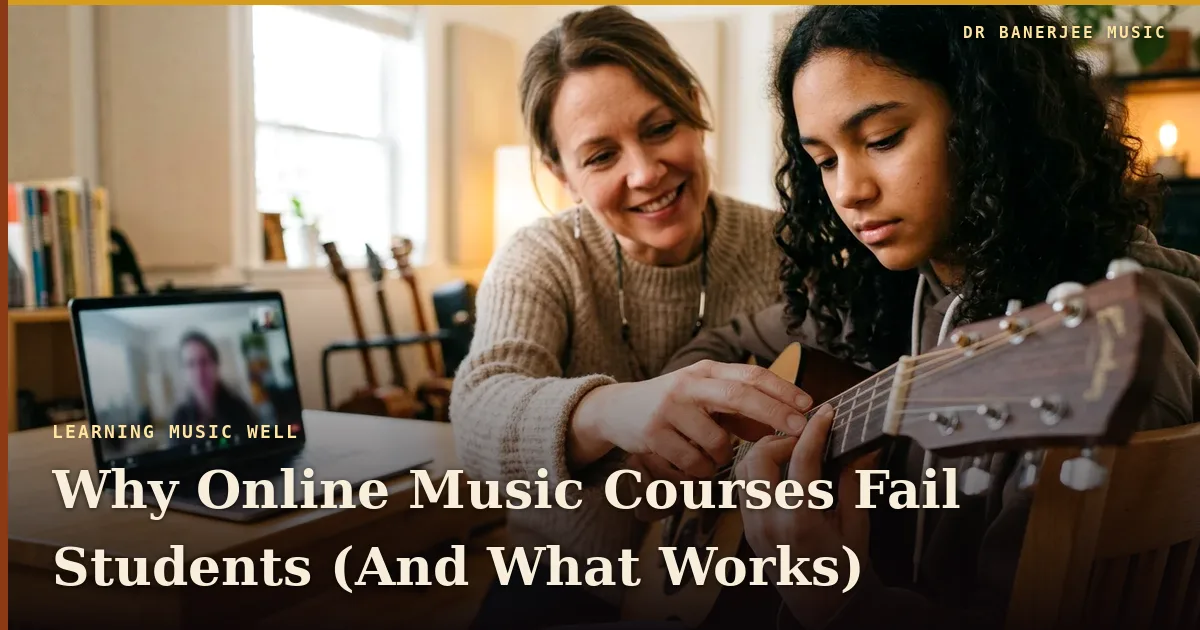
Why do online music courses fail? Content over craft, no real-time correction and automated discipline. A human-led guide for students and parents in 2026.
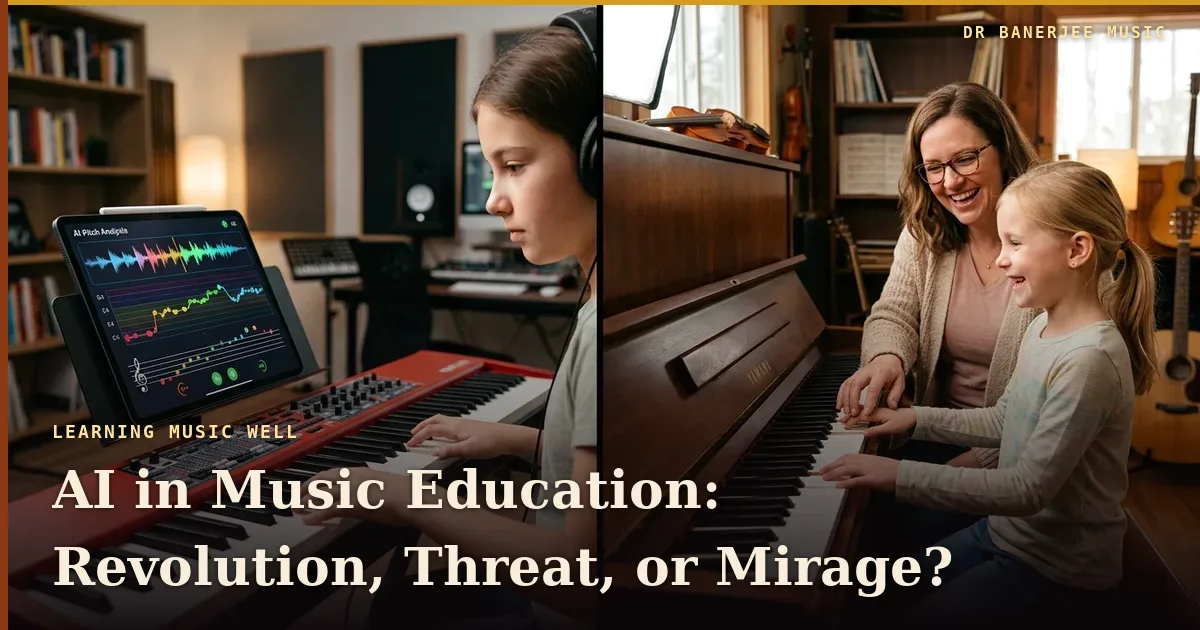
AI in music education can check pitch and rhythm instantly, but can it teach phrasing, rasa or judgement? A balanced guide for students, teachers and parents.
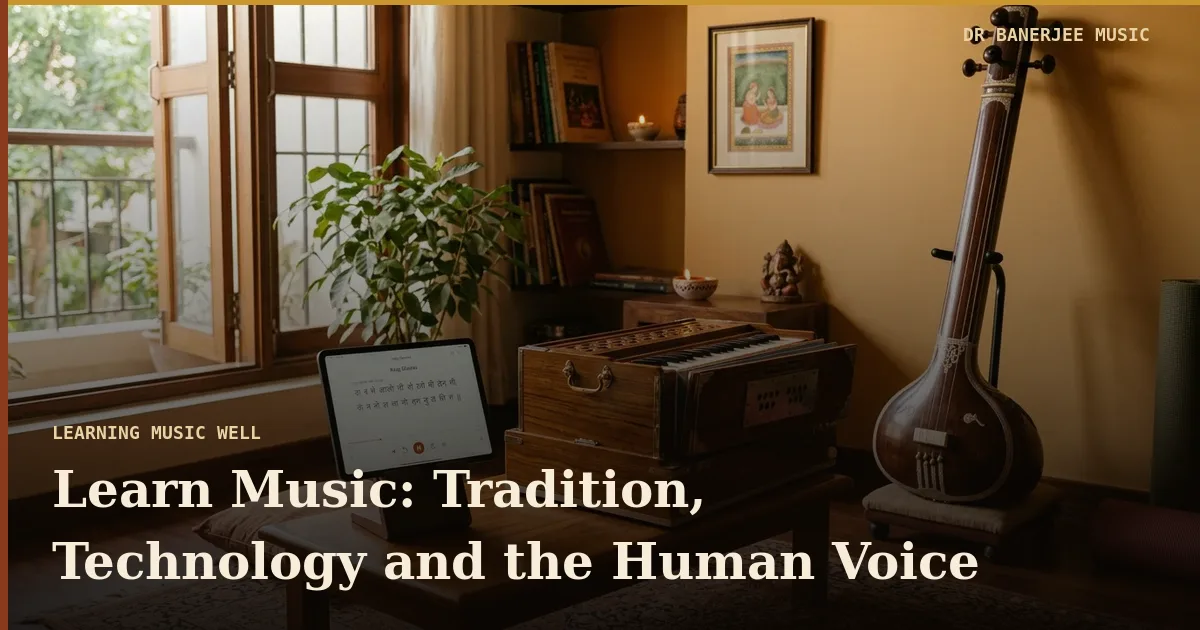
How to learn music now: riyaz and lineage, AI tools used as a mirror, licensed AI music and recorded grade exams, with the human voice at the centre. Updated for 2026.
Book your free demo class on WhatsApp, call +91-62800-75157, or email drbnrj@gmail.com. Physical classes begin after one studio visit; online plans start with the free 15–30-minute demo class, where days, timings, syllabus and progression are agreed.
Add this website to your phone or computer and it opens like an app, loading current lessons, fees and articles when connected. Recently visited pages may be available offline. There is nothing to download from an app store and no separate app to update.
How to add it to your home screen
Android (Chrome): open the ⋮ menu and tap Install app or Add to Home screen.
iPhone and iPad (Safari): open this site in Safari, tap Share (or the browser menu, then Share), choose Add to Home Screen, keep Open as Web App enabled if shown, then tap Add.
Computer (Chrome or Edge): use the install icon in the address bar when offered, or the browser menu’s install option. Availability depends on your browser and device.
In an in-app browser, open this page in Safari or Chrome first. Installation is optional; all lessons and articles also work in your browser. Offline copies may be older, and video, maps and messages need an internet connection.