Where music came from and why it sounds the way it does — styles, periods, instruments and the wider cultural story behind them. Book your free demo class.
Listen to musical history as well as reading it
I approach music history through questions that can be taken back to a recording. Who is performing? What kind of occasion is the music serving? Which instruments and forms are audible, and which details are later interpretations? A date can place a work in a chronology, but it cannot explain the difference between two performances. The essays in this collection connect historical context with the choices a listener or student can actually recognise.
A useful first distinction is between a composition, a particular performance and the release through which you discovered it. Those events need not share a date or even a single musical identity. A later interpretation may preserve the melody while changing the accompaniment, pacing or audience. I avoid treating popularity on a current platform as proof of historical origin.
Build a small comparative listening notebook
Choose two performances of a related form. Record the performer, the source you used and the version where those details are available. Listen once for the broad shape and once for a specific feature, such as the treatment of a refrain. Keep observations separate from explanations: “the second singer holds this note longer” is an observation; a claim about why requires evidence.
This makes reading more useful. Instead of collecting names, you have a question to ask of an essay. If a historical claim contradicts what you hear, check whether the writer is discussing the same version, tradition or period before drawing a conclusion.
Avoid a single story for a living tradition
Styles change through performers, communities and teaching, not just through one famous inventor. Influence is also not the same as ownership. Where a source is uncertain, I prefer an explicit limit to a neat origin story. Students can apply the same discipline in programme notes and examination answers: identify the tradition being discussed, explain the example and avoid universal claims from one recording.
For explanations of musical vocabulary alongside this context, read music theory. For a practical route from listening to singing or instrumental study, the genre guide distinguishes the repertoire I teach without presenting styles as rigid boxes.
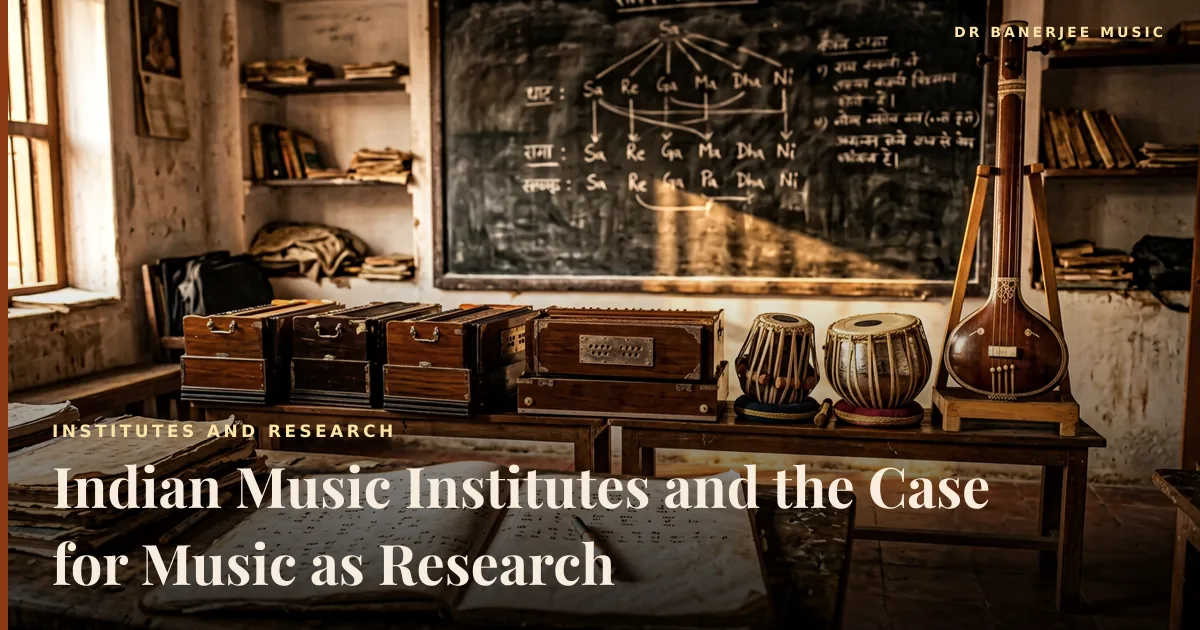
A classroom, a chalkboard of swars, and a syllabus that decides what a student may learn in a year.
Indian music institutes train students for examinations, not inquiry. What the syllabus asks, what the history paper repeats, and what research-led teaching would look like.
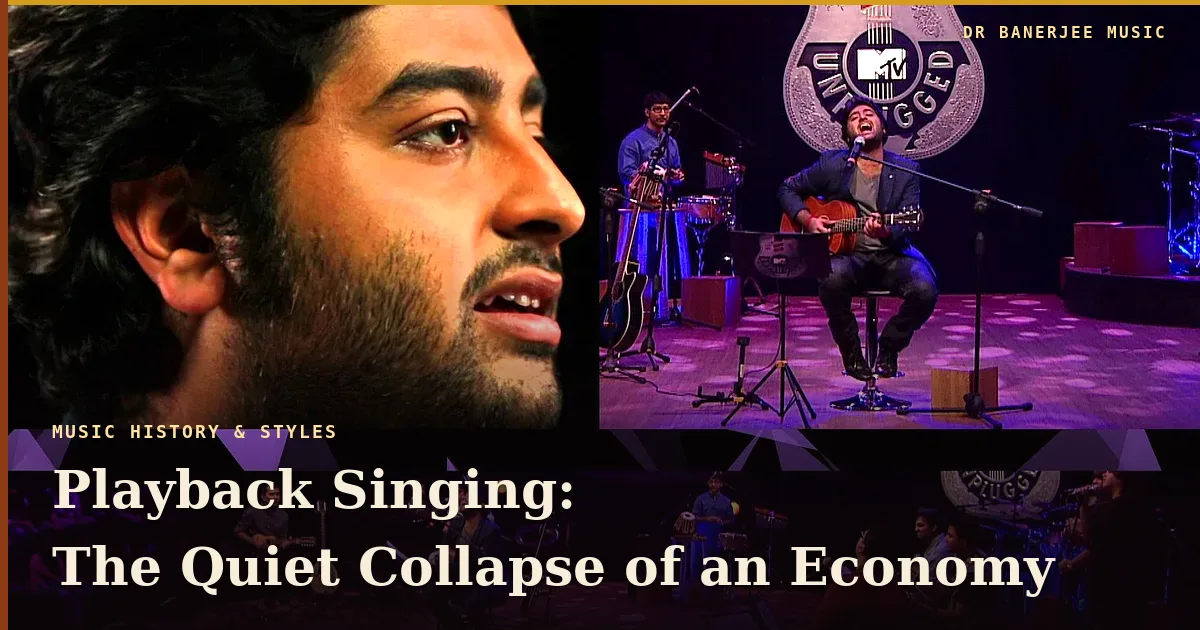
Playback singing did not fail dramatically — its economic logic simply expired. A structural reading of Arijit Singh's exit and what it means for musicians.
Book your free demo class on WhatsApp, call +91-62800-75157, or email drbnrj@gmail.com. Physical classes begin after one studio visit; online plans start with the free 15–30-minute demo class, where days, timings, syllabus and progression are agreed.
Add this website to your phone or computer and it opens like an app, loading current lessons, fees and articles when connected. Recently visited pages may be available offline. There is nothing to download from an app store and no separate app to update.
How to add it to your home screen
Android (Chrome): open the ⋮ menu and tap Install app or Add to Home screen.
iPhone and iPad (Safari): open this site in Safari, tap Share (or the browser menu, then Share), choose Add to Home Screen, keep Open as Web App enabled if shown, then tap Add.
Computer (Chrome or Edge): use the install icon in the address bar when offered, or the browser menu’s install option. Availability depends on your browser and device.
In an in-app browser, open this page in Safari or Chrome first. Installation is optional; all lessons and articles also work in your browser. Offline copies may be older, and video, maps and messages need an internet connection.