Indian Music Institutes and the Case for Music as Research

Doctorate in World Music, University of Oxford · teaching since 1992. More about the teacher.
Indian music institutes are the largest single obstacle to the progress of Indian classical music, and they are not an obstacle by accident: they are built to turn students into examination candidates rather than into musicians who can investigate. The culprit is not the shortage of tablas, teachers or concert halls, though all three are real. It is the syllabus, which asks a student to show breadth in minutes and then marks memory of dates and biographies as knowledge. The alternative I am arguing for is simple to state and hard to build — teach music as a research discipline, with methods, evidence and honest disagreement, in the places where that evidence is actually generated.
What an Indian music institute asks of a student
The boards' own paperwork shows the arithmetic. The Akhil Bharatiya Gandharva Mahavidyalaya Mandal's Visharad Pratham syllabus requires six ragas to be known in depth, with fifteen minutes of improvisation in front of the examiner for each, and six more for general knowledge. Gandharva Mahavidyalaya in Pune publishes a written paper that asks for the "biography and musical contribution" of six named artists, alongside swar lekhan, taal lekhan and the samay chakra. Two syllabi, side by side:
| ABGMVM Visharad Pratham | Gandharva Mahavidyalaya, 2025 | |
|---|---|---|
| Ragas examined in depth | 6, fifteen minutes of improvisation each | 2, twenty minutes each, with four more prepared |
| Also required | 6 further ragas for general knowledge | 4 further ragas, thoroughly prepared |
| Written paper | thaat, samay chakra, biographies of eight named musicians | swar and taal lekhan, samay chakra, biographies of six artists |
| Accompaniment in the oral | tanpura and tabla only | no harmonium; the candidate brings a tabla player |
I do not think these are bad examinations. They are designed to certify coverage quickly and reliably, and for that they work. But the tradition they certify is the opposite of quick. A single raga, worked at properly, is a multi-year undertaking, which is why the honest arithmetic of how long this takes is worth setting beside the syllabus rather than inside it — see how long it really takes to learn music.
What an examination of this kind cannot do is ask a student to defend a claim, because there is no room for a claim in it. It asks what the syllabus contains. That is not the same as asking what the student knows, and the gap between the two is where a music education either grows a mind or manufactures a certificate.
The theory paper and James Mill's shadow
The history half of the syllabus does more damage than the practical half, because history is where a tradition explains itself to itself. Much of the standard account runs on a frame set out in James Mill's History of British India (1817), which divided Indian history into Hindu, Muslim and British periods; Romila Thapar's work showed how thoroughly the periodisation distorted what it claimed to describe. Music history syllabi inherited a cousin of that frame — ancient, medieval, modern, with a clean break where Europe arrives — and the clean break is convenient for examiners and false for musicians.
The syllabus then turns this into memorisation: eight named musicians with their dates and contributions in one board's theory paper, six in another's. Add the tabla origin story and the effect is complete. The legend that Amir Khusrau split the pakhawaj into two drums has no support in any contemporary source, the earliest pictorial evidence of the tabla dates from around 1745, and Neil Sorrell and Ram Narayan judge that the story cannot be given any credence. A student who can recite that legend as history has been taught a myth by an institution that should have been the first to doubt it.
Music as a research discipline
A discipline is not a subject. It is a method, plus a community that checks the method. Music has the apparatus for this, and India has almost no institutional use of it.
In medicine, the Cochrane review of music-based therapy for dementia pooled 30 studies and 1,720 participants and found that the therapy probably improves depression and may improve overall behavioural problems against usual care, with no evidence of benefit for agitation, cognition or emotional well-being, and effects that may not outlast the treatment. In brain-injury rehabilitation, a Cochrane review of 29 trials found that music interventions may improve walking speed after stroke and may improve communication and quality of life, with evidence quality rated from moderate down to very low.
Read properly, those are not failures. They are the profile of a young science: plausible effects in some places, unproven in others, and not yet durable.
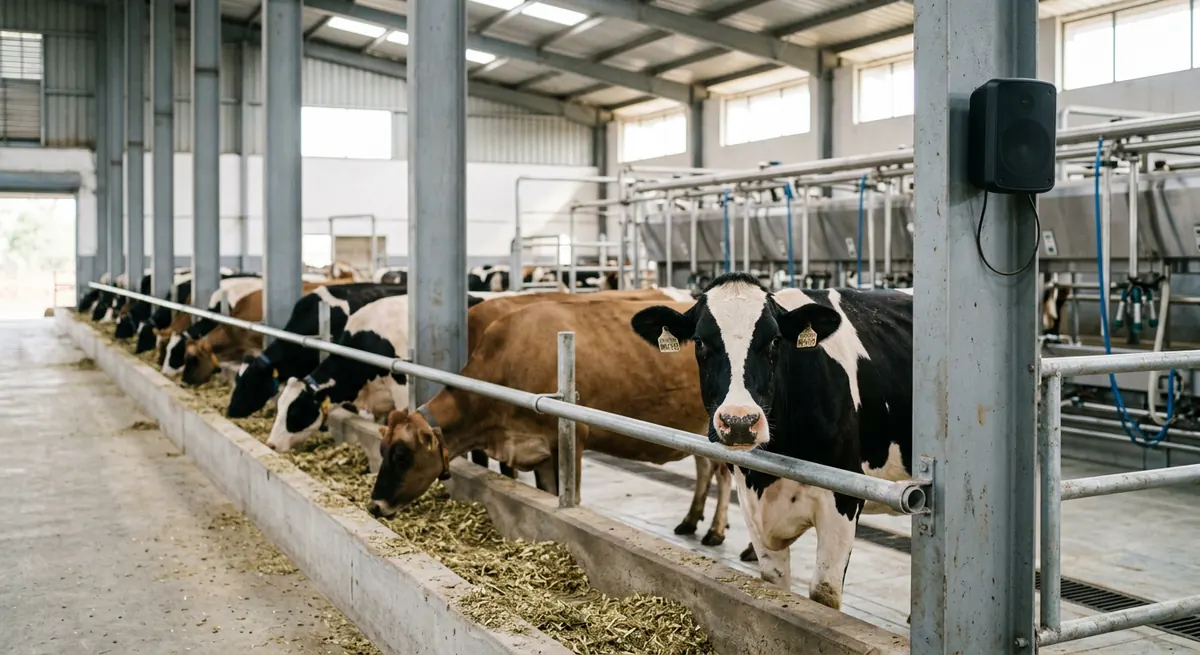
Sociology has had the sociology of music for decades — the study of how music both signals and constitutes social relations, from class and gender to race and collective identity. Biology has begun on livestock: a trial run by ICAR-NIAS at Baramati with ICAR-IVRI, Izatnagar played the yaman raga on flute and sitar at 40–60 dB during the milking of 21 Vrindavani crossbred cows and found significant effects on milking time, milking speed, cortisol and milk let-down — but no significant effect on milk yield itself. A later study with 60 Holstein cows reported a 7–10 per cent yield increase under classical raga music, while other work on dairy cattle has found no significant effect on resting behaviour at all.
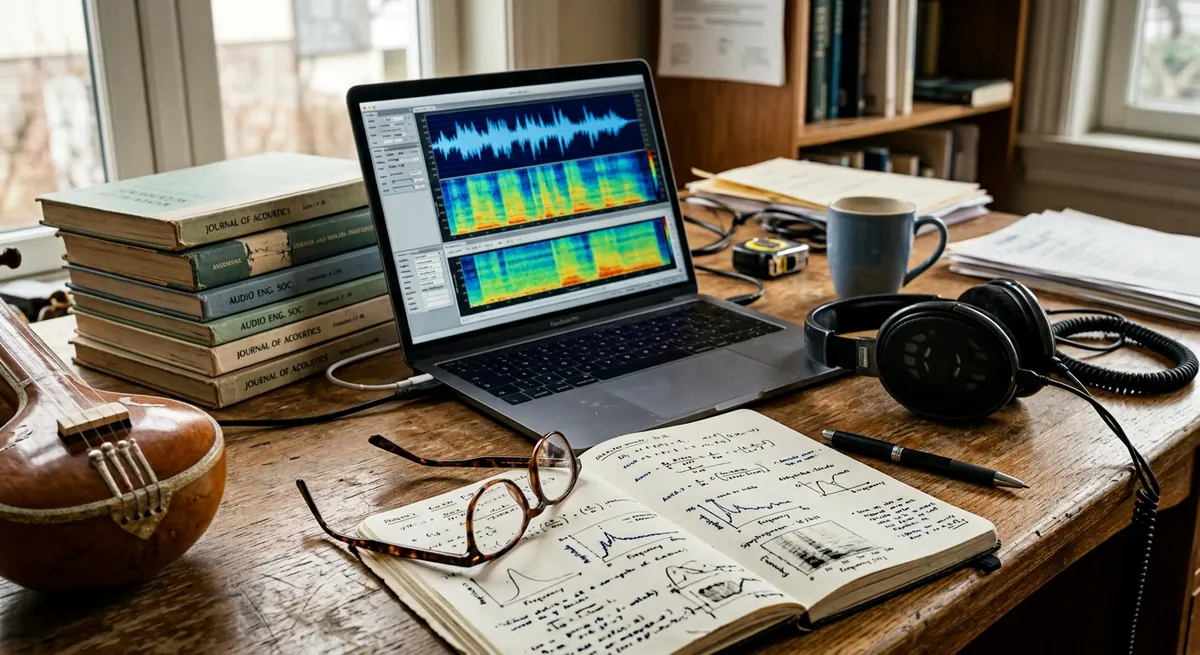
That disagreement is the point. A field with contradictory results is not a field without knowledge; it is a field that has never had enough trained people to run the next study properly. Every one of those studies is a place where a musician could have earned a living, and no music syllabus in the country trains anyone to design one.
Gujarat's dairy belt is the test case
Which brings the argument to somewhere concrete. Gujarat's milk production rose from 5,862 thousand tonnes in 2001-02 to 18,312 thousand tonnes in 2023-24, according to the National Dairy Development Board's state-wise estimates, and the cooperative network behind it — Amul, Banas, Sabar and the rest — runs on animal husbandry science, veterinary practice and applied research rather than on folklore.
A music research programme sitting next to an animal-husbandry programme in that landscape is not a metaphor. It is a scheduling decision, and a cheap one: the cows are already being milked, the cortisol already measured, the milk already assayed. The open question — does a raga change an animal's stress response, and does it change the milk? — is answerable with controls, blinding and a proper design.
There is a career argument here too, and it is the part students should hold on to. Most graduates of a music course in India end up teaching, performing or working in media. The qualification does not open the door; what they can do opens the door. A student who has spent two years designing a study, collecting data and defending a result in front of a supervisor arrives in a room with a different kind of access from a student who has recited a chronology.
What students should ask before they enrol
Before enrolling, ask the institute some awkward questions. What research have your students conducted? Which part of my course is a paper I have to defend? Do you teach the history of Indian music as settled fact, or as a contested field with named scholars who disagree? Which of your teachers have published? If the answers are vague, the course is a syllabus with a teacher attached, and a syllabus is a floor, not a ceiling.
Do not settle for an examination-only qualification. I mean that as someone who prepares students for examinations: the boards set the standard, the exam is conducted by the board and the certificate is awarded by the board, never by me, and preparing for a graded examination is worth doing because a deadline makes you practise. But a qualification that certifies only the examination leaves a young musician with very little to say for themselves in a room. Add to it something that cannot be examined — a documented case study, a written note on a performance, an experiment with a stated method and a stated limit.
At Dr Banerjee Music that means the syllabus work is the floor, not the ceiling: the Indian classical music classes in Jalandhar and the online music classes worldwide are built on the same principle — a student should leave able to play, and able to say why they played it that way.
Related study
More from the discipline series on this site:
- Why Raga Learning Apps Fail: A Discipline Problem
- UGC NET Music Unit IV: Research Methodology Guide
- Why Reels and Shorts Cannot Teach Music
Reading and lesson routes
For practical work with sargam, raga and daily riyaz, read about Hindustani vocal classes.
Frequently Asked Questions
How many ragas should a student realistically learn in a year?
One, properly. A single raga worked at daily will absorb a beginner's attention for years, which is arithmetic rather than modesty. Examinations ask for breadth: one board's oral lists six ragas in depth and six more for general knowledge. Treat the syllabus as a certificate of exposure, and the practice as the education.
Is a music degree from an Indian institute worth it?
It depends entirely on what the institute teaches beyond the examination. A course that only certifies a paper gives you a floor, not a career, because most graduates end up teaching, performing or working in media. A course that asks you to write, measure and defend something gives you a method, and the method travels further than the certificate does.
What does teaching music as a research discipline actually involve?
Working the way the Cochrane reviews and the livestock studies work: a question, a comparison, a stated method, a recorded result and an honest account of the limits. It also means reading the literature honestly, including where results contradict each other, and treating an old claim as a claim to be tested, not a fact to be repeated.
Should I prepare for a music exam or focus on playing?
Both, in that order of honesty. The boards set a standard worth meeting, and a graded examination is a deadline that forces practice and correction. But treat it as the floor. If the qualification is all you leave with, you will pass an examination and little else, and the profession will ask for the second thing far more often.
Questions about anything in this article? WhatsApp +91-62800-75157 or email drbnrj@gmail.com.