Music Careers in India: 12 Paths Beyond Being a Singer


Doctorate in World Music, University of Oxford · teaching since 1992. More about the teacher.
Music careers in India extend well beyond becoming a singer or building a following as an independent artist. You can work as a session musician, producer, composer, audio engineer, artist manager, marketer, licensing professional or member of a live production team.
The right direction depends on more than how much you love music. It depends on what you can do reliably, which problems you enjoy solving and what kind of working life suits you.
People often ask me a version of the same question: “My music career is not moving forward. What else can I do?”
Sometimes they mean that their own songs are not reaching listeners. Sometimes they are struggling to find performances. Others enjoy music deeply but are unsure whether being the person on stage is what they actually want.
Those are different problems, and none automatically means that music is the wrong field.
A released song and a successful live show both depend on people whose names may never appear on the poster. Understanding those roles gives you more choices—and a more realistic way to turn musical ability into useful professional work.
Music Industry Careers at a Glance
Use this comparison to identify the kind of work you would like to explore. The examples are starting points for a portfolio, not qualifications that guarantee employment.
| Career path | Main responsibility | First portfolio project |
|---|---|---|
| Session musician | Perform parts for another artist or project | Three contrasting performance samples |
| Music producer | Develop the creative direction of a recording | A completed production with arrangement notes |
| Songwriter or composer | Write music or lyrics for a brief | Original demos for three different briefs |
| Recording, mixing or mastering engineer | Capture, balance or prepare recorded sound | An authorised recording or mix with clear credits |
| Live sound engineer | Deliver workable sound for performers and audiences | An assisted event and documented technical learning |
| Artist manager | Coordinate business and planning around an artist | A release schedule with defined responsibilities |
| A&R or talent scout | Discover and evaluate artists and repertoire | A researched artist-discovery report |
| Music marketer | Connect an artist with relevant listeners | A campaign plan with measurable objectives |
| Sync and licensing professional | Help place and license music in visual projects | A rights-documented pitch catalogue |
| Music supervisor | Select and coordinate music for a production | Selections and clearance questions for a sample brief |
| Publishing and royalty administrator | Maintain ownership and royalty information | A sample catalogue and registration checklist |
| Live production or tour manager | Coordinate people and logistics behind shows | A show-day schedule or tour itinerary |
12 Music Careers in India and How to Start Exploring Them
1. Session Musician: Perform Without Having to Front the Project
A session musician contributes to somebody else’s recording or performance. This may involve singing backing vocals, recording guitar parts, playing keyboards, performing percussion or delivering another instrumental contribution.
The client is not necessarily looking for the most technically impressive player. They may need someone who can learn a part quickly, follow a reference, take direction and deliver a clean performance without delaying the project.
Imagine a producer asking for a restrained acoustic guitar part under a vocal. Playing an elaborate solo may demonstrate ability, but it does not fulfil the brief.
Skills to develop: Timing, tuning, stylistic flexibility, listening, preparation and professional communication. Reading notation or chord charts can be useful, depending on the work.
First step: Record a small set of contrasting examples. Include simple, supportive playing—not just your most difficult piece. Label exactly what you performed.
2. Music Producer: Turn an Idea into a Finished Recording
A producer helps shape the musical and creative direction of a recording. Depending on the project, this may include developing the arrangement, choosing sounds, guiding performances and coordinating with recording or mixing engineers.
Producing is not simply owning a digital audio workstation or collecting plugins. The important skill is making decisions that serve the song.
For example, a vocal-led composition may need space rather than additional layers. A dance track may depend on a particular relationship between the rhythm section and the hook. Different songs require different judgement.
Skills to develop: Arrangement, critical listening, musical communication, sound selection and familiarity with a recording workflow.
First step: Complete one production from an initial idea to a presentable version. Keep notes explaining why you changed the structure, instrumentation or texture.
For a broader discussion of tools and their role in learning, read Technology Tools in Modern Music Education.
3. Songwriter or Composer: Write for More Than Your Own Releases
Writing music professionally can mean creating songs for artists, composing instrumental material or responding to briefs for advertisements, films, series and other productions.
Songwriter, lyricist and composer are related roles, but they are not always performed by the same person. One collaborator may write the words, another the melody and another the score around a scene.
Commissioned work also differs from personal expression. You may need to work within a duration, mood, narrative or production requirement. A thirty-second piece for a visual brief has different demands from a full-length independent song. Being able to explain and revise your choices matters.
Skills to develop: Melody, structure, lyric writing where relevant, harmony, arrangement and the ability to respond to feedback.
First step: Create original pieces for three clearly different briefs. When collaborating, agree contributions, credits and ownership arrangements in writing before release.
4. Recording, Mixing and Mastering Engineer: Work with the Detail of Sound
These are connected disciplines, but they should not be treated as interchangeable.
- Recording engineers focus on capturing performances.
- Mixing engineers work on the balance and interaction of recorded elements.
- Mastering engineers prepare final mixes for release and may work on consistency across a collection of tracks.
A person may offer more than one service, but each requires its own judgement and experience.
The work can involve repeated listening, technical problem-solving, revisions and careful file management. Enjoying music is useful; enjoying this detailed process is equally important.
Skills to develop: Signal flow, listening, editing, acoustics, level management and organised delivery.
First step: Choose one discipline and develop a small portfolio using material you are authorised to work with. State your contribution accurately rather than presenting a collaborative recording as entirely your own.

5. Live Sound Engineer: Make the Performance Work in the Room
Live sound engineers help performers and audiences hear the show properly. Work may involve microphones, routing, soundchecks, front-of-house sound and stage monitoring.
On larger events, these responsibilities can be divided between specialists. On smaller events, one person may cover several tasks.
Unlike a studio session, a live performance cannot always stop while a problem is investigated. Preparation, troubleshooting and clear communication under pressure are central to the role. The objective is not simply to make everything louder. It is to make the performance intelligible and workable within the venue’s conditions.
Skills to develop: Signal flow, gain structure, microphone use, feedback management and communication with performers and crew.
First step: Assist an experienced sound team. Learn safe working practices before taking responsibility for equipment or systems you have not been trained to handle.
6. Artist Manager: Organise the Career Around the Music
An artist manager helps coordinate the business and planning around an artist’s work. Responsibilities may include evaluating opportunities, organising schedules, communicating with collaborators and supporting release decisions.
You do not have to be a singer to become an artist manager. You do need to understand the artist’s goals and distinguish an attractive opportunity from an unsuitable commitment.
A manager is not automatically a booking agent, publicist, accountant or lawyer. Smaller teams may combine responsibilities, but those boundaries should still be clear.
Skills to develop: Organisation, negotiation, budgeting, communication, judgement and dependable follow-through.
First step: Support a limited project with a written scope. A release calendar showing deliverables, deadlines and responsible people is more useful than a vague promise to “handle everything”.
7. A&R and Talent Scouting: Discover and Evaluate Musical Potential
A&R stands for Artists and Repertoire. Depending on the organisation, the work may involve discovering artists, evaluating music and contributing to an artist’s creative development.
Talent scouting is not just checking follower counts. It involves listening carefully and explaining why an artist, song or direction may be relevant to a particular company or audience.
A useful recommendation goes beyond “I like this”. It identifies what is distinctive, what needs development and why the opportunity fits the organisation considering it.
Skills to develop: Broad listening, musical judgement, research, relationship-building and clear written recommendations.
First step: Prepare a short discovery report on a few emerging artists using publicly available material. Separate observable information from your opinion. Do not imply that you represent a label when approaching artists.
8. Music Marketing: Help the Right Listeners Find the Work
Music marketing connects an artist or release with an audience. It can involve positioning, campaign planning, social content, advertising, email communication and analysing results.
The first question should be the objective. Are you trying to introduce an artist, sell tickets, encourage listeners to return or support a particular release? These goals require different decisions. A campaign cannot be judged sensibly if nobody agreed what it was meant to achieve.
Marketing also needs coordination with the music itself: artwork, release information, short-form assets and artist communication must be ready when needed.
Skills to develop: Audience research, writing, campaign planning, measurement and budget management.
First step: Build a campaign proposal for one release with a clear audience, timeline and success measures. Avoid fake engagement and promises of guaranteed streams.
9. Sync and Licensing: Connect Music with Visual Projects
Sync work concerns the use of music alongside visual material, such as films, advertisements, series and games. Licensing professionals may help source tracks, pitch music and coordinate permissions with rights holders.
A crucial distinction is that the composition and a particular sound recording can have different owners. Having an audio file does not mean having permission to license every right associated with it.
Creative suitability matters, but so does reliable information about ownership and availability.
Skills to develop: Understanding briefs, catalogue organisation, metadata, rights awareness and communication.
First step: Build a small catalogue of music you own or are authorised to represent. Record the writers, recording owners, contact details and any restrictions. Do not describe a track as ready to license until the necessary information is verified.
10. Music Supervisor: Choose Music That Serves the Production
A music supervisor works with the needs of a film, series, advertisement or other production. The role can combine creative selection with coordination around budgets, rights and delivery.
The most obvious song is not always the workable choice. It may be unavailable, unsuitable for the budget or wrong for the intended use. Finding an alternative requires both musical judgement and an understanding of the scene.
Music supervision and sync representation are not identical. A representative may be pitching a catalogue; a supervisor is working from the production’s requirements.
Skills to develop: Listening across genres, interpreting narrative, research, rights coordination and practical communication.
First step: Create music selections for a fictional brief and explain each choice. Include the questions you would need answered before commercial use. Treat this as a planning exercise, not permission to publish copyrighted music with visuals.
11. Music Publishing and Royalty Administration: Keep the Business Records Accurate
Publishing and royalty-related work involves information that musicians may overlook until a payment or ownership question arises.
Depending on the role, responsibilities can include maintaining composition records, documenting writer shares, supporting registrations, reviewing statements and following up on discrepancies.
Music publishing primarily concerns compositions. Sound-recording ownership and associated income involve separate rights and arrangements.
This career suits someone who enjoys music but also has patience for records, identifiers, correspondence and detail. An incorrectly entered name or ownership share is not simply a cosmetic mistake.
Skills to develop: Accuracy, catalogue management, spreadsheet work, rights terminology and documentation.
First step: Build a sample catalogue using fictional works or your own material. Practise keeping contributor details, agreed shares and supporting documents consistent. Specific registration and collection requirements should be checked with the relevant organisation.
12. Live Production and Tour Management: Coordinate What Happens Around the Stage
A show needs more than performers and a sound system. Travel, accommodation, schedules, venue communication, backstage arrangements and crew coordination all require attention.
Tour managers, production managers and stage managers can have distinct responsibilities. On smaller projects, roles may overlap, but clarity remains important.
A good plan connects the details: arrival times affect soundcheck; soundcheck affects doors opening; transport and equipment arrangements affect whether the plan is achievable.
Skills to develop: Scheduling, budgeting, documentation, practical problem-solving and calm communication.
First step: Take a clearly defined coordination role at a manageable event. Learn to produce a useful itinerary or show-day schedule. Do not take on specialist safety responsibilities without appropriate training.
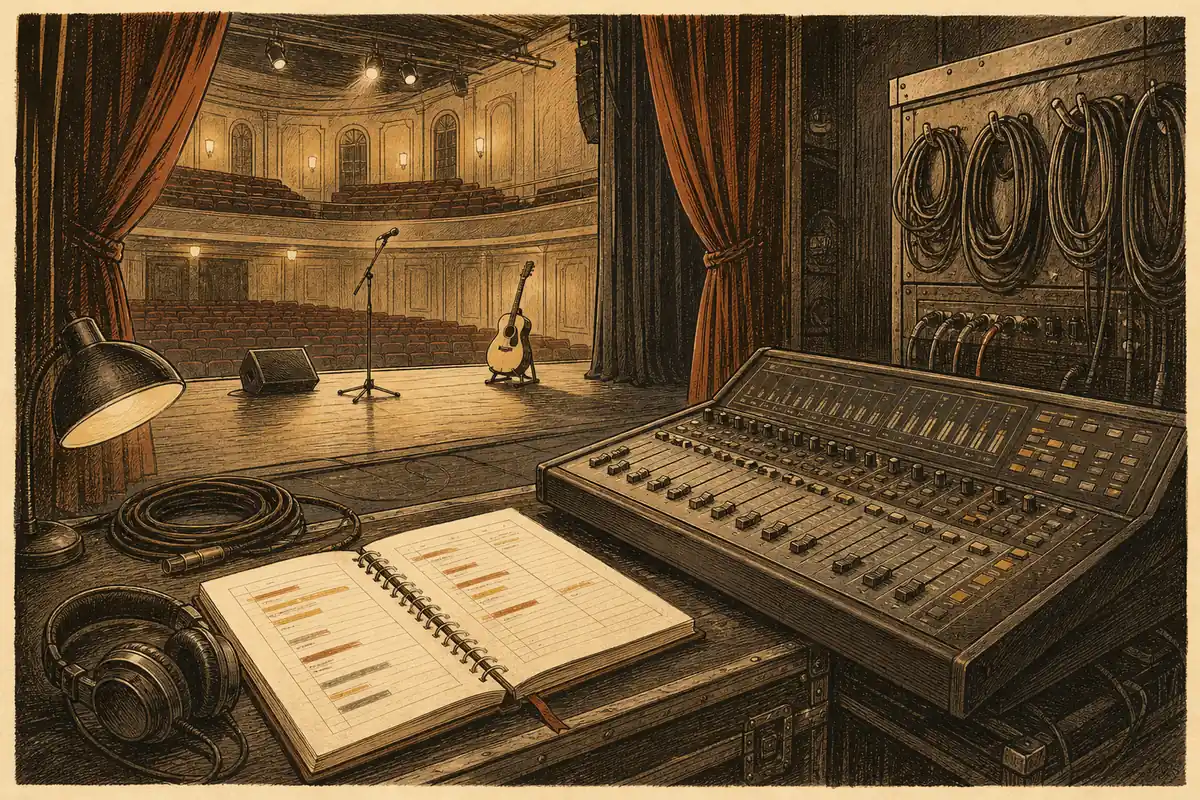
How Different Music Careers Fit into One Release
Consider an illustrative project: an independent singer wants to release an original song, perform it live and make it available for possible use in visual media.
Different professionals might contribute at different stages:
- The songwriter and composer develop the words and music.
- The producer shapes the recording’s musical direction.
- Session musicians perform the required parts.
- Recording, mixing and mastering engineers handle their respective stages of the audio process.
- The artist manager and marketer coordinate the plan and audience-facing campaign.
- Publishing and rights administrators maintain the relevant ownership and registration information.
- Licensing representatives and music supervisors may become involved if a suitable visual project arises.
- Live production staff and sound engineers support the performance.
Not every release hires twelve different people. Some responsibilities are combined, while others are not needed for that project.
The point is that one song can create several different kinds of professional work. Your own artist profile is only one possible place within that process.
How to Choose the Right Music Career for You
Start with the work you enjoy doing repeatedly—not the job title that sounds most impressive.
Ask what people can already rely on you for
Can you learn parts quickly? Finish compositions? Organise a group? Hear small differences in a mix? Keep track of deadlines and documents?
These observations provide a better starting point than deciding that everyone who enjoys music should become a producer.
Choose a working environment, not just a subject
Studio work can involve long periods of detailed listening. Live work may involve travel and irregular hours. Management brings conversations, planning and competing priorities. Rights administration requires sustained accuracy.
None is automatically easier because it happens away from the stage.
Develop musical understanding where the role needs it
The required depth varies, but listening and musical vocabulary help people communicate. A producer discussing an arrangement and a session player interpreting a brief both benefit from understanding the material.
If that is a gap, the article on why music theory makes you a better player explains how theory connects with practical work.
A Practical 90-Day Plan to Explore a Music Career
Treat this as an exploration framework—not a promise of employment within three months.
Days 1–30: Choose one role and identify the gaps
Study real role descriptions and compare their requirements with your current abilities. Speak to working professionals where possible.
Choose one small project that demonstrates a relevant skill. Keep its scope narrow enough to finish.
Days 31–60: Complete something you can show
A performer might prepare three session samples. A producer might complete one track. A marketer might build a release campaign proposal. An aspiring manager might document the coordination of a small project.
Seek feedback on the work itself. “Is the delivery clear and useful?” is a better question than “Do you think I can become successful?”
Days 61–90: Improve the work and make specific approaches
Revise the project, organise the files and write a concise explanation of your contribution.
Approach relevant people with a specific offer. Explain what you can do, show an appropriate example and ask about a realistic next step. Avoid sending the same vague message to every contact.
Before accepting paid work, clarify scope, deadlines, revisions, payment terms, credits and usage rights.
What About Salaries, Qualifications and Job Security?
There is no single salary figure that describes these twelve careers accurately. Salaried employment, freelance sessions, commissions, project fees and rights-based income are different arrangements.
A headline earnings figure can hide important details: experience, location, responsibilities, expenses and how consistently work is available.
When comparing an opportunity, ask:
- Is the payment for a session, a project, a month or a specific deliverable?
- How many revisions or working hours are included?
- Who covers travel, equipment and other expenses?
- What rights or permissions are involved?
- When is payment due?
Qualifications also vary by role and employer. Formal study may be useful or required for a particular position, but a certificate should not be mistaken for evidence that someone can deliver every type of work.
If you are considering a course, compare its curriculum, practical work, feedback and teaching with the role you actually want. The discussion in Why Online Music Courses Fail Students—and What Works offers a useful way to examine the difference between access to lessons and meaningful skill development.
Your Music Career Does Not Have to Depend on Fame
If your independent artist career is progressing slowly, that is a reason to assess your approach—not automatic proof that you have no future in music.
You may be better suited to contributing to a recording, shaping an arrangement, organising an artist’s work or making a live event function properly. These are not consolation prizes for people who failed to become famous. They are different professions with their own standards.
Choose one direction. Understand its responsibilities. Develop the skill, finish a useful project and learn to deliver reliably.
You do not always have to be the person on stage. You can build a career around the music, the people and the work that make the stage possible.
If your next step is strengthening your singing or instrumental foundations, book your free demo class to discuss what you want to learn. The introductory session is about music lessons, not a job-placement service.
Frequently Asked Questions
Can I work in music without becoming a singer?
Yes. Production, engineering, management, marketing, licensing, publishing and live operations are all possible directions. The relevant skills differ significantly. Choose a role by examining its actual responsibilities rather than assuming that every non-performing job requires the same musical or technical background.
Do I need a music degree to build a career?
Not for every role. Requirements depend on the employer and the work. Some positions value or require formal qualifications; others assess a portfolio, experience and practical ability. Check actual job descriptions before paying for a course, and evaluate what supervised practice and feedback it provides.
Which music career should a beginner choose?
Choose a role that matches both your interests and a skill you are willing to develop consistently. Start with a small project before making a major financial commitment. Completing a recording, coordinating an event or preparing a campaign can reveal more about your suitability than reading a job title.
Can I perform and work in another music role?
Yes, although you need realistic expectations about time and responsibilities. Performing can sit alongside teaching, production, session work or other activities. Make your contribution clear on each project, manage deadlines carefully and avoid offering a specialist service simply because you have participated in a related activity.
Will a music production course guarantee paid work?
No course can guarantee that clients will hire you. Training can provide structure, technical knowledge and feedback, but paid work also depends on the quality of your delivery, professional relationships and available opportunities. Ask to see the practical assignments and feedback process rather than judging a course only by its certificate.
Questions about this guide? WhatsApp 62800-75157 or drbnrj@gmail.com.