Online Singing Lessons for Beginners (Hindi aur Punjabi Songs)


Doctorate in World Music, University of Oxford · teaching since 1992. More about the teacher.
Almost every week, someone messages with the exact same wish: "Mujhe classical maestro nahi banna — bas mehfil, parivaar, ya apne sukoon ke liye Hindi aur Punjabi gaane sur mein gaane hain." Looking for online singing lessons for beginners Hindi Punjabi songs India is one of the most natural ways to begin music, because your instrument is already with you and the songs are already in your memory.
Yet singing along with original film tracks on earphones often frustrates beginners. Playback singers record in keys chosen for trained studio voices, backed by compression and reverb; when an untrained beginner tries to copy high antara lines directly, the throat tightens, pitch slips flat, and confidence drops. Good one-to-one online vocal lessons fix that from the root — by matching songs to your natural scale and building sur, breath, and taal step by step.
Why Hindi Film and Punjabi Folk Songs Ask Different Things of Your Voice
Although listeners enjoy Bollywood melodies and Punjabi folk or light songs on the very same playlist, they train slightly different vocal habits — which is why studying both is so rewarding:
- Hindi film melodies and ghazal-style songs: ask for smooth legato connection (meend between notes), gentle consonant endings, soft breath control on sustained vowels, and clean shifts from a quiet mukhda into a soaring antara. Think of timeless Kishore, Rafi, Lata, Jagjit Singh, or modern acoustic film ballads where emotional restraint matters more than volume.
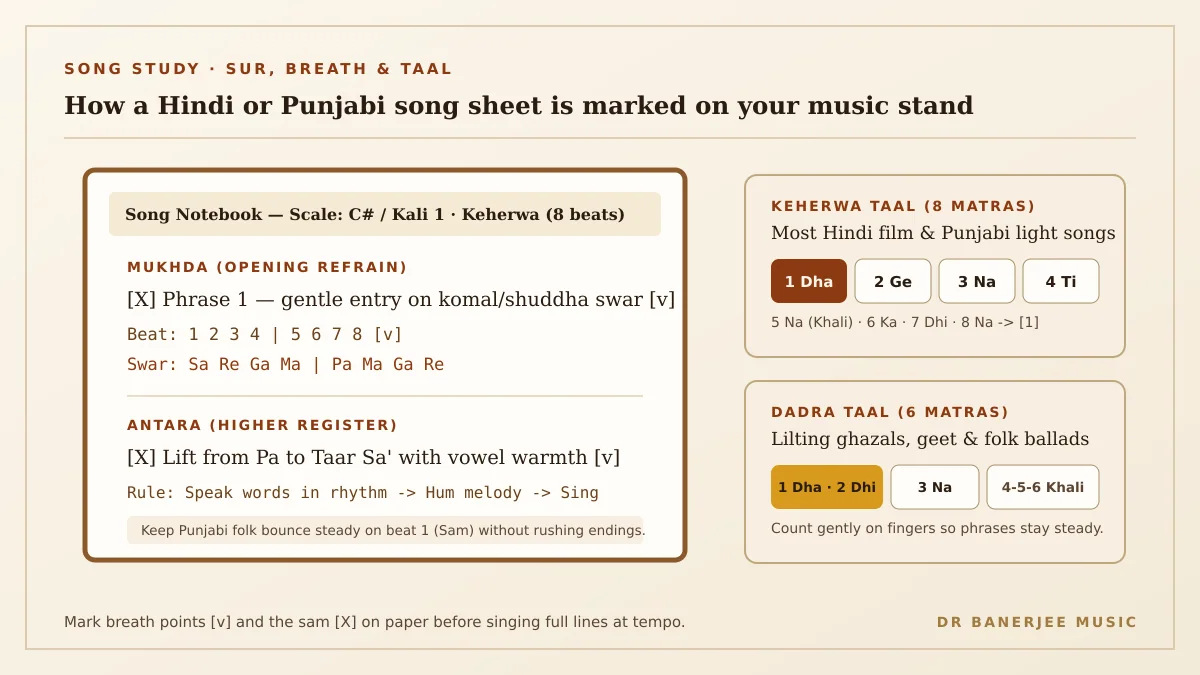
- Punjabi folk, sufi-folk, and light songs: ask for infectious rhythmic energy (laya and bounce on the
KeherwaorDadracycle), crisp diction on retroflex consonants (ड़,ण,ख़), forward chest-voice warmth, and fearless landing on the sam (beat 1) after lively melodic turns (murki and khatka).
When a teacher breaks a song down into swaras (Sa Re Ga Ma...) rather than asking you to imitate a YouTube karaoke track blindly, you suddenly understand why a note feels high or tricky — and how to place it comfortably.
What Good Online Singing Lessons for Beginners Hindi Punjabi Songs India Actually Cover
A structured beginner vocal journey online does not throw twenty random karaoke tracks at you, nor does it lock you into dry exercises with zero songs for a year. Instead, a balanced 45-to-60-minute live session weaves technique and repertoire together:
1. Finding your comfortable home scale (Sa)
Every voice has a natural resting range. Before singing a single Hindi or Punjabi song, an experienced teacher checks where your speaking and humming voice sits comfortably — often around C, C# (Kali 1), or D for many adult men, and G, G# (Kali 4), A, or A# (Kali 5) for many adult women and younger voices, though every individual differs. Transposing a song by just two semitones into your true scale immediately stops throat strain.
2. Breath management and open vowel resonance
Beginners usually run out of breath mid-line not because their lungs are small, but because they leak air on the very first word or lift their shoulders tensely. Simple rib-and-belly breathing drills paired with sustained Om, Mmm, and open Aa vowels teach you how to hold a long film phrase steadily without pushing from the neck.
3. Ear training (Sur matching) with simple sargam
You do not need years of heavy raga study just to sing melodies cleanly, but 10 minutes of Sa – Pa – Sa' matching and simple alankars at the start of every practice session sharpen your ear dramatically. Within a few weeks, you start noticing on your own when a note drifts sharp or flat instead of waiting for someone else to tell you.
4. Rhythm (Taal) and phrase marking
Most Hindi film and Punjabi songs sit on 8-beat Keherwa or 6-beat Dadra (and occasionally 7-beat Rupak). Learning where the mukhda actually lifts — often starting on beat 7 or beat 5 before landing on beat 1 (sam) — stops the classic beginner mistake of entering a bar too early on karaoke tracks.
How to Set Up a Quiet Singing Corner at Home in 5 Minutes
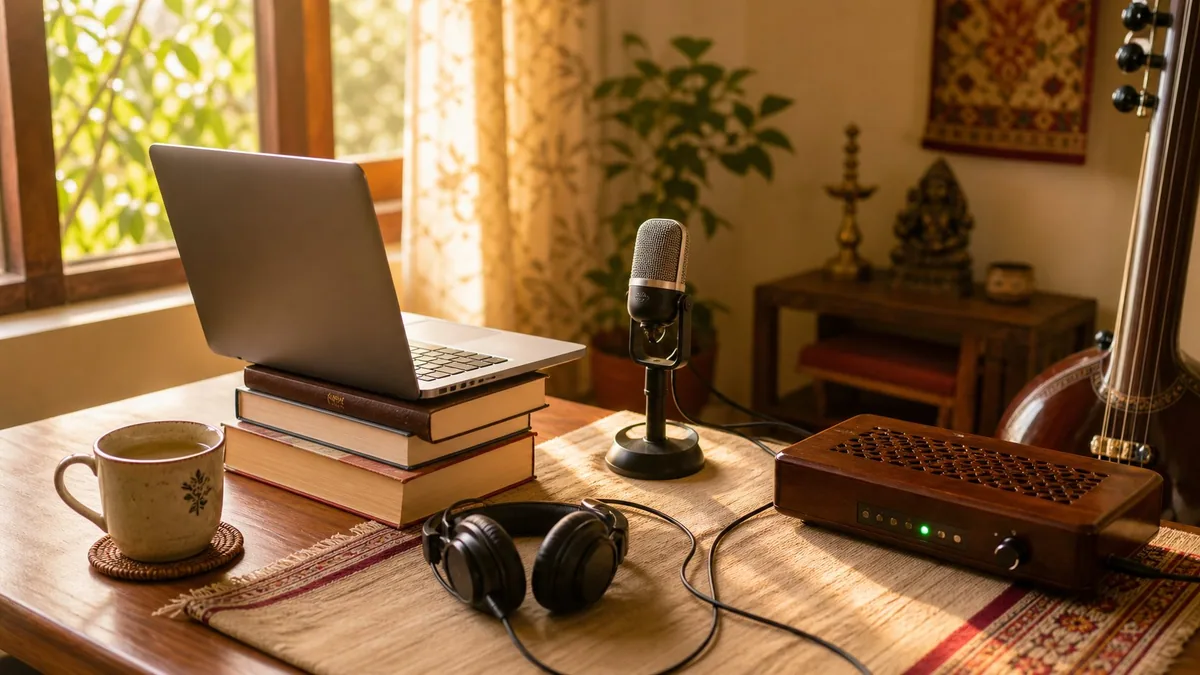
You do not need a studio condenser mic or acoustic foam panels to start online vocal lessons in India:
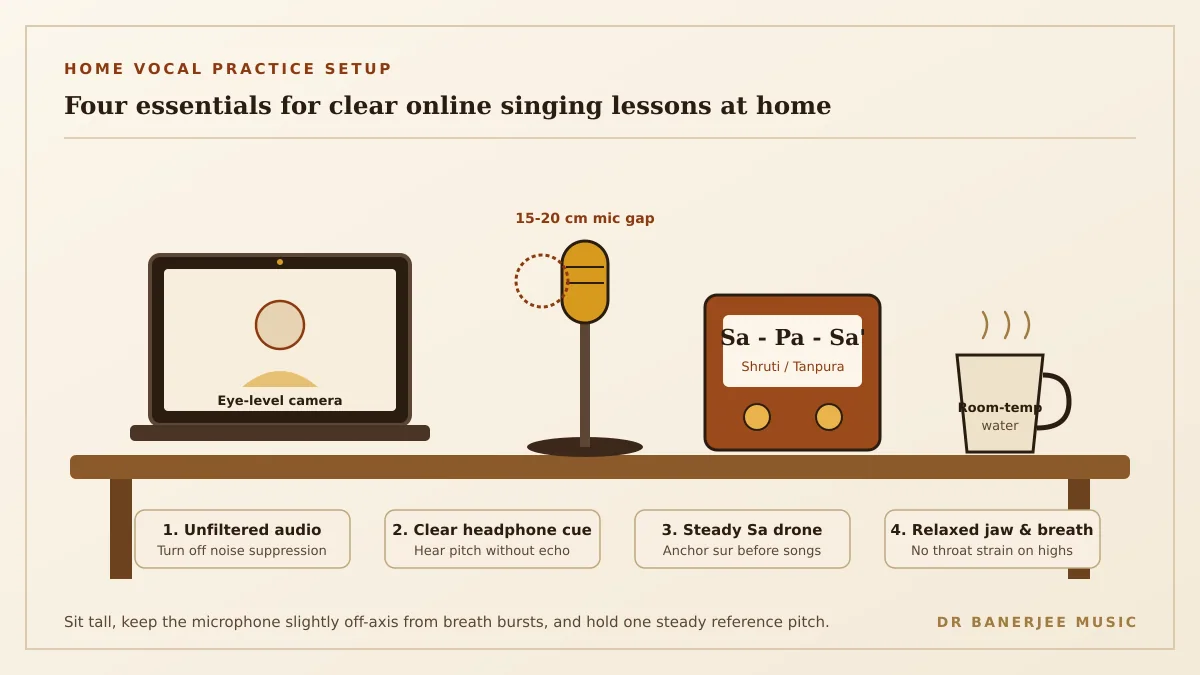
- Sit or stand tall: keep your laptop or phone at eye level on a stack of books so your chin does not tilt down toward your chest (a dropped chin pinches high notes).
- Disable aggressive noise suppression: turn on original/music audio mode in Zoom or keep the phone 20–30 cm away on WhatsApp Video/Google Meet so sustained vocal endings are not cut off.
- Keep a local reference pitch: run a shruti/tanpura app softly in your own room or use a harmonium/keyboard if you own one.
- Confirm repertoire upfront: not every vocal coach teaches both Hindi light melodies and authentic Punjabi phrasing — always check during an introductory chat that the teacher actually knows and teaches the styles you want to sing!
A 20-Minute Daily Home Practice Plan for Busy Beginners
- 5 minutes — Gentle warm-up: lip trills, humming glides, and steady
Sa – Pa – Sa'breath sustains (never sing cold high notes first thing in the morning). - 5 minutes — Scale & ear drill: one slow sargam pattern in the scale of your current song (
Bilawal,Kafi,Kalyan, orBhairavimood). - 10 minutes — Song work by phrase: speak the Hindi or Punjabi lyrics in rhythm first, hum the melody on
NaorMmto check pitch, and only then sing the full words with marked breath spots.
Trying a Free 15–30-Minute Online Intro with Dr Banerjee Music
If you want patient, live vocal guidance tailored to your natural voice, Dr Banerjee teaches beginners and returning singers across India through monthly one-to-one and group options (alongside harmonium, guitar, keyboard, and classical vocal). Every online student starts with a free 15–30-minute one-to-one introductory session before enrolment: we check your comfortable vocal scale, talk through the Hindi, Punjabi, devotional, or semi-classical songs you hope to sing, and agree suitable weekly slots. Normal enrolment and monthly payment follow only if you choose to begin.
To confirm current India fees and open timings directly, visit the fees page, read what happens in the free demo class, or get in touch through the contact page. You can message directly on WhatsApp (+91 62800 75157) or email drbnrj@gmail.com (for learners under 18, a parent or legal guardian books with guardian details, written permission, and the student's date of birth for age-appropriate vocal pacing).
Frequently Asked Questions
Can someone who thinks they are "besura" (off-key) learn to sing in tune?
In nearly every case, yes. What beginners call being "tone-deaf" is usually just an untrained coordination between the ear and vocal cords. Patient pitch-matching drills on a comfortable scale steadily bring the voice into sur.
Should beginners practise singing with karaoke tracks from day one?
Not on day one. Backing tracks hide small pitch slips under loud instruments. Learn the mukhda and antara cleanly against a simple tanpura drone or harmonium/keyboard chords first, then enjoy karaoke tracks once the notes are secure.
Is cold water or spicy food really bad right before singing class?
Ice-cold water tightens throat muscles temporarily, and heavy oily meals right before singing make deep breathing uncomfortable. Room-temperature or slightly warm water and a light gap after meals keep the voice comfortable.
How soon will I be able to sing two or three complete songs cleanly?
With one or two guided classes a week and 15–20 minutes of calm daily practice, most beginners sing their first simple Hindi or Punjabi melodies with noticeably steadier sur and rhythm within six to eight weeks.
Questions about this guide? WhatsApp 62800-75157 or drbnrj@gmail.com.