Keyboard vs Digital Piano India Mein Kaunsa Kharidein?

Doctorate in World Music, University of Oxford · teaching since 1992. More about the teacher.
Walk into an Indian musical instrument showroom or scroll an online store, and the confusion hits within thirty seconds: dozens of black-and-white instruments sit side by side from entry-level ₹4,000 toys up to ₹70,000+ home consoles. Parents and adult beginners researching a keyboard vs digital piano India buy decision almost always ask the same honest question: "Shuruat mein portable keyboard lein ya seedha 88-key weighted digital piano kharidna chahiye?"
The right answer has nothing to do with showroom sales pitches and everything to do with three personal realities: your comfortable budget in INR, the physical space in your home, and the kind of music you want your hands to play two years from today. (Any market price bands mentioned below are general Indian retail context only — always check current street prices and talk with your teacher before buying.)
The Core Difference Lies Under Your Fingers — Not in 500 Rhythm Buttons
Showroom brochures love boasting about "600 built-in tones and 200 auto-accompaniment beats." A working piano teacher ignores all of that and checks key action first:
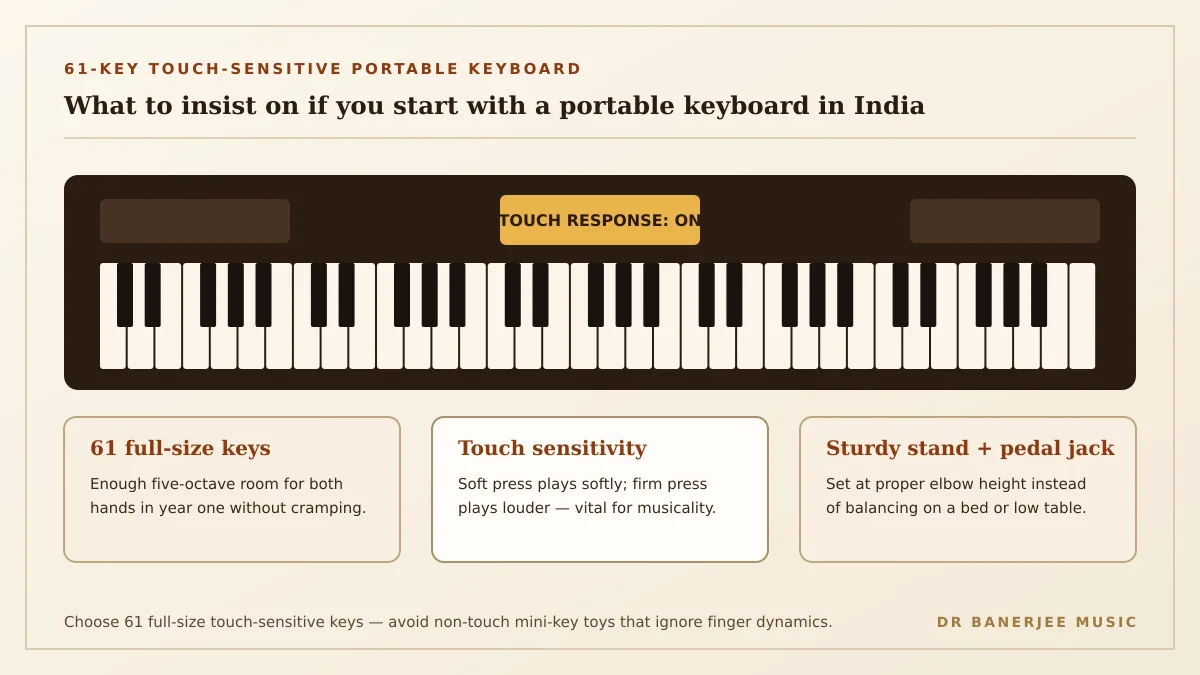
- Portable electronic keyboard (typically 61 keys, synth/spring action): lightweight plastic keys return upward on small springs. Good student models include touch sensitivity (touch response) so playing gently sounds soft and playing firmly sounds louder, whereas ultra-cheap beginner keyboards have non-touch keys that blast the exact same volume regardless of finger control.
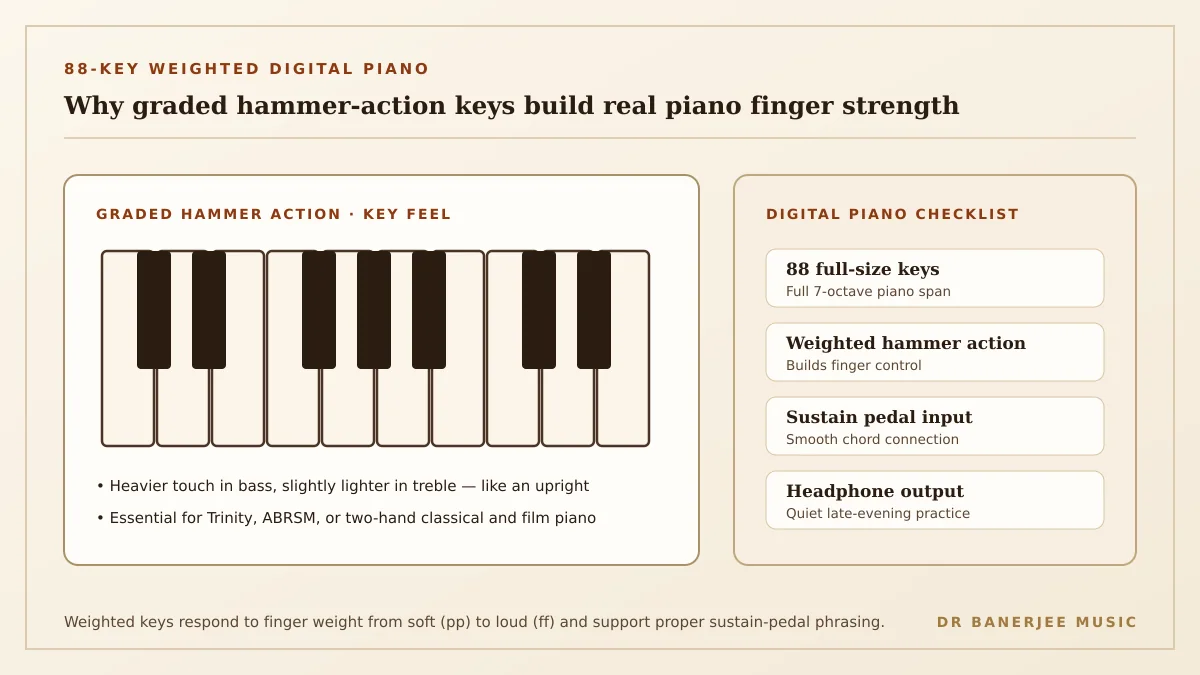
- Digital piano (88 full-size keys, weighted hammer action): built specifically to replicate the mechanical resistance and expressive dynamic range of an acoustic upright or grand piano. Lower bass keys feel subtly heavier under the fingers and high treble keys feel slightly lighter (graded hammer action), building genuine finger strength and pedal control from month one.
If you want a deeper technical look at key mechanisms alongside this India buying checklist, you can also read our companion breakdown of digital piano vs keyboard differences.
Keyboard vs Digital Piano India Buy Guide: Which One Fits Your Goal?
Instead of asking "which instrument is superior?", match the instrument to how it will actually be played in your household:
When a 61-key touch-sensitive portable keyboard is the smarter buy
- Tighter starter budget or testing a young child's consistency: in Indian retail markets, dependable 61-key touch-sensitive student keyboards cost a fraction of an 88-key weighted digital piano. If a 6-to-8-year-old is just beginning and you want to see six to twelve months of steady daily practice before investing heavily, a touch-sensitive 61-key model is completely sensible.
- Compact apartment space or portability: a 4–5 kg portable keyboard lifts off its stand into a cupboard or car boot in thirty seconds — ideal for hostel rooms, rented flats, or carrying to school/community events.
- Bollywood melodies, synth layers, and chord-backing styles: if your primary joy is playing Hindi film melodies, bhajans, or light keyboard arrangements rather than classical two-hand piano repertoire, 61 touch-sensitive keys serve well for the first couple of years.
When an 88-key weighted digital piano is worth buying straight away
- **You specifically want true piano technique (Western classical, Trinity/ABRSM grades, or expressive two-hand film ballads):** starting on springy unweighted keys for two years and then sitting at an exam-room acoustic piano feels shocking to the fingers — like training with a plastic bat and suddenly facing a leather cricket ball.
- Long-term adult learner or committed family instrument: an 88-key slab digital piano (from established makers such as Yamaha, Casio Privia/CDP, Roland, or Kawai in India) does not go out of tune during humid monsoons, lets you practise silently on headphones after 10 pm without disturbing neighbours, and never needs "upgrading" in year two.
Three Buying Mistakes to Avoid in Indian Stores & Online Sales
- Buying a non-touch keyboard just to save ₹2,000–₹3,000: if the spec sheet says Touch Response: No (or omits it), walk away. Without velocity sensitivity, a student cannot play musically, and you will end up replacing it within six months.
- Forgetting the stand, bench height, and sustain pedal: balancing a keyboard on a soft bed or high dining table twists beginner wrists upward and causes forearm ache. Budget for a sturdy X-stand (or table at elbow height), a sustain pedal (
damper pedal), and a footstool for children whose feet do not yet reach the floor. - Buying blind before asking your teacher: if the learner is a child under 18, share their date of birth (DOB) and room space with the teacher first so key weight and bench setup suit their growing hands comfortably.
Quick Store & Online Spec Checklist Before You Pay
- Minimum keys:
61full-size keys (portable keyboard) or88weighted hammer-action keys (digital piano). - Touch sensitivity: Mandatory (
Touch Response/Velocity Sensitive= Yes). - Polyphony: at least
48to64+notes so sustained pedal chords do not cut off earlier notes. - Connections:
1/4"or3.5mmheadphone output +Sustain Pedalinput jack + Indian warranty/service support.
Getting Honest Instrument & Lesson Guidance from Dr Banerjee Music
Before spending ₹10,000 or ₹45,000 on an instrument you are unsure about, talk with the teacher who will actually guide your hands. Dr Banerjee teaches piano, keyboard, Western staff notation, chords, and Indian melodies live online across India through monthly one-to-one and group options.
Every new online student starts with a free 15–30-minute one-to-one introductory session before enrolment — you can bring two shortlisted models to discuss, check your musical goals and weekly schedule, and get unbiased advice with zero store commission; normal enrolment and monthly payment follow only if you decide to begin classes. View plan structures on the fees page, see how the free demo class works, or confirm current India class fees directly via the contact page, WhatsApp (+91 62800 75157), or drbnrj@gmail.com (parents/guardians handle enquiries, DOB, and written consent for minors under 18).
Frequently Asked Questions
Can a beginner start piano lessons on a 61-key touch-sensitive keyboard?
Yes — for the first 12 to 18 months, 61 full-size touch-sensitive keys with a sustain pedal cover nearly all beginner two-hand pieces, scales, and Hindi/Western melodies cleanly. Upgrade to 88 weighted keys once two-hand classical or intermediate pieces outgrow five octaves.
Are mini-key keyboards (32, 37, or 44 small keys) okay for a 7-year-old?
Generally no, once formal lessons start. Mini keys crowd finger spacing so the child has to relearn hand distances later on standard piano keys. Full-size 61-key touch-sensitive models are much healthier for developing muscle memory.
Does a digital piano need annual tuning during Indian summers and monsoons?
No! Unlike wooden acoustic pianos whose steel strings drift in humidity, digital pianos stay permanently in pitch while still giving weighted hammer resistance and headphone privacy for apartment living.
Is a sustain pedal needed right from month one?
You will focus on clean finger legato without pedal in the very first weeks, so there is no rush on day one — just make sure the keyboard or digital piano you buy has a sustain-pedal input socket ready for month two or three.
Questions about this guide? WhatsApp 62800-75157 or drbnrj@gmail.com.