Sargam notation for Hindi songs and bhajans — swaras set line by line, so voice, harmonium and guitar follow the same melody. Book your free demo class.
Fix Sa before you read the sequence
Sargam names relationships around a chosen tonic. Sa is not permanently attached to one piano key for every singer. Before following a notation lesson, establish the pitch used in that example and whether it suits your voice or instrument. I want a student to hear the resting note first; otherwise the syllables become labels copied without a stable musical reference.
The articles below use sargam for particular melodies and devotional texts. Read each notation legend rather than assuming that a dot, dash or capital letter means the same thing in every source. Octave and altered-svara conventions vary in informal transcriptions. A missing explanation is a reason to ask a question, not to invent a rule halfway through a song.
Three things a note sequence cannot supply alone
A line of svaras may show the pitch route without fully specifying duration, ornament or pronunciation. Learn the skeletal phrase first, but do not mistake it for a finished performance. I separate the pitch exercise from the words when either one is unstable, then join a short phrase at a time.
Count through held notes and rests. A beginner often shortens a repeated svara because the written syllable looks uneventful. The ear hears that shortening immediately. On an instrument, listen for clean releases as well as correct attacks; overlapping notes can blur a phrase whose finger sequence is otherwise right.
Move from reading to recall
After two accurate readings, look away and reproduce only the first phrase. Check it against the notation, then try again. This tests whether you are hearing the relationships or following the page mechanically. Add the next phrase only when its entry has a clear connection to the previous ending.
Sargam study and Western notation can support each other, but their naming systems should not be treated as interchangeable without explanation. For live work on tonic, pitch and melodic movement, the Indian classical vocal course describes my teaching approach.
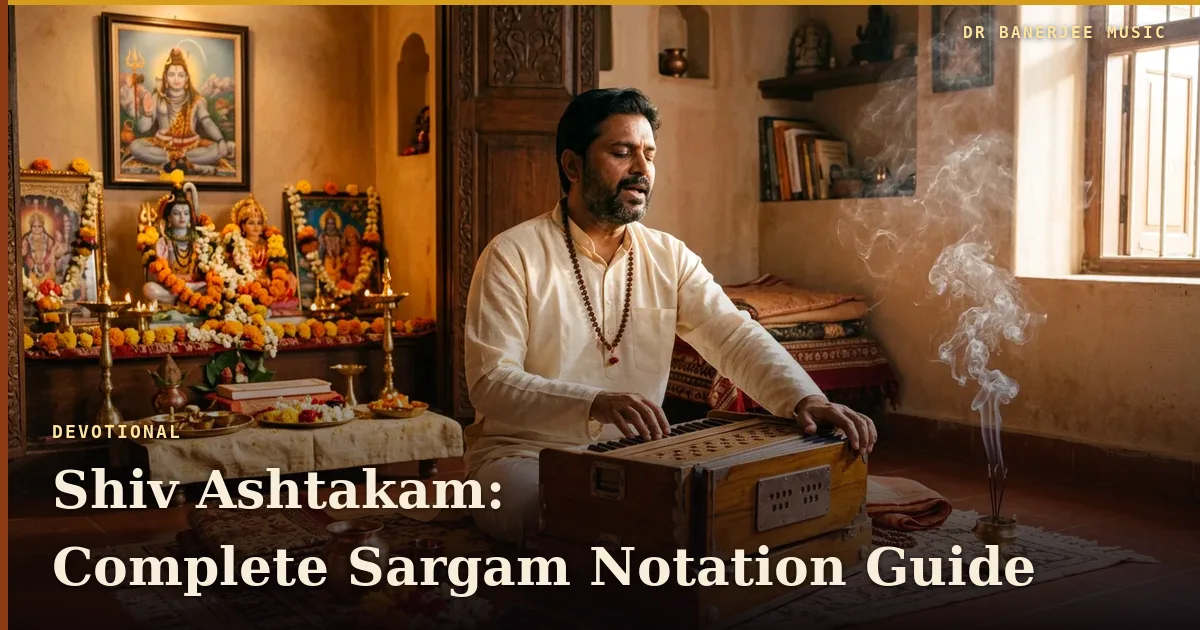
Beginner harmonium lessons online for bhajan and Punjabi songs.
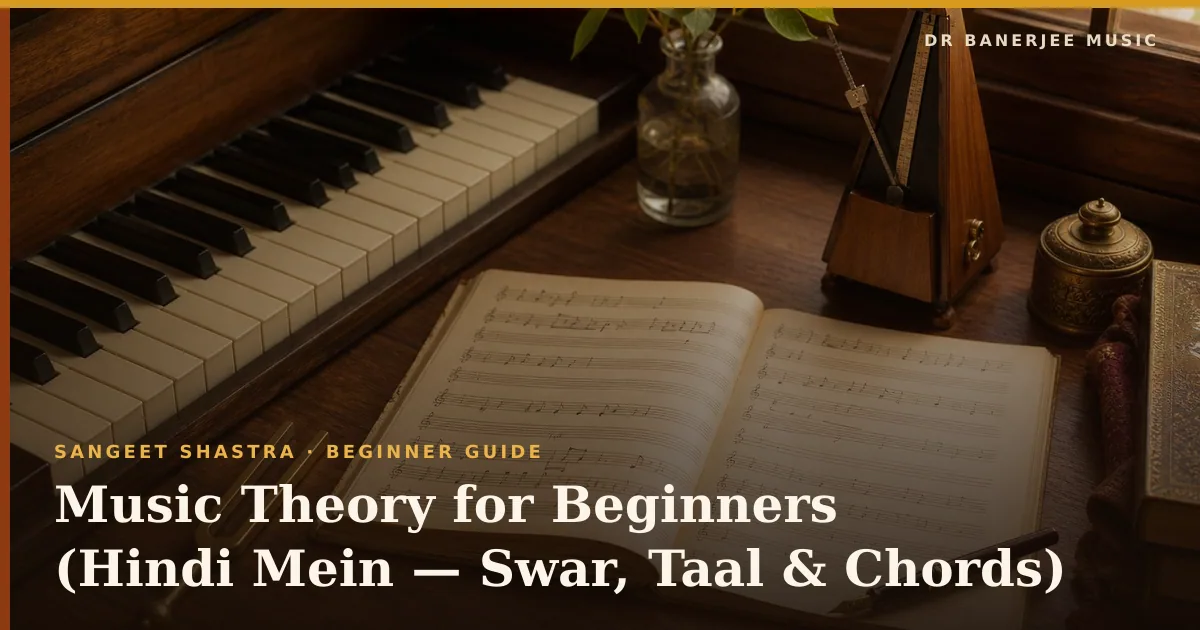
Friendly music theory for beginners Hindi India guide explaining swar, saptak, taal, Western staff notes, and major/minor chords side by side for daily practice.
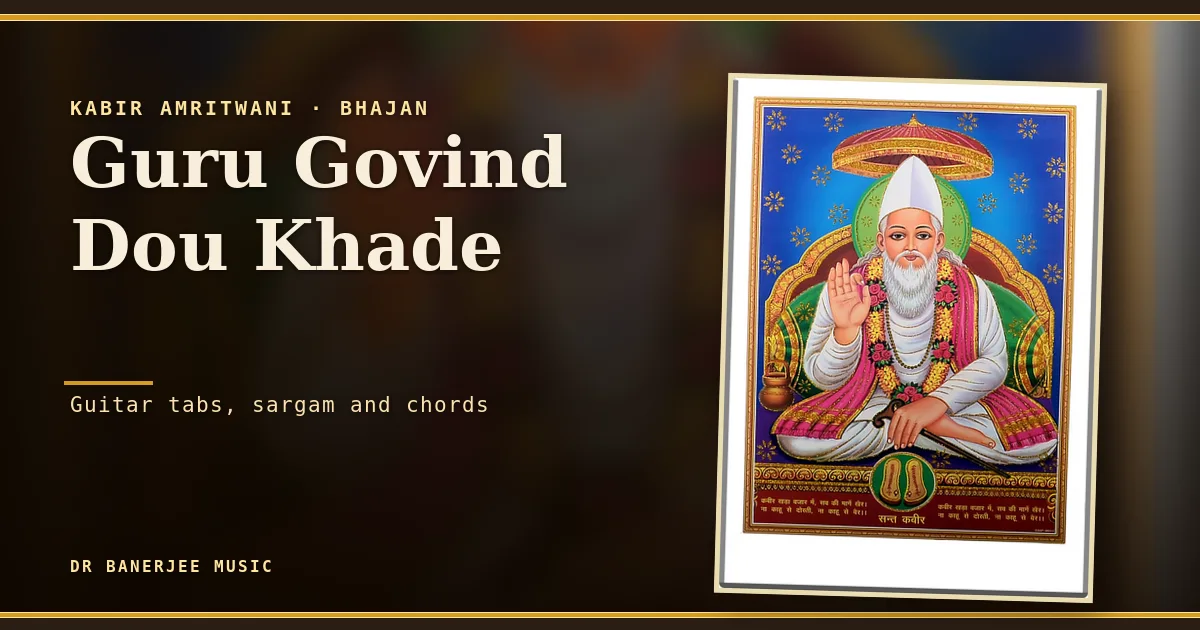
Guru Govind Dou Khade set for guitar: six-line sargam notation, tabs and chords, with a practice method that treats Kabir doha with real structural care.
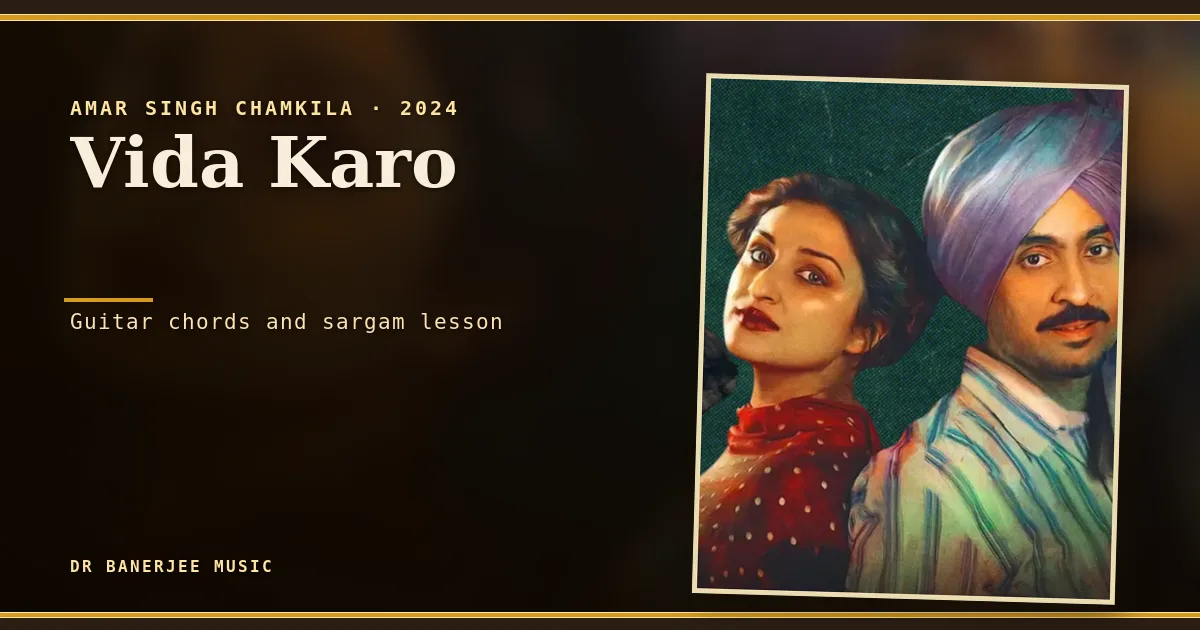
Vida Karo (Amar Singh Chamkila, 2024) in sargam and chords: line-by-line notation, the harmonic reading behind it, and how to practise it with drone and voice.
Book your free demo class on WhatsApp, call +91-62800-75157, or email drbnrj@gmail.com. Physical classes begin after one studio visit; online plans start with the free 15–30-minute demo class, where days, timings, syllabus and progression are agreed.
Add this website to your phone or computer and it opens like an app, loading current lessons, fees and articles when connected. Recently visited pages may be available offline. There is nothing to download from an app store and no separate app to update.
How to add it to your home screen
Android (Chrome): open the ⋮ menu and tap Install app or Add to Home screen.
iPhone and iPad (Safari): open this site in Safari, tap Share (or the browser menu, then Share), choose Add to Home Screen, keep Open as Web App enabled if shown, then tap Add.
Computer (Chrome or Edge): use the install icon in the address bar when offered, or the browser menu’s install option. Availability depends on your browser and device.
In an in-app browser, open this page in Safari or Chrome first. Installation is optional; all lessons and articles also work in your browser. Offline copies may be older, and video, maps and messages need an internet connection.