Prayag Sangeet Samiti Exam Ka Online Prep Guide

Doctorate in World Music, University of Oxford · teaching since 1992. More about the teacher.
For generations of North Indian families, classical music milestones have meant preparing year by year for Prayag Sangeet Samiti (Prayagraj). Yet many sincere learners live far from a seasoned Hindustani guru or struggle to fit evening commutes around school, college, or office hours. This Prayag Sangeet Samiti online prep guide explains how structured live online lessons can prepare you thoroughly for both the practical performance and written shastra (theory) papers — without rushing raga foundations.
One important note right at the start: Dr Banerjee Music is an independent music teacher, not Prayag Sangeet Samiti and not an examination board or registration office. Prayag Sangeet Samiti publishes its own official syllabus booklets, examination schedules, and quarterly or annual fee tables, which can be revised from session to session. Always verify the latest official syllabus, registration deadlines, authorised local venue rules, and board fees directly with Prayag Sangeet Samiti before submitting an exam form.
Understanding the Prayag Sangeet Samiti Progression
Whether you study Hindustani vocal (गायन), harmonium, flute, or guitar/instrumental streams, Prayag Sangeet Samiti organises classical training into progressive yearly stages — starting from foundational junior/प्रारंभिक and प्रवेशिका levels, moving through भूषण (Bhushan) years, and advancing into प्रभाकर (Sangeet Prabhakar) and higher stages.
Across every year, examiners look for balanced musicianship rather than mere memorisation:
- Swar accuracy and alankar clarity: clean intonation against the tanpura drone (
Sa – Pa – Sa'), steady breath or bellows support, and unhurried palta patterns. - Prescribed ragas for your year: accurate aroha-avaroha, pakad, chhota khayal (and bada khayal in intermediate/senior years), plus age-appropriate alaps and taans that respect the raga's chalan rather than racing mechanically.
- Taal command (ताली-खाली): reciting theka bols (
Teentaal,Dadra,Keherwa,Ektaal,Jhaptaal,Chautaalas prescribed) on hand claps and waves (taliandkhali) without losing laya. - Written shastra and oral viva: raga comparison (
samprakritik raga), notation writing (Bhatkhande paddhati), musical definitions (naad,shruti,swar,saptak,thaat,vadi-samvadi), and composer/musician biographies.
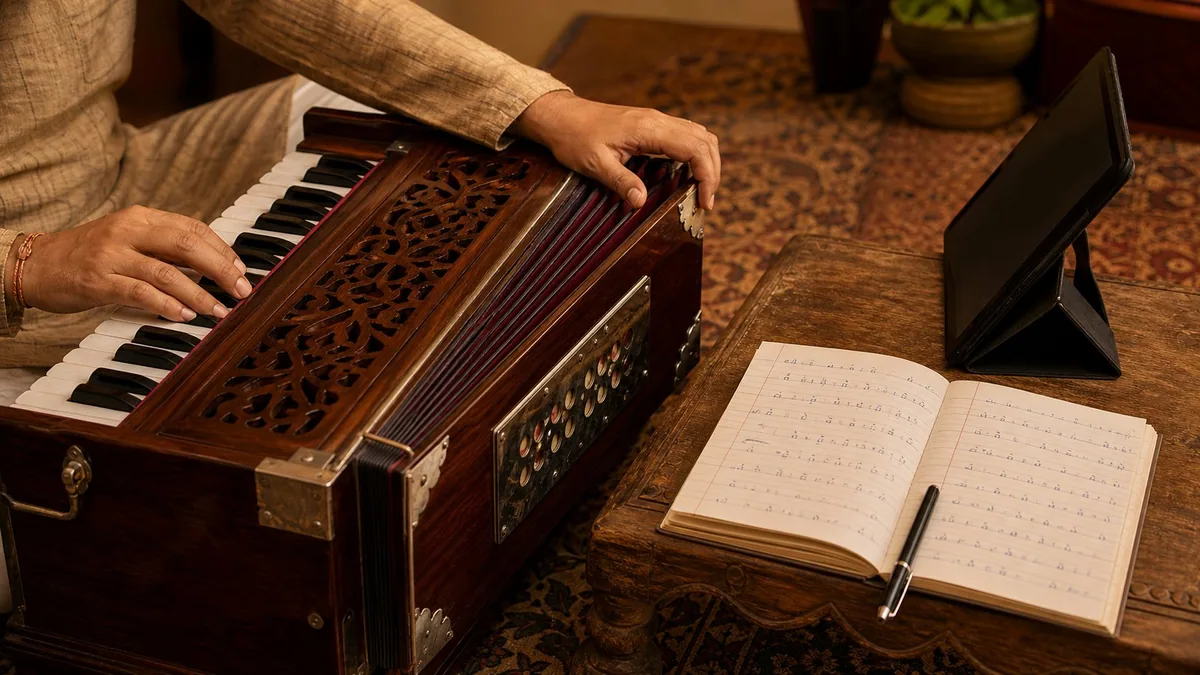
Prayag Sangeet Samiti Online Prep Guide: How Live 1:1 Classes Cover Every Part
Kayi students aur parents poochte hain: "Kya classical exam ki taiyari online sach mein ho sakti hai?" Yes — when lessons are live, one-to-one, and built around honest listening rather than pre-recorded videos. Here is how online preparation works week by week:
1. Fixing unfiltered audio and tanpura balance first
Standard video-call "noise cancellation" treats a tanpura drone or harmonium sustain like background fan noise and clips it out. In your very first week online, turn on original/unprocessed sound on Zoom or keep a clean close mic on Meet/WhatsApp Video, and run your electronic tanpura or shruti app in your room rather than over screen-share. That way you sing or play in real time with zero network lag against your Sa, and the teacher hears both your voice and reference pitch together.
2. Building raga repertoire without shortcuts
Online prep works best when each prescribed raga gets three layers of attention:
- Swar-vistar and pakad recognition: spending 10 minutes simply dwelling on the
vadiandsamvadiswaras until you can identify the raga in two phrases during an oral viva. - Bandish in steady madhya laya: locking the
sthayiandantarato thesam(X) before adding ornamentation. - Structured alap and bol-taan/sargam-taan sets: writing them cleanly into your notebook in Bhatkhande notation so your practical singing and written notation paper reinforce each other.
3. Practicing Taal Padhant on Camera
Many candidates sing melodiously yet lose marks when asked to recite Ektaal or Jhaptaal dugun on hand claps in front of the examiner. Keep both hands visible in the camera frame for five minutes every lesson to practise padhant — speaking bols crisply while showing sam, tali, and khali cleanly.
4. Monthly Theory & Notation Checkpoints
Do not leave the shastra paper for the final two weeks before exams! Writing one notation question and two short definitions (vaarjit swar, poorvanga-uttaranga, raga time theory) every fortnight makes theory effortless and deepens your practical phrasing at the same time.
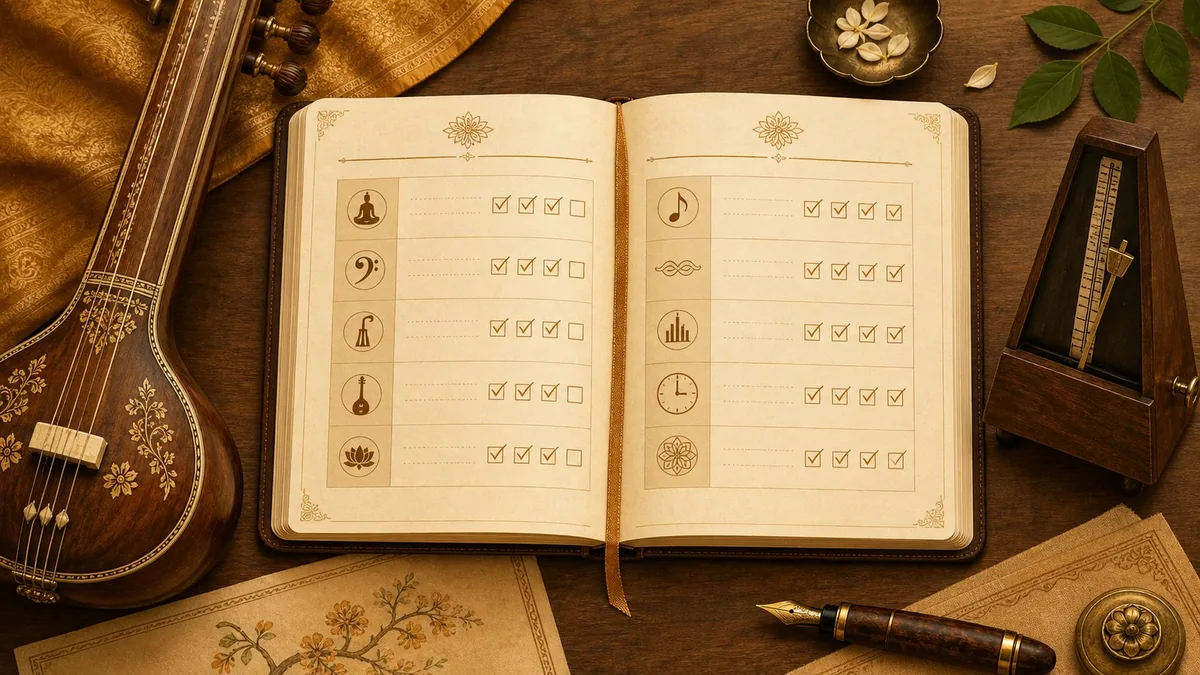
Weekly Home Riyaz Routine for Exam Candidates (30–45 Minutes Daily)
Consistency beats marathon Sunday sessions every single time. A calm 35–45-minute daily routine for a working adult or school student looks like this:
- Minutes 1–10 (Kharaj & Alankar): sustain
Sa, mandra swaras (for vocalists), and two prescribed palta patterns slowly against the tanpura. - Minutes 11–25 (Current Raga Bandish & Vistars): sing or play the raga currently under study, checking how smoothly you return to the
mukhya angandsam. - Minutes 26–35 (Previous Raga Retention + Taal Padhant): revise an earlier raga from your year's list and recite one taal in barabar and dugun laya on your hands.
- Minutes 36–45 (Twice a week — Notation & Shastra): write out one
sthayi-antarain Bhatkhande notation from memory and checkmatragroupings (vibhagbars,meend,kan swarsymbols).
Always Verify Official Rules, Dates, and Fee Tables Directly
Prayag Sangeet Samiti maintains structured syllabus books and official examination/quarterly fee schedules across different years and streams, and local authorised venues may also have specific form-submission windows and practical dates. Because board circulars, prescribed raga options, and official fees are controlled solely by Prayag Sangeet Samiti, always verify the current year's syllabus book, form deadlines, and official fee table directly with Prayag Sangeet Samiti before registering as a candidate.
If the candidate is a school-age child under 18, share the learner's date of birth (DOB) when planning classes so vocal range and exam year selection match healthy vocal development rather than rushing into heavy ragas too early.
Preparing Online with Dr Banerjee Music
Dr Banerjee (Doctorate in World Music, University of Oxford; teaching since 1992) guides students across India in Hindustani classical vocal, harmonium, bansuri, guitar, and music theory through monthly one-to-one and group options. While Dr Banerjee does not run examinations or issue board certificates, one-to-one online lessons can be tailored carefully around your chosen Prayag Sangeet Samiti year — covering raga gayaki/vaadan, taal padhant, Bhatkhande notation, and mock oral viva questions.
Every new online student starts with a free 15–30-minute one-to-one introductory session before enrolment, so we can hear your current swar and laya, review the year you have in mind, and agree days and timings; normal enrolment and monthly payment follow only if you decide to begin. Check general plan details on the fees page, read about the free demo class, or visit the contact page to confirm current India fees directly via WhatsApp (+91 62800 75157) or email drbnrj@gmail.com (parents/guardians handle enquiries and written permission for learners under 18).
Frequently Asked Questions
Does Dr Banerjee register candidates or run Prayag Sangeet Samiti exams?
No. Dr Banerjee is an independent music teacher who prepares learners for the musical and theoretical syllabus. Official candidate registration, venue allocation, exam dates, and certificates are handled solely by Prayag Sangeet Samiti and its authorised offices.
Which instrument should a vocal candidate keep at home for online prep?
An electronic tanpura (or a dependable tanpura app on a second phone/speaker) is essential for pitch purity, and a standard Indian harmonium is very helpful for visualising Bhatkhande notation and swar distances.
How many months ahead should I begin preparing for a classical music exam?
Give yourself at least six to nine months of steady weekly lessons and daily 30-minute riyaz for junior-to-intermediate years, and a full academic cycle for senior years so ragas mature naturally in your ear.
Can working adults prepare for Prayag Sangeet Samiti syllabuses too?
Yes — many adult learners study the syllabus purely for structured raga discipline even before deciding whether to sit the formal exam. Check age or stream rules directly with Prayag Sangeet Samiti if you plan to submit an exam form.
Questions about this guide? WhatsApp 62800-75157 or drbnrj@gmail.com.